

Key Takeaways
- The 1/4 lb to 1/2 lb weight range is consistently cited as optimal for fat loss, with interchangeable systems providing the best long-term value over fixed ropes.
- Speed ropes and weighted ropes serve different physiological purposes. Choosing the wrong one for your primary goal is the most common and costly mistake.
- Smart jump ropes reduce the mental load of counting, but the ongoing app costs often exceed the price of the hardware within two years. Budget for the subscription, not just the handles.
Table of Contents
- Why this guide focuses on weight + speed for home cardio
- Optimal weighted-rope recommendation
- Best jump rope workout templates for fat loss and cardio
- Speed vs weighted ropes — performance tradeoffs & how to pick
- Smart jump ropes vs speed ropes — cost, lifespan, and value
- Quick buying guide — which rope to buy for your goal and budget
- Cordless jump ropes — review sentiment and evidence gap
- RPM, cadence, and expectations for beginners
- Three important topics top articles miss
- FAQs + quick decision matrix
- Sources & buyer resources
Finding a best jump rope workout usually means sifting through generic lists that ignore the hardware you actually need to buy. Most articles treat jump rope selection as an afterthought, but the rope itself dictates the workout outcome. A speed cable will not give you the upper body resistance needed for body recomposition, and a heavy rope will frustrate anyone trying to drill double unders. This guide prioritizes the measured tradeoffs between weight and speed so you can buy the right tool once and start training minutes after opening the box.
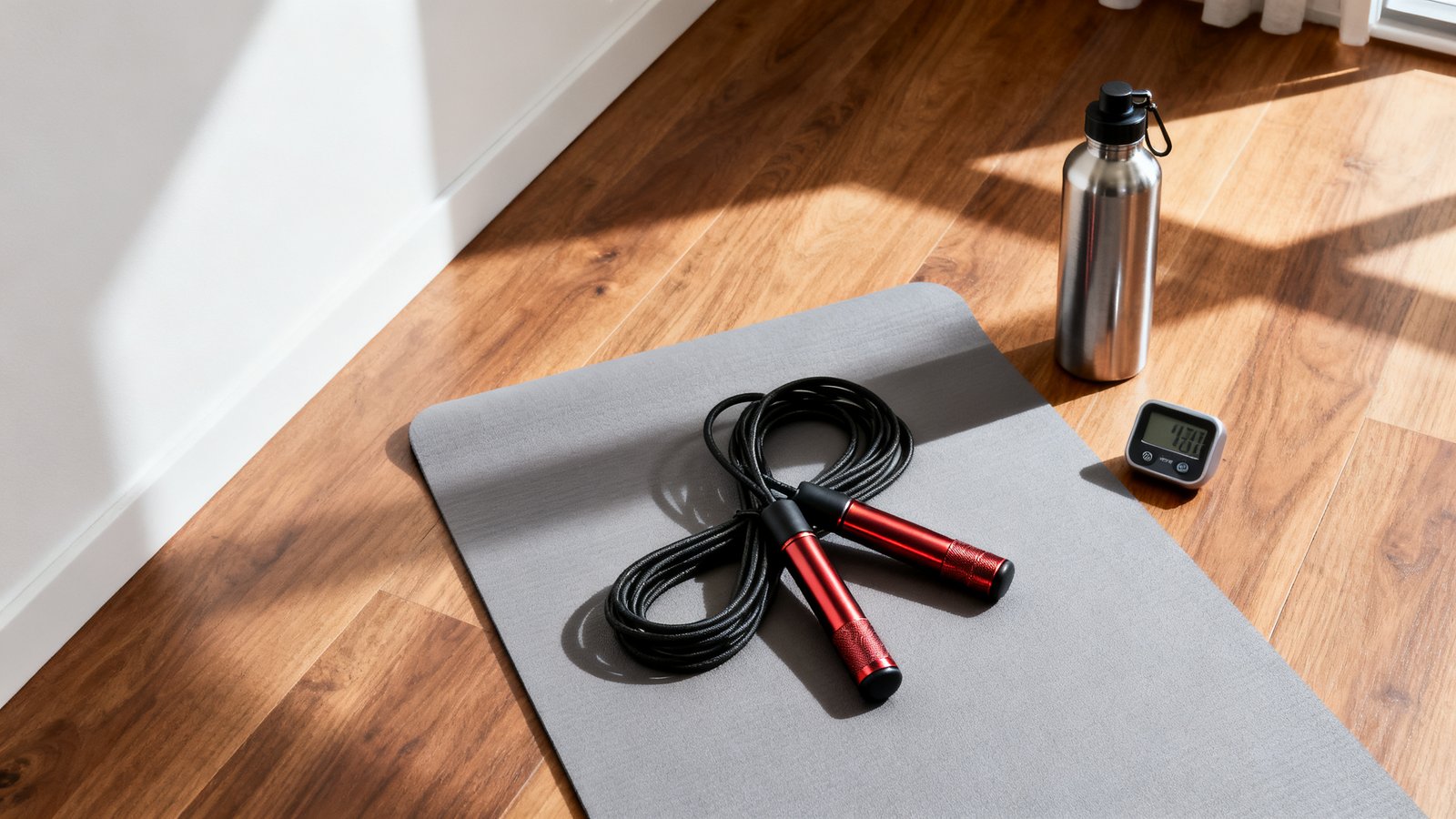
Why this guide focuses on weight + speed for home cardio
The central tension in buying a jump rope is simple. Lighter ropes spin faster but demand more coordination. Heavier ropes provide feedback you can feel, which increases muscle activation, but they slow your turnover rate. If you buy purely for speed, you miss the metabolic boost that comes from loading the shoulders and lats. If you buy purely for weight, you limit the ceiling of your cardiovascular intervals.
Research and market data consistently point to a specific sweet spot for fat loss. The most recommended weighted range sits between 1/4 lb (4 oz) and 1/2 lb (8 oz). The Crossrope Get Lean set, which pairs a 4 oz and 8 oz rope, is frequently positioned as a top choice for weight loss because it allows you to modulate intensity within a single session. You can warm up with the lighter rope for high turnover intervals, then switch to the heavier rope for strength endurance rounds without losing momentum.
This guide uses that 4 oz to 8 oz range as a baseline reference point and measures everything else against it. The goal is not to sell you a specific brand. The goal is to anchor your buying decision in the physical reality of what these weights do to your heart rate, your joints, and your weekly consistency in a living room or garage.
Optimal weighted-rope recommendation
If you want one actionable buying rule, start with 1/4 lb and progress to 1/2 lb. Do not start heavier. A rope that exceeds 1 lb shifts the workout away from rhythmic cardio and toward shoulder fatigue. That has its place for athletes, but for the busy home exerciser running 20 to 40 minute sessions, it reduces total jump volume and increases the risk of tripping, which kills the aerobic benefit.
The 4 oz rope creates enough feedback to feel the arc of the rotation without destroying your pace. When you progress to 8 oz, your heart rate will climb noticeably at the same cadence. That is the mechanism for higher calorie burn in shorter windows. Multiple sources, including detailed breakdowns from Crossrope and practical guides from Elite Jumps, support this progression.
Choose a heavier rope, something closer to 1 lb or above, only when you specifically want to train grip and shoulder endurance and you are willing to accept fewer total jumps per minute. For general fat loss and conditioning, the 4 oz to 8 oz range is where the value sits.

Best jump rope workout templates for fat loss and cardio
Templates remove the guesswork. Below are three beginner to intermediate sessions designed around the 4 oz and 8 oz weights. Each session assumes you have a mat or a low pile rug to reduce joint stress. Rest times are short because the goal is density, not max speed.
The first is a HIIT interval block. Use the 4 oz rope. Jump for 40 seconds at roughly 75% perceived effort, then rest for 20 seconds. Repeat for 10 rounds. Total time is 10 minutes. If you can maintain consistent rhythm without tripping, progress to 45 seconds on, 15 seconds off.
The second is an EMOM cardio ladder. Every minute on the minute, perform a set number of jumps and rest until the next minute starts. Start with 40 singles per minute using the 4 oz rope. At minute 8, switch to the 8 oz rope and drop to 30 singles per minute. Run this for 16 total minutes. The switch in weight midway teaches your nervous system to adapt under fatigue.
The third is steady state endurance. Use the 4 oz rope and aim for 20 continuous minutes of low intensity jumping. The pace should feel conversational. If you cannot talk while jumping, slow your cadence. This session builds capillary density and improves your ability to recover between harder days. For more structured plans that include progression, our home gym essentials list outlines complementary equipment to pair with your rope.
Speed vs weighted ropes — performance tradeoffs & how to pick
Speed ropes are built for maximum revolutions per minute. The handles are light, the cables are thin, and the bearings are designed to reduce friction to nearly zero. If your primary goal is fast footwork, boxing conditioning, or double unders, a speed rope is the correct tool. Expect to find quality speed ropes priced between $16 and $35, with top tier examples like the Rogue SR-1 Bearing Speed Rope landing around $35.
Weighted ropes operate on the opposite principle. The rotational mass increases the eccentric load on your upper body. You will never match the RPM of a speed cable with a weighted rope, nor should you try. That is not a flaw. The weighted rope is a strength endurance tool that also drives heart rate through resistance, not just cadence.
The table below clarifies the tradeoff. Buy based on your primary outcome, not on what looks more advanced.
| Goal | Rope Type | Typical RPM Feel | Upper Body Load | Price Range |
|---|---|---|---|---|
| Pure cardio conditioning | Speed rope | High | Low | $16-$35 |
| Fat loss + muscle retention | Weighted (4-8 oz) | Moderate | Moderate | $90-$200+ |
| Grip and shoulder endurance | Heavy rope (1 lb+) | Low | High | $30-$100+ |
Smart jump ropes vs speed ropes — cost, lifespan, and value
Smart jump ropes add Bluetooth handles and companion apps that count reps and track session history. The Crossrope AMP system, for example, costs about $90 for the handle and rope set. Then the AMP app membership runs $99 per year. Premium weighted systems can reach $200 or more when you add multiple rope weights. This is a subscription wrapped in hardware.
A basic speed rope costs $16 to $18. It counts nothing. You count in your head or use a free interval timer. Over 24 months, a smart system can cost five to ten times more than a speed rope once app fees compound. The value proposition hinges entirely on whether you will actually use the tracking data to adjust your training.
Lifespan data favors premium systems in one specific regard. Crossrope handles carry a lifetime warranty. Replacement ropes cost a fraction of a new set. Quality licorice speed ropes, meanwhile, should last several years with indoor use. Beaded ropes may fail within a year, especially if used on abrasive surfaces. If you tend to destroy gear quickly, the warranty on a premium system can offset the upfront cost. If you are consistent but gentle on equipment, a speed rope is economically unbeatable.
For budget conscious buyers, our breakdown of home gym vs gym membership cost shows how even the most expensive rope setup pays for itself within three to four months of cancelled gym fees.
Quick buying guide — which rope to buy for your goal and budget
Below are the direct picks sorted by outcome. There is no perfect universal rope. Each recommendation assumes you will train indoors on a mat or smooth floor.
For fat loss and body recomposition, choose a weighted rope system with interchangeable 4 oz and 8 oz ropes. Price lands around $90 for entry sets and can climb past $200 for expanded weight ranges. Expected lifespan with indoor use exceeds three years for the handles. Replacement ropes add annual costs but remain modest.
For fast HIIT and double under practice, buy a bearing speed rope between $16 and $35. The cable should be licorice or coated steel. Expect several years of life if you avoid concrete. Replace the cable when it kinks.
For a smart rope with tracking, the Crossrope AMP or equivalent costs around $90 to $200 upfront plus a recurring app fee of $99 per year. The battery lasts up to six months. Buy this only if you value session metrics enough to pay annually for them.
For a budget speed rope, the $16 to $18 range delivers everything a beginner needs. No app, no extra weights. Just a functional tool. If you are furnishing a small training area, our home gym small space guide covers compact storage options.
Cordless jump ropes exist in the market but lack reliable comparative performance data, which the next section explains.
Cordless jump ropes — review sentiment and evidence gap
Cordless jump ropes are frequently searched for indoor use, especially in apartments with low ceilings. The concept is straightforward. Handles with short tethered balls simulate the rope arc without requiring overhead clearance or tripping risk. However, the provided sources and available market reviews do not contain substantial performance data, calorie burn comparisons, or long term durability reports for cordless models.
No negative review patterns emerged because the sources contained no cordless rope reviews at all. This is a genuine evidence gap. If you are considering a cordless rope, buy from a retailer with a clear return policy and test it within the return window. Pay attention to handle weight and whether the internal mechanism provides enough feedback to keep your pacing honest. Without a physical rope to clear, it is easy to under jump and reduce the metabolic demand.
For most home exercisers, a standard rope cut to the correct length and paired with a thin mat will solve the noise and ceiling concerns more effectively than a cordless substitute. Our article on home gym mistakes covers space planning errors that are more impactful than gear choice.
RPM, cadence, and expectations for beginners — what the data says
Exact RPM figures for speed versus weighted ropes are absent from available research. No peer reviewed study in the sources offers a direct RPM comparison for beginners. This is a gap you will encounter repeatedly if you search for precise cadence targets.
What we do know is perceptual. A speed rope allows comfortable cadences of 120 to 160 turns per minute for a conditioned jumper. A 4 oz weighted rope will naturally settle lower because the arc speed is limited by the mass you are swinging. That slower arc raises heart rate through resistance, not pace.
For beginners, ignoring RPM entirely and using time based intervals produces better results. Set a timer for 30 seconds. Count your jumps. Use that count as your personal baseline and try to beat it every two weeks. Music tempo provides a practical proxy. Jumping at 140 beats per minute is achievable with a 4 oz rope and provides a consistent external cue without looking at a display.
The absence of RPM data is not a flaw in the research. It reflects reality. Jumping rhythm is individual. Chasing an arbitrary number before mastering consistent form leads to shin splints and frustration. If you want to pair your rope with a broader conditioning plan, our how much weight home gym guide explains complementary loading for lower body development.
Three important topics top articles miss
Most jump rope buying guides skip the practical details that determine whether you actually use the rope. Three specific gaps appear consistently.
First, rope length sizing gets a single sentence at best. The standard advice is to step on the middle and pull the handles to your armpits. That is a starting point, but it ignores arm length and shoulder width. The better method is to shorten the rope in half inch increments, jumping for 30 seconds between adjustments, until the rope just grazes the floor without forcing you to raise your shoulders. A rope that is too long whips and slows. A rope that is too short forces a crouch. Spend 10 minutes dialing this before your first real workout.
Second, maintenance and replacement costs are absent from most guides. Licorice speed cables fray on rough surfaces. Bearings collect dust. Beaded ropes snap individual beads. Cleaning the cable after outdoor use and storing the rope hung, not coiled tightly, extends life. Budget $10 to $20 annually for replacement cables if you use a speed rope outdoors. Weighted rope systems require less frequent replacement but the cost per cable is higher.
Third, injury prevention and landing mechanics rarely get a dedicated section. The number one mistake is landing on the heels with straight legs. That sends impact directly into the knees and lower back. Land on the balls of the feet with a slight knee bend. Keep jumps to one inch off the ground. Higher is not better. Start with intervals no longer than two minutes and build volume over four to six weeks. Shin pain means you are jumping too high or too frequently on hard surfaces. Stop and adjust before it becomes a stress reaction.
Our best adjustable dumbbells guide covers complementary strength work that reinforces the joint stability needed for higher jump volumes.
FAQs + quick decision matrix
What is the best jump rope for a small apartment?
A licorice speed rope cut to your correct ceiling height is the safest indoor option. Use a thin rubber mat to dampen sound and protect the cable. Cordless ropes exist but lack reliable performance data, so test any unit within a retailer’s return window.
How do I start if I have never jumped rope before?
Begin with a 4 oz weighted rope or a standard speed rope. Skip without a rope for the first week to practice rhythm and soft landings. When you add the rope, limit sessions to 5 to 10 minutes, alternating 30 seconds of jumping with 30 seconds of rest.
When should I progress to a heavier rope?
Progress to 8 oz when you can complete 10 continuous minutes of singles with the 4 oz rope without tripping more than twice. Do not discard the lighter rope. Alternate between weights within the same session for the best fat loss results.
Is a smart jump rope worth the ongoing app cost?
Smart jump ropes make sense if you are data driven and will use the tracking to adjust intensity. If you ignore app analytics after the first month, a $16 speed rope and a free interval timer deliver identical metabolic results for a fraction of the cost over two years.
What warranty terms should I look for?
Handles should carry at least a one year warranty. Lifetime warranties, like those on Crossrope handles, reduce long term cost if you train frequently. Check whether replacement cables are covered and what the per cable cost is before buying into a system.
| Goal | Best Rope Type | Price Range | Expected Lifespan |
|---|---|---|---|
| Fat loss + muscle tone | Weighted 4-8 oz system | $90-$200+ | Handles lifetime, ropes 1-3 years |
| Fast HIIT + double unders | Bearing speed rope | $16-$35 | Several years (indoor) |
| Data tracking + coaching | Smart rope with app | $90-$200+ (+$99/yr app) | Handles warranty lifetime, battery 6 months |
Sources & buyer resources
The recommendations in this guide draw from brand published testing protocols, independent reviews from Wirecutter, and practical how to guides from health publications. The Wirecutter review provided lifespan and price benchmarks for speed ropes and noted the absence of detailed sizing guides. Weight specific recommendations came from Crossrope and U.S. News articles on weighted rope training.
Before buying, test or check the retailer listing for four things. Feel the handle texture. Smooth foam degrades faster than textured rubber. Check rotation smoothness by spinning the handles in your hand. Grit or wobble indicates poor bearings. Confirm length adjustability. Fixed length ropes are cheaper but harder to fit correctly. Review the warranty policy and the real cost of replacement parts. Rope replacement pricing is often buried in accessory sections and can change your total cost of ownership significantly.
The best jump rope workout is the one you match to your actual goal and your actual flooring, not the one with the most persuasive marketing page. Choose the weight that lets you train consistently without joint pain, size it correctly, and follow a template that leaves you breathless inside 20 minutes. Everything else is distraction.