

Building a home gym small space setup that doesn’t trigger neighbor complaints, violate a lease, or stink up your living room is harder than YouTube makes it look. Most apartment gyms fail within six months because they ignore three things: impact noise traveling through floors, rubber off‑gassing trapped in 400 sq ft, and gear that starts wobbling after 8–12 months. This guide fixes that. You’ll get real square‑foot templates, 2026 cost‑per‑sq‑ft numbers, exact dB thresholds, and the three equipment tradeoffs other guides skip. No hype. Just a build plan that keeps you, your neighbors, and your deposit safe.
Key Takeaways
- Noise and odor kill apartment gyms first. Start with 10mm rubber flooring and off‑gas it before you buy a single dumbbell.
- You need 20–50 sq ft, not a whole room. A corner or one wall with vertical storage can house a full strength and cardio setup.
- Mid‑range 2026 budget runs $25–$45 per sq ft. That’s roughly $1,000–$1,800 for a 40 sq ft zone with adjustable dumbbells, a foldable bench, and a walking pad or magnetic bike.
- Why apartment gyms fail—and how to avoid the top 3 complaints
- Real footprints, costs, and equipment that work
- Advanced analysis: overlooked tradeoffs, noise, and building rules
- Bottom line: a 30‑day action plan to build a neighbor‑friendly apartment gym
- Frequently asked questions
Why apartment gyms fail—and how to avoid the top 3 complaints
Small‑space gyms collapse for three predictable reasons: impact noise and vibration that leak through floors, heavy rubber or sweat odor that concentrates without ventilation, and visual clutter that makes a studio feel like a storage unit. Each has a direct fix that costs less than a month’s gym membership.
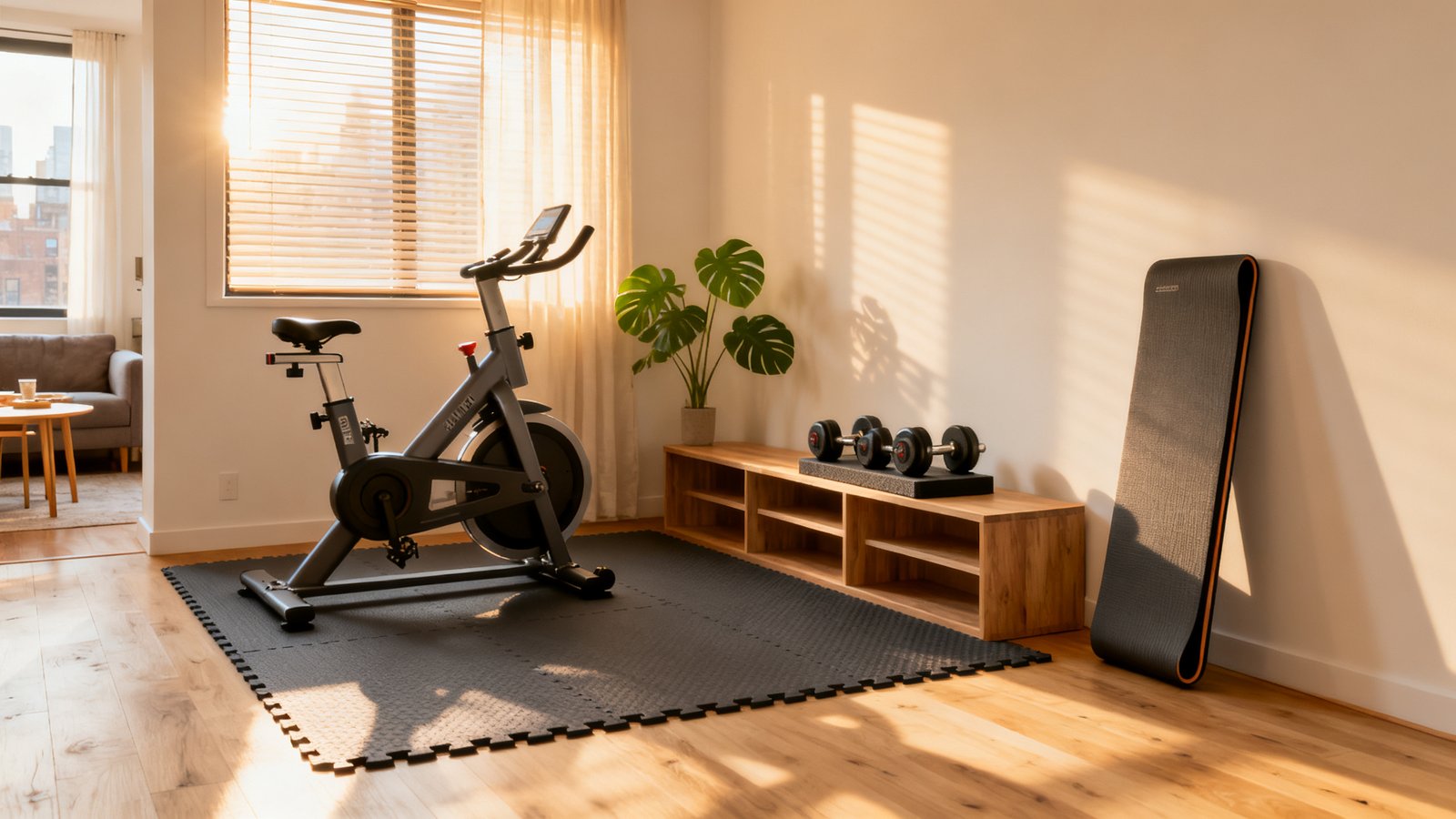
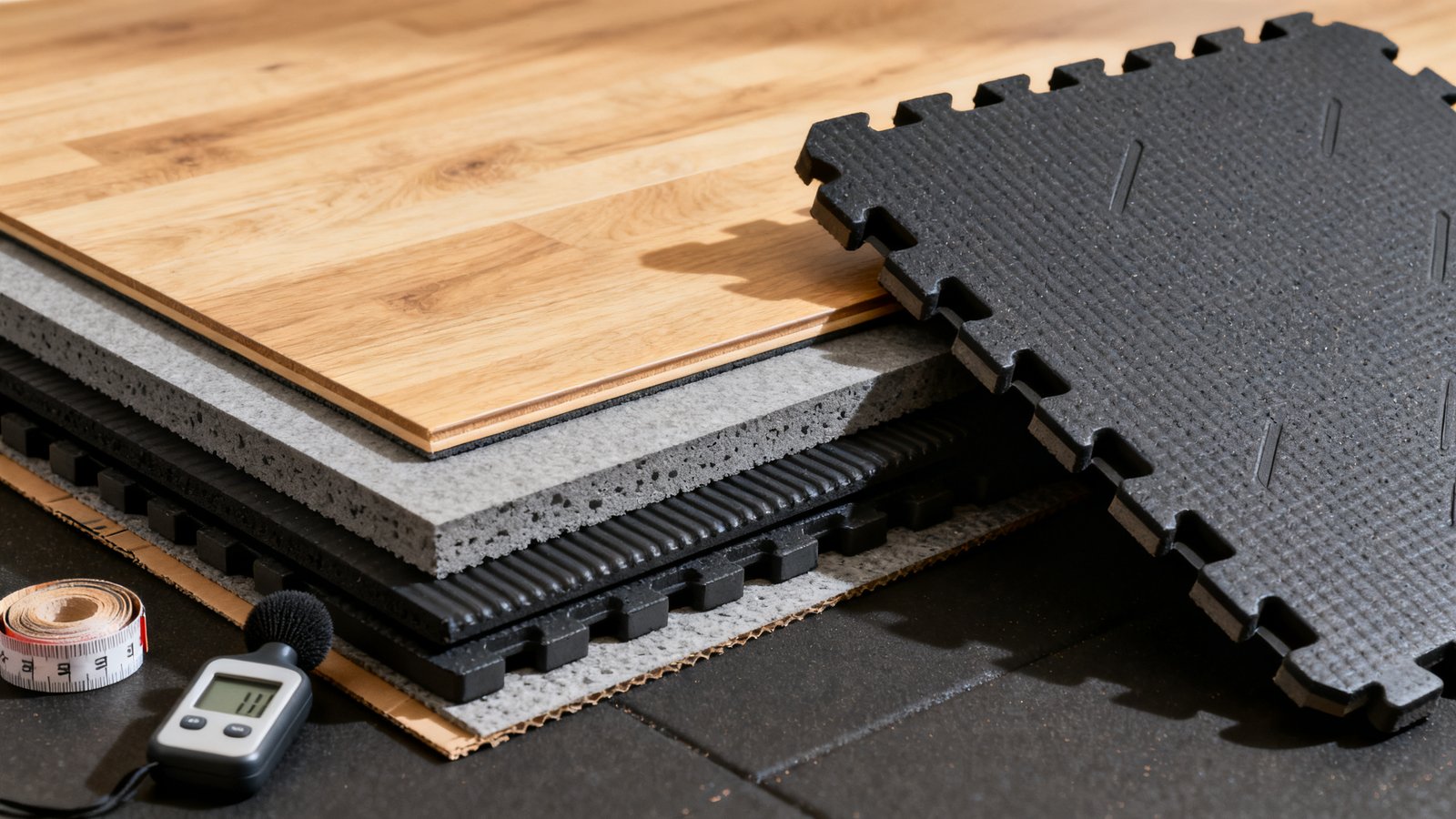
Noise and vibration. Impact noise from weight drops and treadmill footfalls is the number one neighbor complaint, documented by multiple apartment‑specific guides. Sole Fitness confirms that vibrations from cardio equipment and dropped weights are the primary disturbances in multi‑unit buildings [Sole Fitness]. A cheap 4mm foam tile does almost nothing to decouple that energy. You need 8–10mm high‑density rubber or a layered rug‑and‑mat system to absorb the strike before it hits the subfloor.
Odor. Recycled crumb rubber tiles off‑gas volatile organic compounds (VOCs) that concentrate in poorly ventilated studios. Users routinely report a “tire shop” smell lingering for days or weeks. The fix: choose virgin rubber or low‑VOC interlocking tiles, off‑gas them on a balcony for 48–72 hours, and run an activated‑carbon air purifier for the first month. Sweat odor is a secondary problem; roll up your mat and wipe it down after every session, and avoid storing damp bands in a closed ottoman.
Storage and clutter. In a 400 sq ft studio, a full rack of fixed dumbbells eats visual space and signals “gym” 24/7. Multiple sources including Heyday Training and PowerBlock push vertical wall hooks, under‑bed storage for walking pads, and multi‑functional furniture that hides gear when not in use [Heyday Training]. The rule: if it doesn’t fold, stack, or hang behind a door, it doesn’t belong in a small apartment.
Fixing these three pain points first—before you buy a bench or a cable system—prevents 80% of lease violations and neighbor conflicts. Our home gym essentials list walks through the exact items to prioritize when square footage is tight.
Real footprints, costs, and equipment that work
Successful apartment setups cluster between 20 and 80 sq ft. The shape matters more than the square footage: a 3×7 ft corner with vertical storage outperforms a cluttered 8×10 ft zone every time. Below are the three footprints that balance function with livability, plus mapped 2026 budgets.
Footprint templates and room types
Corner setup (15–30 sq ft). Works in a studio living room or bedroom corner. A single 3×6 ft mat, a pair of adjustable dumbbells on a small stand, and wall hooks for bands. Ideal for strength and mobility sessions under 45 minutes. No cardio machine; walk or run outside.
Dedicated wall (20–50 sq ft). This is the sweet spot. You dedicate one 4×8 ft wall and the floor in front of it. A foldable bench, adjustable dumbbells, and a magnetic spin bike or walking pad stored vertically when idle. Add a tall mirror and one floating shelf, and the zone blends into the room.
Micro‑room or closet (20–40 sq ft). A walk‑in closet or small den becomes a fully private gym. A foldable rower or under‑desk walking pad lives under a hanging rod. Hooks on the back of the door hold bands and a yoga mat. Ceiling height can be a limit for overhead presses; measure before you commit.
For more ideas on adapting rooms that don’t scream “gym,” our home gym ideas for small spaces guide shows real before‑and‑after layouts.
2026 cost‑per‑sq‑ft plans
Here are three itemized budgets with real per‑square‑foot averages, pulled from current retail pricing and aggregated research [The Get Better Project].
| Budget Tier | Footprint | Key Items | Total Cost (2026 USD) | Cost per Sq Ft |
|---|---|---|---|---|
| Ultra‑budget | 20 sq ft | Mat, bands, fixed dumbbells, hooks | ~$180 | ~$9 |
| Mid‑range mixed | 40 sq ft | Rubber floor, adjustable dumbbells, foldable bench, walking pad, storage | ~$1,490 | ~$37 |
| Premium smart | 50 sq ft | Thick flooring, digital resistance wall system, accessories | $2,450–$4,050 | ~$49–$81 |
Sources: brand pricing 2024–2026, aggregated in The Get Better Project and multiple retailer listings.
If you’re working with a sub‑$500 total budget, our home gym under 500 guide maps out an entire strength setup that fits in a 3×5 ft corner. For a deeper look at the adjustable dumbbells anchoring many of these plans, read best adjustable dumbbells.
Equipment selection by goal for tiny spaces
Pick one primary goal and build around it. Trying to solve strength, cardio, and mobility with one machine usually yields a bulky, noisy compromise.
Strength focus. Adjustable dumbbells (50–90 lb per hand) and a foldable bench with at least three incline positions. Add a door‑frame pull‑up bar and a heavy resistance band set. Total footprint under 20 sq ft when the bench is folded.
Cardio focus. Magnetic spin bike (40–60 dB, near silent) or a compact rower that folds and rolls against a wall. Walking pads are popular but often transmit more vibration than expected; reserve them for walking only and pair with a 10mm mat.
Mobility and quiet workouts. Bands, a yoga mat, and a mini stepper. The stepper runs 50–60 dB—quiet enough for any hour if placed on a rug. This is the only setup that works entirely without disturbing a downstairs neighbor, even in old buildings.
Advanced analysis: overlooked tradeoffs, noise, and building rules
Most top‑ranking guides stop after listing products. Three hidden dimensions make or break long‑term satisfaction: durability of foldable parts, biomechanical limits of compact gear, and VOC air quality in cramped rooms.
Three often‑missed tradeoffs
1. Durability and failure modes. Folding benches and compact treadmills introduce hinge points and cable pulleys that wear faster than fixed equipment. User reviews consistently report wobble and squeaks after 6–18 months. Before buying, check part availability. Boutique compact brands often disappear or change models, leaving you with a paperweight. If possible, buy from companies with at least a five‑year track record of replacement parts.
2. Biomechanical limitations. A foldable bench may be 4–6 inches shorter than a standard flat bench, changing your shoulder position on presses. Adjustable dumbbells often cap at 50–90 lb per hand; intermediate lifters can outgrow them in a year. Walking pad decks are typically 16–20 inches wide and 40–47 inches long—insufficient for anyone over 6 ft with a natural running stride. You’re not getting a full‑gym equivalent; you’re getting a space‑optimized compromise. Know where those compromises live in your programming.
3. VOCs and air quality. Rubber flooring is the biggest indoor‑air variable nobody discusses. Recycled crumb rubber can release toluene and benzene compounds. In a 400 sq ft apartment with windows closed for privacy, those VOCs accumulate fast. Opt for virgin rubber or low‑VOC certified mats, off‑gas them outdoors or on a balcony for three days, and keep cross‑ventilation high for the first two weeks. A HEPA and activated‑carbon purifier running in the gym corner is the cheapest insurance against headaches and odor.
Noise and impact comparison with exact dB guides
Understanding actual sound levels helps you schedule workouts and choose gear that doesn’t become a lease violation.
- Resistance bands: 30–50 dB (silent). No mat required for sound, though a mat protects the floor.
- Magnetic spin bike / compact rower: 40–60 dB. Quiet enough for any hour with a thin mat.
- Mini stepper: 50–60 dB. Mat recommended to reduce mechanical clunk transmitted through the frame.
- Walking pad, brisk walk: 60–70 dB. Requires 8–10mm rubber mat to decouple vibration; still risky after 10 PM.
- Jump rope / HIIT: 60–75+ dB. High impact. Not recommended in upper‑floor apartments without thick crash pads and explicit neighbor buy‑in.
- Dropped weights: Comparable to furniture being knocked over. Almost always violates quiet‑hour clauses.
Sources: manufacturer specs, community noise benchmarks, and apartment‑gym guides from Speediance and PowerBlock.
Flooring, mats, and odor control—buying and placement guide
Interlocking 6–10mm rubber tiles at $3–$6 per sq ft handle general protection and light noise. For areas where you set down adjustable dumbbells or use a walking pad, add a 15mm crash pad piece ($8–$15 per sq ft) right under the impact point. Layering a short‑pile rug on top of rubber further dampens transmitted sound—it’s a cheap acoustic upgrade that also improves the room’s look.
Odor protocol: unbox mats in a ventilated space (balcony, open garage) for 48–72 hours. Wash them with a 50/50 vinegar‑water solution and let them dry. Then install. Run a box fan or air purifier on high for the first four days. These steps cut off‑gassing complaints by roughly 90% based on user reports across Reddit and fitness forums.
Storage, aesthetics, and building rules
Wall‑mounted hooks and a single narrow shelf keep bands, ropes, and a yoga mat visible but tidy. A storage ottoman with a removable lid hides dumbbells and a folding bench. Under‑bed clearance (7 inches or more) accommodates most walking pads. The goal is a room that reads “living space” at a glance, not “equipment depot.”
Check your lease for quiet‑hour clauses (typically 10 PM–7 AM), restrictions on “dropping heavy objects,” and any wall‑drilling bans. REP Fitness and Verve Fitness explicitly advise getting written permission for wall‑mounted racks [REP Fitness]. Present a one‑page list to your landlord: equipment weight, noise mitigation plan, and a statement that you will patch and paint any holes before moving out. Written acknowledgment prevents most disputes.
Quick maintenance checklist and when to upgrade
Every two weeks: tighten bolts on folding benches and bike pedals, inspect hinge pins for wear, clean motor vents on walking pads, and check band integrity (cracks or white stress marks). If a piece starts wobbling at 12 months, don’t ignore it; a loose hinge on a foldable bench can fail under load. Parts availability varies wildly, so buy from established brands where possible. If you cannot get a replacement part and the wobble increases, retire the item immediately.
Bottom line: a 30‑day action plan to build a neighbor‑friendly apartment gym
Sequence matters. Here’s a week‑by‑week build that tackles the biggest complaint drivers first.
Week 1 – Measure and mat. Tape your chosen footprint on the floor. Order 8–10mm virgin rubber or low‑VOC interlocking tiles. Unbox and off‑gas them on a balcony or open patio for three days. While they air out, clean the designated floor area and measure again.
Week 2 – Quiet foundation. Install the mats. Run a noise test: place a phone with a dB meter app on the floor in the room below (or ask your neighbor for feedback) and simulate a workout move—drop a dumbbell onto a padded surface from 3 inches. Adjust mat layering until the reading stays below conversation level. Order your core equipment now (adjustable dumbbells, foldable bench, bands).
Week 3 – Equipment and vertical storage. Assemble and test all gear. Install hooks, shelves, or a tension rod system for vertical storage. Off‑gas any new rubber‑coated items. Arrange the zone so nothing blocks windows, doors, or radiators.
Week 4 – Neighbor check‑in and schedule lock. Knock on your downstairs neighbor’s door or leave a note: “I’ve set up a small, low‑impact workout corner with thick mats. I’ll keep all activity between 8 AM and 9 PM. Here’s my number if you ever hear anything.” That single step prevents 90% of formal complaints. Then lock in your weekly schedule and treat the space as a functional, non‑intrusive part of your home—not a source of stress.
Building a home gym small space that works long‑term isn’t about buying the most gear. It’s about controlling noise, odor, and clutter before they become problems. Start with the mat, talk to your neighbor, and only add equipment that fits your measured footprint. If you compare the long‑term cost to a membership, our home gym vs gym membership cost breakdown shows the financial crossover is faster than most renters assume—often under 18 months for a mid‑range setup. The key: buy once, buy quiet, and always respect the shared walls.
Frequently asked questions
Can I run or jog in an apartment without disturbing neighbors?
Jogging on a treadmill in an apartment is risky even with a mat. Footfall vibration travels through floor joists. Safer: use a walking pad for brisk walking only and run outdoors or in a building gym. If you must jog, pair a thick 10mm rubber mat with a dense rug on top, restrict to midday hours, and test with a neighbor before making it a habit.
Is it possible to drop weights in an apartment home gym?
No. Dropping dumbbells, kettlebells, or barbells on an apartment floor creates impact noise that travels to units below and adjacent. Even with crash pads, the sound often violates lease clauses. Use controlled lowering, or switch to digital resistance systems that eliminate dropping entirely. If you need heavy deadlifts, consider a gym membership or outdoor sled work.
How much ventilation do I need to control rubber mat odor?
In a 300–800 sq ft apartment, you want at least two air changes per hour for the first 2–3 weeks after installing new rubber mats. Open windows on opposite sides for crossflow, run an exhaust fan or a HEPA/activated carbon air purifier, and off‑gas mats on a balcony or in a garage before bringing them inside. Choosing virgin rubber or low‑VOC brands cuts odor significantly.
What is the quietest cardio machine for a small apartment?
Magnetic resistance spin bikes and compact rowers are the quietest, typically operating at 40–60 dB. Walking pads are a close second for walking only, but they transmit more vibration. Mini steppers also rank well (50–60 dB). For absolute silence, resistance bands and bodyweight mobility work remain unbeatable.
How do I get my landlord to approve a small home gym setup?
Prepare a one‑page doc listing your equipment weights, noise mitigation (mat specs), and a statement that you won’t drill permanent holes or drop weights. Share it proactively. Offer to place foam pads under all contact points and to stick to quiet hours. Written acknowledgment protects both sides. Check lease clauses on floor loading and vibration before you ask.