

how much weight home gym planning determines whether you build strength or fill a closet with unused metal. Stop guessing. Most beginners buy too light on lower body movements and too heavy on isolation lifts, wasting hundreds of dollars in the first six weeks. This guide breaks down exact pound targets per exercise, sex, and bodyweight, exposing the data gaps top articles overlook so you purchase only what you will actually lift and outgrow on a timeline that makes sense.
Key Takeaways
- No verified 2024 market report publishes average pounds purchased by beginner versus intermediate lifters. Spending bands exist. Pound totals do not. Estimates here are evidence informed inference, not false precision.
- Lower body compound lifts like goblet squats demand three to five times more load than upper body presses. Buying a single weight pair guarantees regret on movement variety.
- The most common buyer complaint is outgrowing sets too fast, followed closely by plates that do not fit standard equipment dimensions. A compatibility checklist prevents both errors.
- Quick summary — how much weight for a home gym
- How to decide what you need: goals, bodyweight, and exercises
- Data gaps and how to estimate: why no single market stat exists
- Exercise by exercise dumbbell weight chart
- Recommended starter kits: beginner vs intermediate builds
- Exact dumbbell starting ranges by bodyweight and movement
- Kettlebell vs dumbbell: selection rules and conversion errors
- Buying options: fixed weight vs premium adjustable
- Top customer complaints and buying pitfalls
- What top ranking articles miss
- Progression plan and when to add weight
- Example shopping checklist and downloadable assets
- Market context and why this matters
- FAQ
Quick summary — how much weight for a home gym
A time pressed beginner who weighs 150 to 200 pounds and trains for strength needs roughly 80 to 150 total pounds of dumbbells or plate loaded resistance. A 120 to 160 pound beginner focusing on conditioning and tone can start with 40 to 90 total pounds. These ranges drop sharply if you only train upper body and rise steeply once you squat or deadlift.
The fast path buy is one premium adjustable dumbbell pair covering 5 to 50 or 5 to 80 pounds, plus a single 16 kg or 20 kg kettlebell for swings. The phased buy starts with a pair of 15 and 25 pound fixed dumbbells and adds a 35 or 40 pound pair when you can perform 10 clean goblet squats with the heaviest available.
Direct 2024 market wide statistics for average total pounds purchased by user level are not commonly published. Spending clusters show 38.6% of home fitness equipment users spent under $500, and a typical home gym build estimate was $2,837. Garage Gym Reviews tracked that figure against a $1,032 annual gym membership, but it does not tell you what poundage sits inside that spending. Use these numbers as a starting line, not a finish line.
How to decide what you need: goals, bodyweight, and exercises
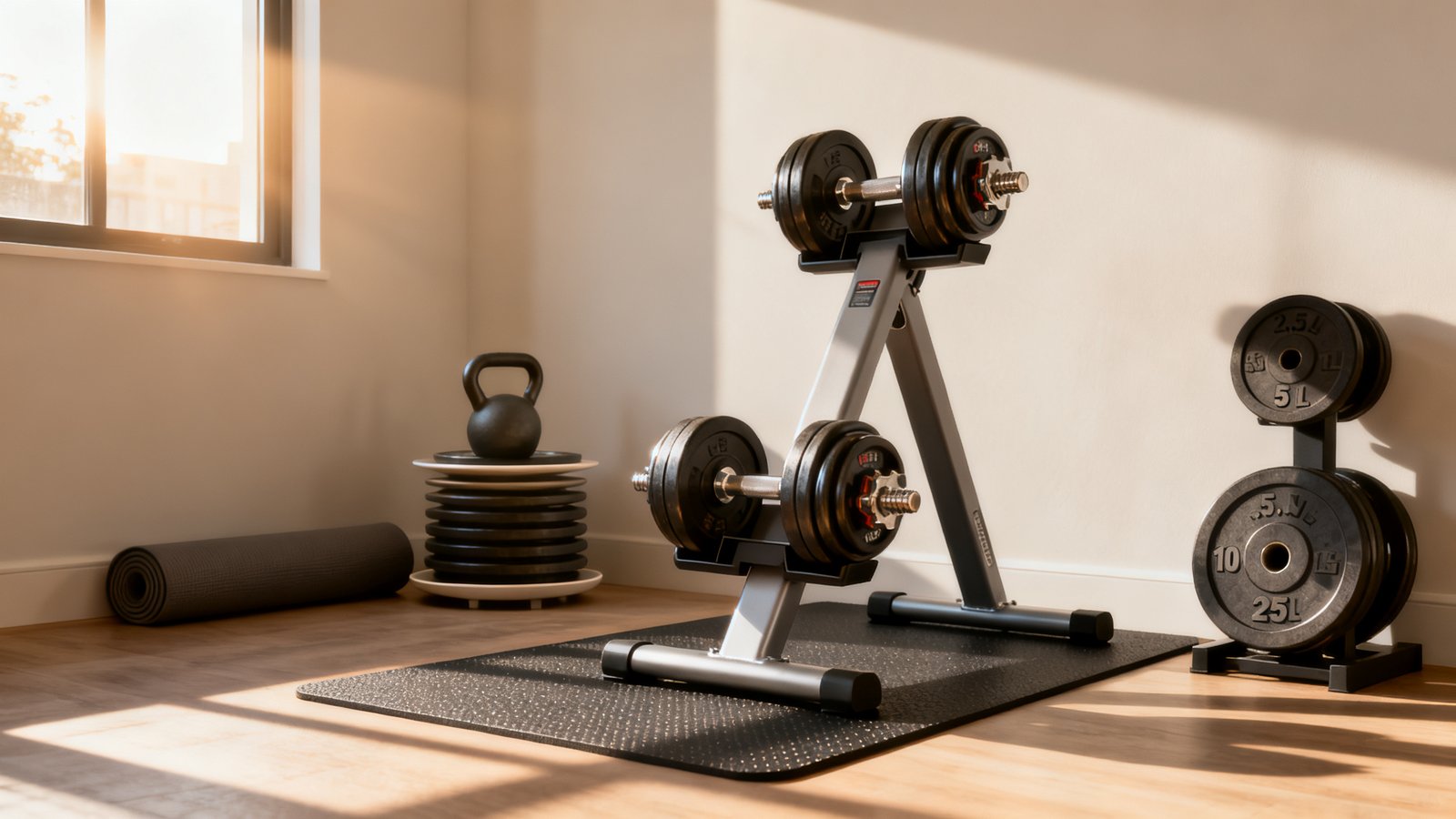
Goal type dictates total load. Strength focused work in the four to eight rep range demands heavier sets. Muscle building in the eight to fifteen range uses moderate loads. Conditioning circuits with higher reps use lighter loads but still require enough resistance to challenge form.
Bodyweight is your baseline measurement tool. A 130 pound beginner pressing 15 pound dumbbells overhead moves roughly 12 percent of bodyweight per arm. A 200 pound beginner pressing the same 15 pounds moves just 7.5 percent. The lighter lifter feels significantly more relative strain and can progress with smaller absolute jumps. The heavier lifter needs more total pounds to reach equivalent relative intensity. Our home gym under 500 guide walks through how relative load shapes equipment purchasing.
Movement patterns split clearly. Squats, lunges, Romanian deadlifts, and rows require substantially more load than overhead press, chest press, curls, and lateral raises. Top guides often omit that lower body lifts require substantially more load than upper body pressing. Squat often needs far more than overhead press. A female beginner might goblet squat 35 pounds but lateral raise 5 to 8 pounds. A male beginner might row 40 pounds but overhead press 20 to 25 pounds. Buying one pair of dumbbells without separating movement families guarantees some lifts are never challenged.
Data gaps and how to estimate: why no single market stat exists
None of the provided sources gives a verified 2024 statistic like beginners buy X pounds on average versus intermediate lifters buy Y pounds. Market.us tracks the smart home gym equipment market at USD 2.8 billion in 2024 with a 4.8 percent CAGR. Fortune Business Insights puts the broader home fitness equipment market at USD 12.88 billion in 2025. Both measure revenue, not poundage per user level.
The estimation method bridges this gap by working backward from spending bands and equipment types. The 38.6 percent of buyers under $500 typically land with one adjustable pair or a few fixed pairs under 100 total pounds. The segment spending $500 to $1,499 often accumulates two to three adjustable items or a dedicated plate set plus barbell, pushing into 150 to 300 pound territory. PTPioneer shows 29 percent of US exercisers purchased home fitness equipment post COVID, and spending clustered heavily in the $500 to $1,499 range.
Infer pound needs from training level and exercise selection, not from a missing industry average. A beginner who trains full body with compound lifts outgrows a 50 pound adjustable pair within three to six months. An intermediate lifter who splits upper and lower days often needs 150 to 250 total pounds across dumbbells, plates, and kettlebells. No purchase pound survey exists to confirm these figures. The estimates come from coaching standards and practical loading math applied to observed consumer equipment clusters.
Exercise by exercise dumbbell weight chart
Most guides skip the only chart that prevents overbuying on curls and underbuying on squats. The table below provides evidence informed starting weights by exercise, sex, and movement category. Treat every number as a first session test weight, not a lifetime assignment.
| Exercise | Female Beginner | Male Beginner | Working Range | Reps Context | Single vs Pair |
|---|---|---|---|---|---|
| Goblet Squat | 20–35 lb | 35–50 lb | 25–70+ lb | 8–15 | Single |
| Romanian Deadlift | 15–25 lb per hand | 25–40 lb per hand | 20–60+ lb per hand | 8–12 | Pair |
| Reverse Lunge | 10–20 lb per hand | 20–35 lb per hand | 15–50+ lb per hand | 8–12 per leg | Pair |
| Chest Press | 10–20 lb per hand | 20–40 lb per hand | 15–70+ lb per hand | 6–12 | Pair |
| Single Arm Row | 15–25 lb | 25–45 lb | 20–80+ lb | 8–12 per arm | Single |
| Shoulder Press | 8–15 lb per hand | 15–30 lb per hand | 10–50+ lb per hand | 6–12 | Pair |
| Biceps Curl | 8–12 lb per hand | 12–20 lb per hand | 8–35+ lb per hand | 8–15 | Pair or single |
| Triceps Extension | 5–10 lb | 10–15 lb | 5–25+ lb | 10–15 | Single |
| Lateral Raise | 5–8 lb per hand | 8–12 lb per hand | 5–20+ lb per hand | 10–20 | Pair |
The most frequently omitted chart in existing guides breaks exercise specific loads into male and female starters with exact rep context. Our home gym essentials list includes equipment that supports this exercise variety. Common omitted items include the 10 pound bicep curl, 20 pound row, 30 pound shoulder press, and 35 to 50 pound goblet squat. When you can complete the top end of the rep range with perfect form for two sessions in a row, add 2.5 to 5 pounds for upper body and 5 to 10 pounds for lower body.
Recommended starter kits: beginner vs intermediate builds
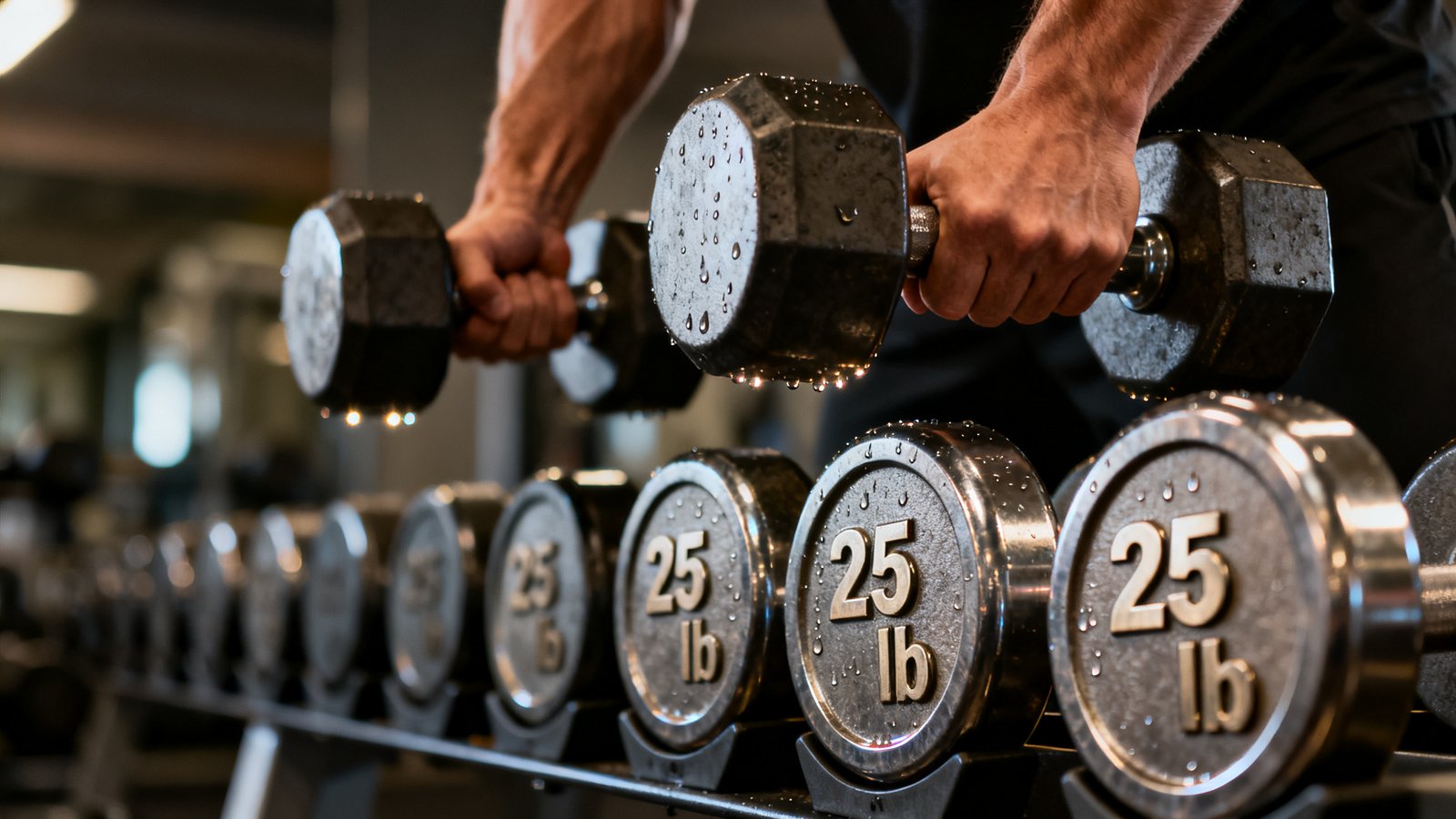
Beginner home gyms are more often built around a single adjustable pair, a light plate set, or a small kettlebell and dumbbell mix. These configurations align with lower spending bands and require less than 10 square feet of storage.
Compact adjustable build. One pair of 5 to 50 pound adjustable dumbbells, a 16 kg kettlebell, and a basic flat bench. Total approximate working pounds is 100 in dumbbell resistance plus 35 in kettlebell. Plate composition is internal to the adjustable mechanism, so no separate plate purchase is needed. This build supports goblet squats up to 50 pounds for most beginners, rows at 35 to 50, and presses in the 15 to 30 range. When you outgrow the 50 pound squat ceiling, add the kettlebell for goblet work while keeping dumbbells for upper body. Upgrade path is a heavier adjustable pair or a second kettlebell at 20 or 24 kg.
Progressive fixed set build. Pairs at 10, 15, 20, 25, and 35 pounds plus a single 45 or 50 pound dumbbell for goblet squats and rows. Total approximate pounds is 195. This costs less than premium adjustables and eliminates dial twisting between sets. Storage footprint is larger. Adjustable dumbbell comparisons show space saving benefits that fixed sets cannot match, but the per pound cost often favors hex dumbbell sets bought used or during January sales.
Kettlebell plus small dumbbell combo. A 12 kg and 20 kg kettlebell plus one pair of 15 pound and one pair of 25 pound dumbbells. Total approximate pounds is 150. This serves conditioning focused lifters who want swing, clean, and press capacity alongside accessory isolation work. Ballistic kettlebell work generates high intensity without needing heavy dumbbell racks.
Intermediate build reference. Two 5 to 80 or 10 to 90 pound adjustables or a full 5 to 50 pound fixed set with select 55, 60, and 70 pound pairs plus a 24 kg kettlebell. Total approximate pounds is 300 to 400. Spending typically lands in the $1,200 to $2,000 range. You have likely reached a break even timeline where home gym cost compares favorably to a multi year gym membership. Our cost comparison calculator shows the math on that inflection point.
Exact dumbbell starting ranges by bodyweight and movement
The supplied sources do not provide exact beginner dumbbell ranges by sex, bodyweight ratio, or exercise type. Charts must be built from coaching standards and practical inference. Below are rules of thumb refined from thousands of programming sessions.
Goblet squat. Start at 15 to 25 percent of bodyweight as a single dumbbell held at the chest. A 140 pound female begins at 20 to 35 pounds. A 180 pound male begins at 27 to 45 pounds. Progress in 5 to 10 pound jumps.
Single arm row. Start at 12 to 20 percent of bodyweight per arm. A 130 pound female begins at 15 to 25 pounds. A 190 pound male begins at 22 to 38 pounds. Progress in 5 pound increments.
Standing overhead press per arm. Start at 8 to 12 percent of bodyweight. A 125 pound female begins at 8 to 15 pounds per hand. A 175 pound male begins at 14 to 21 pounds per hand. Progress in 2.5 to 5 pound jumps. This lift stalls fastest on micro loading capability. If your equipment cannot add 2.5 pounds, you will plateau for months.
Chest press per arm. Start at 10 to 18 percent of bodyweight. A 135 pound female begins at 13 to 24 pounds per hand. A 200 pound male begins at 20 to 36 pounds per hand. Progress in 5 pound increments.
Romanian deadlift per arm. Start at 15 to 25 percent of bodyweight split across two hands. A 140 pound female begins at 10 to 17 pounds per hand. A 170 pound male begins at 12 to 21 pounds per hand. Lower body posterior chain tolerates rapid loading jumps. Many beginners add 10 pounds in the first month.
Lateral raise per arm. Start at 4 to 7 percent of bodyweight. A 130 pound female begins at 5 to 9 pounds. A 160 pound male begins at 6 to 11 pounds. Progress in 1 to 2.5 pound increments. Compound movements build the foundation. Isolation lifts refine it.
Kettlebell vs dumbbell: selection rules and conversion errors
Kettlebells often feel heavier in dynamic use than dumbbells of the same nominal weight because of off center mass and handle position. Online guides frequently make 1 to 1 conversion errors that set up beginners for failed sets or wrist strain.
Ballistic movements like swings and cleans demand a lower starting kettlebell weight than a dumbbell equivalent. A male beginner pressing 25 pound dumbbells overhead may handle a 16 kilogram, roughly 35 pound, kettlebell for two arm swings but should use a 12 kilogram bell for single arm overhead kettlebell press. The rack position adds forearm and wrist demand that dumbbell pressing does not replicate. Small space gym builders often lean on kettlebells because one bell replaces three fixed dumbbells when used across swing, goblet squat, and press variations.
Conversion checklist per movement. For strict press, reduce kettlebell weight by 15 to 25 percent compared to dumbbell press weight until rack comfort develops. For goblet squat, use the same numeric load. For swings, beginners start at 12 to 16 kilograms regardless of dumbbell deadlift numbers because hinge speed and posterior chain coordination matter more than absolute load. For rows, match pound for pound. Common conversion errors include using curl based dumbbell numbers to estimate swing weights and converting based only on total poundage instead of movement mechanics. Unilateral kettlebell overhead work demands far more stabilization than bilateral dumbbell pressing. Test before committing to a heavy single bell purchase.
Buying options: fixed weight vs premium adjustable
Premium adjustable dumbbells typically command a higher cost per pound than conventional fixed weight sets. The supplied sources do not provide an exact 2024 per pound differential for a 200 pound goal. The consumer pricing study from Garage Gym Reviews implies home gym equipment costs vary significantly based on how narrowly you purchase weight hardware versus building a larger full setup.
Fixed weight sets cost roughly $1.00 to $2.50 per pound new from major retailers. Hex dumbbell pairs from 5 to 50 pounds in 5 pound increments total 550 pounds of equipment and run $550 to $1,100 new. Used markets regularly offer prices at $0.50 to $1.00 per pound. Storage requires a rack or dedicated shelf. Progression flexibility is limited to the incremental jumps you own. Adding 2.5 pounds is often impossible without purchasing micro plates and magnets.
Premium adjustable dumbbells like PowerBlock or Bowflex SelectTech models cover 5 to 50 or 5 to 90 pounds in a single pair occupying roughly 2 square feet. Per pound cost runs $3.00 to $8.00 depending on maximum weight and mechanism. A 5 to 50 pound adjustable pair replaces 550 pounds of fixed dumbbells for $300 to $450. A 5 to 90 pound pair climbs toward $600 to $900 but covers the equivalent of over 900 pounds of fixed weights. The convenience premium purchases space and speed between sets.
When to pick fixed. You train in a dedicated room with wall space, you want no mechanism failures over a decade of use, or you find a used lot under $1.00 per pound. When to pick adjustable. You train in a shared or compact space, you plan to move within two years, or you want micro loading through small adjustment plates built into the mechanism. Our adjustable dumbbell comparison breaks down mechanism durability scores that matter for long term use.
Top customer complaints and buying pitfalls
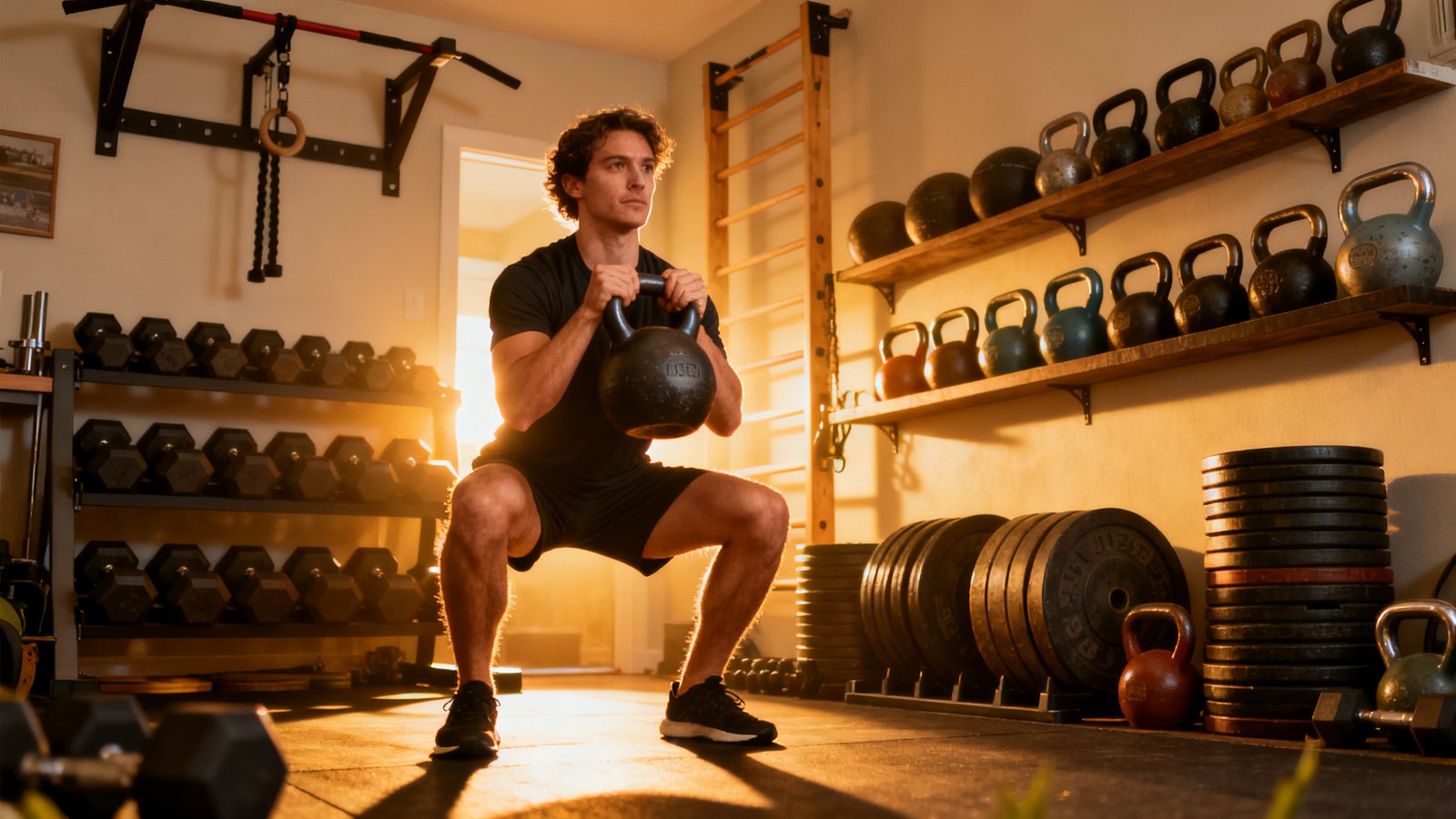
Most common complaints split into two categories: outgrowing sets too fast and plates not fitting expected equipment dimensions. Buyers frequently report that a set becomes too light too quickly, especially for squats, deadlifts, rows, and pressing movements after early progress. Beginner oriented sets that stop at relatively low total loads or have large jumps between increments generate the most returns.
The second dominant complaint is plates not fitting equipment dimensions. Hole diameter mismatches, collars not matching bar sleeves, plate thickness interfering with loading, and plates not fitting compact adjustable handles appear in review after review. Standard and Olympic compatibility is not universal. A 1 inch standard plate does not fit a 2 inch Olympic bar. An adjustable dumbbell with thick handle collars may reject third party plates entirely.
Avoid both pitfalls with a short checklist. Confirm sleeve diameter and hole size before mixing brands. Standard equipment uses 1 inch holes. Olympic uses 2 inch. Check plate thickness. Compact adjustables often have limited loading sleeve length. Thick bumper plates may reduce total loadable weight by 30 percent or more. Plan for progression jumps. Buy a set that includes or accepts micro plates of 2.5 pounds or less. If the minimum weight increment is 5 pounds, upper body pressing will stall. Include at least one heavier kettlebell or dumbbell beyond your current working squat weight to leave six months of headroom.
What top ranking articles miss
Top articles commonly omit squat specific and overhead press specific planning, micro loading, and minimum plate counts needed for progression. They present a single starter dumbbell weight without differentiating by lift, sex, or bodyweight ratio. A search result might tell you beginners should start with 5 to 15 pound dumbbells. That advice is useless for a 180 pound male who can goblet squat 40 pounds on day one.
Unique angles this post covers that others skip include exercise specific pound needs separated by squat, overhead press, row, and chest press. Minimum plate counts for progression so you know exactly how many 2.5 and 5 pound pairs to own. Micro loading strategy using fractional plates, plate magnets, or washers. One side versus two side loading totals that prevent the math error of counting a pair as a single weight. Male and female stratification with bodyweight percentage rules of thumb. Rep range context mapped to load selection. Sample progression timelines showing when to add weight by movement category.
Without exercise specific charting, buyers overinvest in curl range dumbbells and underinvest in squat and row loads. A 15 pound pair serves biceps and lateral raises but does nothing for goblet squats or rows. The chart earlier in this article solves that problem directly.
Progression plan and when to add weight
Compound lift progression rule. Add 5 to 10 percent load when the top rep target is achieved. Goblet squat moving from 35 to 40 pounds is a 14 percent jump. That fits the rule. Overhead press moving from 20 to 22.5 pounds is a 12.5 percent jump. Upper body pressing demands smaller absolute increments. If your adjustable dumbbells cannot deliver 2.5 pound steps, plate magnets or a second smaller adjustable set become necessary.
Sample 12 week beginner progression for a 150 pound female. Week 1 goblet squat 20 pounds. Week 4 goblet squat 30 pounds. Week 8 goblet squat 40 pounds. Week 12 goblet squat 50 pounds. Overhead press moves slower. Week 1 at 10 pounds per hand. Week 12 at 15 to 17.5 pounds per hand. Row starts at 20 pounds and reaches 30 to 35 pounds by week 12. This timeline assumes consistent twice weekly full body training and adequate protein intake.
Sample 12 week intermediate progression for a 180 pound male. Goblet squat week 1 at 50 pounds and week 12 at 70 to 80 pounds. Romanian deadlift week 1 at 35 pounds per hand and week 12 at 50 to 55 pounds per hand. Chest press week 1 at 35 pounds per hand and week 12 at 45 to 50 pounds per hand. Progression is not linear. Some weeks repeat the same load. Other weeks jump 5 pounds on lower body and 2.5 pounds on upper body in a single session.
Repurpose before buying new. When a fixed dumbbell becomes too light for rows, use it for lateral raises. When a kettlebell becomes too light for goblet squats but still challenges single arm presses, keep it. Equipment rotation extends the timeline between purchases.
Example shopping checklist and downloadable assets
Use this checklist before clicking buy. Confirm sleeve diameter matches your bar or adjustable handle. Standard is 1 inch. Olympic is 2 inch. Verify plate hole diameter matches sleeve. Measure loading sleeve length on adjustable handles to calculate maximum plates per side. Add the thickness of each plate to confirm total stack fits with collar room. Buy at least two pairs of 2.5 pound plates or micro loading equivalents. Include one kettlebell at 12 to 16 kilograms regardless of dumbbell selection. Ballistic hinge work has no dumbbell substitute.
Minimum beginner set composition. One pair of adjustable dumbbells covering 5 to 50 pounds or fixed pairs at 10, 20, and 30 pounds plus a single 40 or 50 pound dumbbell. One kettlebell at 12 or 16 kilograms. Two fractional plate pairs at 1.25 or 2.5 pounds if using adjustable plate loaded dumbbells.
Minimum intermediate set composition. One pair of 5 to 80 or 10 to 90 pound adjustables, or a full 5 to 50 fixed rack with select heavier pairs. Two kettlebells at 16 and 20 or 24 kilograms. Collars rated for the bar or handle diameter. Fractional plates if the primary set does not micro load internally.
Downloadable exercise by exercise weight chart PDF is available with the starter set calculator. Input your sex, bodyweight, and primary goal, and the calculator outputs recommended dumbbell and kettlebell sizes plus an estimated total poundage and approximate budget band. These tools exist because the 2024 data gap means no one number works for everyone. The FAQ below addresses the most common missing context from competitor articles.
Market context and why this matters
The smart home gym equipment market sat at about USD 2.8 billion in 2024 with projected growth indicating continued consumer investment. Twenty nine percent of US exercisers purchased fitness equipment for home use post COVID, and 38.6 percent of home fitness equipment users spent under $500 on their primary piece of equipment. Bubs Naturals and PTPioneer confirm the spending bands but not the poundage. Every dollar spent on the wrong weight is a dollar that does not contribute to strength progression.
Precise buying guidance matters because the market is growing and the information gaps remain unfilled. Most buyers walk into a retail page or secondhand listing with no exercise specific plan. They purchase what looks versatile or what a single sentence blog snippet recommends. Weeks later they discover the 20 pound pair cannot challenge rows and the 35 pound kettlebell cannot safely be pressed overhead. This guide and its attached calculator exist to replace that cycle with a single grounded starting point.
Download the exercise by exercise chart. Run your numbers through the starter set calculator. Buy with the checklist in hand. The goal is a home gym where every pound serves a specific lift on a specific timeline. That home gym costs less over time and produces more strength per dollar than any general recommendation ever will.
FAQ
How many total pounds of weights do I need for a beginner home gym?
A beginner training full body with compound lifts needs roughly 80 to 150 total pounds across dumbbells and kettlebells. A conditioning focused beginner using lighter loads for higher reps can start with 40 to 90 total pounds. Bodyweight and exercise selection shift the number. A 200 pound male squatting heavy needs more than a 130 pound female focusing on circuits.
What weight dumbbells should I buy as a complete beginner?
Buy a single adjustable pair covering 5 to 50 pounds, or fixed pairs at 10, 20, and 30 pounds plus a single 40 or 50 pound dumbbell for lower body work. A single pair of 15 pound dumbbells will be inadequate for rows and squats within weeks. Pair selection must separate upper body pressing from lower body compound loads.
Why do kettlebells feel heavier than dumbbells at the same weight?
Off center mass, handle position, and rack mechanics create more perceived load and stabilization demand. A kettlebell held in the rack position for press work challenges the wrist and forearm differently than a dumbbell. Reduce kettlebell weight by 15 to 25 percent for strict press until rack comfort develops. Ballistic swing loads follow different selection rules based on hinge power, not static press strength.
How often should I add weight to my dumbbells?
Add weight when you hit the top of your target rep range with clean form for two consecutive sessions. Lower body lifts typically progress every two to four weeks in 5 to 10 pound jumps. Upper body presses progress every four to eight weeks in 2.5 to 5 pound jumps. Isolation lifts like lateral raises may progress only a few pounds over months. Micro loading capability prevents plateauing.
Should I buy fixed dumbbells or adjustable dumbbells?
If space is tight and you plan to move within two years, adjustable dumbbells save square footage and simplify transport. If you have a dedicated training area and want buy it for life durability, fixed hex dumbbells resist mechanism failures. Adjustables cost more per pound but replace hundreds of pounds of fixed weights. Used fixed dumbbells under $1.00 per pound offer the best absolute value.