

Key Takeaways
- Consumer Reports identifies loss of elasticity, thinning, cracks, and micro tears as the primary band failure indicators you must inspect for before every session.
- Most product roundups skip the programming details that actually drive strength gains. We give you the full beginner to intermediate blueprint with frequency, rep ranges, RPE targets, and progression markers.
- We openly flag what independent test data is missing from available sources so you know exactly what to demand from manufacturers before spending your money.
Table of Contents
- Quick summary: what this guide delivers and what it does not
- Programming for strength with bands: what most product lists skip
- Advanced analysis and common pitfalls when buying resistance bands
- Practical buying checklist and next steps for deeper reporting
- Conclusion
- Frequently asked questions
Quick summary: what this guide delivers and what it does not
Finding the best resistance bands for your home setup is harder than it should be. Most buying guides on the web are essentially product lists with affiliate links stitched together. They rarely tell you how to program your training for actual strength gains, what to inspect before every session, or which safety claims remain unverified by independent labs.
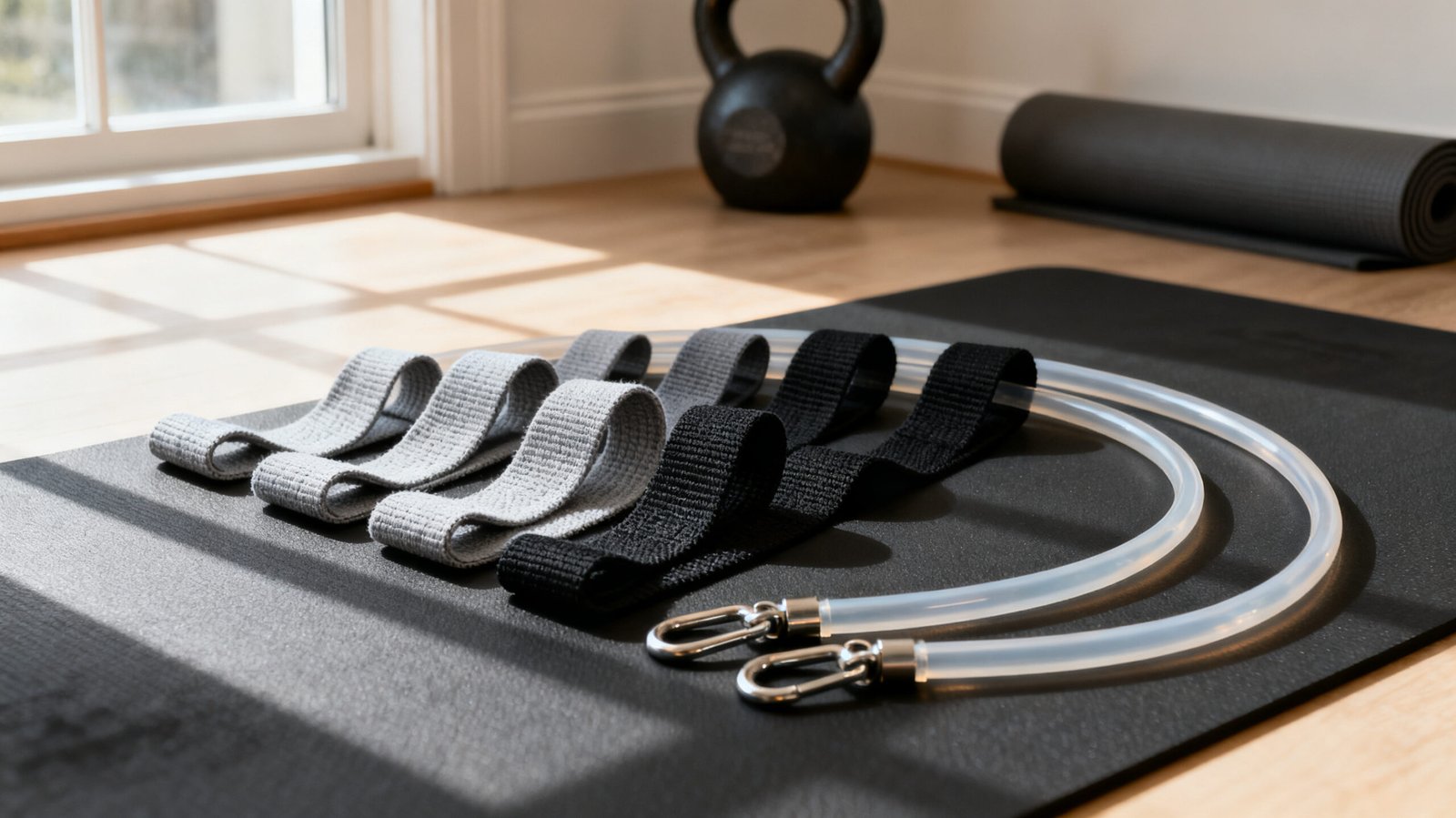
This guide takes a different approach. We synthesized the most trusted consumer guidance available from Consumer Reports, Men’s Health, and Garage Gym Reviews and combined it with practical coaching logic. But we also did something most publishers will not do: we explicitly identified the data gaps we could not verify from the supplied sources.
What you will get: verified failure mode indicators, evidence backed programming parameters, and a clear framework for evaluating resistance bands for strength training before you buy. What you will not get: made up tensile strength numbers, fake lab results, or unverifiable brand rankings. If a number appears here, it comes from a named source. If a number is missing, we tell you why and what to ask the manufacturer for.
For context, when we attempted to source Amazon 2024 review frequency data, exact price per resistance calculations, measured tensile and cycle test results, and brand by brand compliance statements, these data points were simply not present in the results we could access. Rather than fabricate them, we built this guide around what is verifiable and gave you a roadmap for filling the gaps yourself.
Programming for strength with bands: what most product lists skip
This section is the primary reason we wrote this guide. Most resistance band roundups tell you which product to buy and stop there. They completely skip how to actually train with bands for progressive strength development. If you are building a home gym essentials list on a budget, programming knowledge matters more than the specific band you choose.
Consumer Reports provides practical training guidance that addresses this gap directly. Here is the framework, sourced from their recommendations:
- Train two to three nonconsecutive days per week to allow adequate recovery between sessions.
- Select a band that allows roughly 50% elongation at the start of each movement. This ensures you have resistance through the full range of motion rather than only at the endpoint.
- Begin with an RPE of 4 to 6 out of 10. You should feel like you could do several more reps at the end of each set.
- Progress toward RPE 8 to 10 over multiple weeks as your strength and technique improve.
- Start in the 6 to 10 rep range. Once you can control that range comfortably, move to a heavier band while targeting 8 to 12 reps.
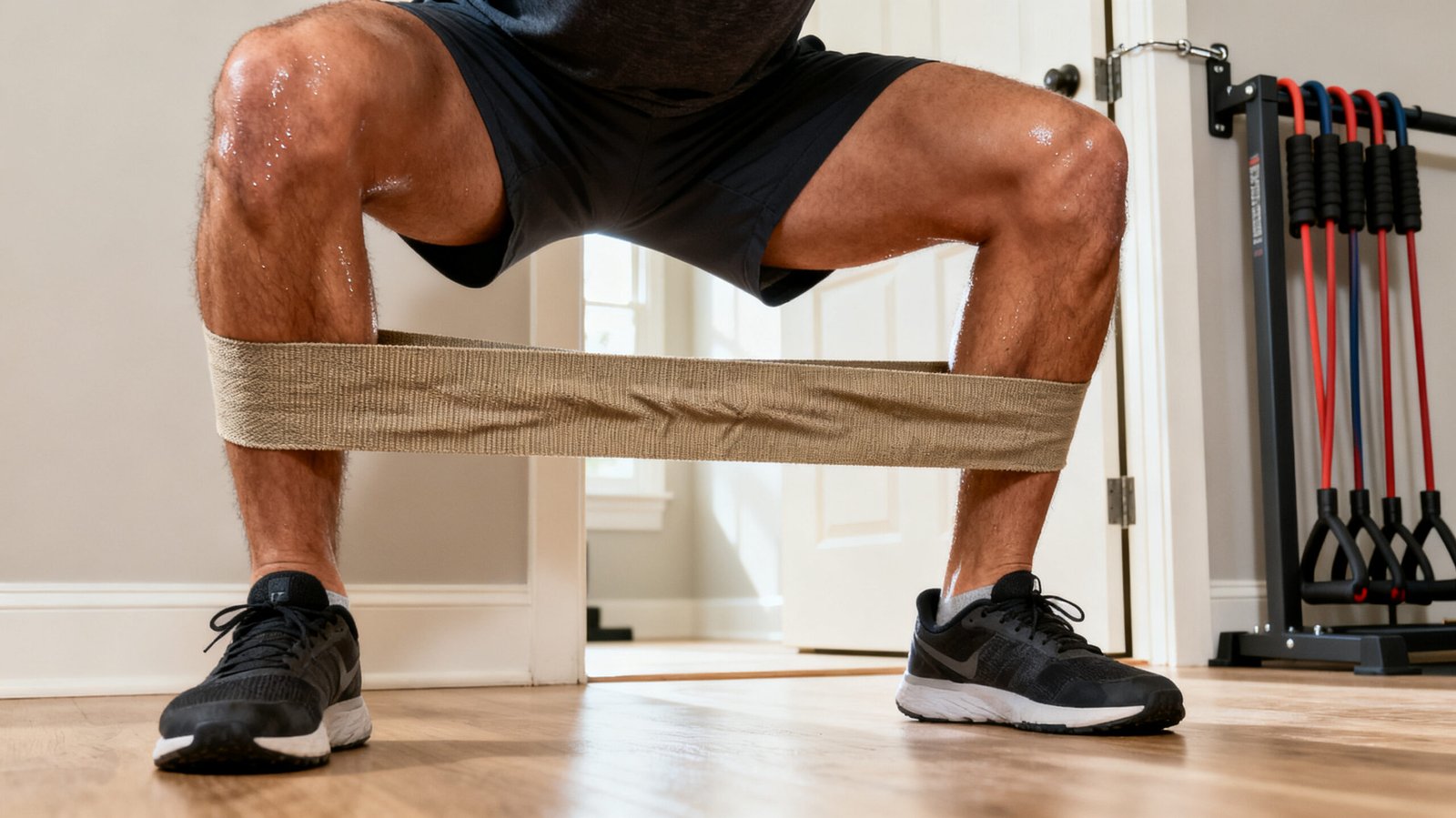
For balanced programming, Consumer Reports emphasizes including both front and back work. If you do chest presses, you must also do rows. This is not optional advice. Neglecting the posterior chain creates muscular imbalances that increase injury risk over time. A sample two day split might pair squats with chest presses on day one and rows with pull up assist work on day two.
Progression markers matter more than the specific band you use. Track your reps at a given RPE each week. When you can hit the top of your rep range at RPE 7 or below for two consecutive sessions, move to a heavier band. This methodical approach is what separates best resistance bands for home workout effectiveness from random band workouts that produce no measurable results. If you have already invested in best adjustable dumbbells, bands complement them perfectly for exercises where dumbbells become awkward, like lateral raises or pull aparts.
Advanced analysis and common pitfalls when buying resistance bands
Top failure modes to watch for
Consumer Reports flags four primary indicators that a band is about to fail: loss of elasticity, thinning, cracks, and micro tears. These are not cosmetic issues. A band that snaps under tension can cause serious injury, particularly during overhead or face level exercises. Before every session, hold the band up to a light source and stretch a section gently while inspecting the surface. Any visible irregularities mean the band should be retired immediately.
For heavy duty resistance bands and pull up assist bands, the stakes are even higher because the loads involved are substantial. A failing pull up assist band can drop you unexpectedly. Check the area near any knots or anchor points especially carefully. That is where degradation concentrates.
Foundational movements your bands must support
Consumer Reports explicitly highlights squats, rows, and chest presses as the core movements any band setup should accommodate. If your band selection cannot handle these three patterns with appropriate resistance, you have the wrong setup. For lower body work, you need bands that provide enough resistance at full elongation for squats. For horizontal pulling and pushing, you need bands that pair well with an anchor point at chest height.
Loop bands for working out are particularly useful for lower body exercises because they stay in place around the thighs or ankles during lateral walks and squat patterns. For vertical pulling like assisted pull ups, you need longer bands rated for significant load. The band must stretch enough to reduce your bodyweight meaningfully while remaining within its safe elongation range.
Accessories, set completeness, and budget tradeoffs
Many under $50 sets omit critical accessories that determine whether you can actually perform the exercises listed on the packaging. The essentials include a door anchor, ankle straps, carabiners, and handles. Without a door anchor, horizontal pressing and rowing become nearly impossible. Without ankle straps, you cannot isolate leg movements effectively. Without handles, high resistance pulling becomes uncomfortable and grip becomes the limiting factor rather than the target muscle.
Budget sets often include flimsy carabiners that are not load rated. Inspect every carabiner in a set before trusting it. If it does not have a stamped weight rating, assume it is decorative. The Garage Gym Reviews Amazon roundup and Men’s Health roundup confirm that comparative buying guides exist, but the snippets provided do not include detailed complaint counts or accessory omission frequencies. We were unable to verify which specific accessory is most commonly missing from budget sets using the available sources.
Safety standards and what we could not confirm
Claims about ASTM F2613 compliance, latex purity, and specific warranty language are common in product marketing. We attempted to verify which brands explicitly list these standards and could not do so from the sources available. This does not mean brands are lying. It means you should ask for documentation before buying. A reputable manufacturer will provide compliance certificates and warranty terms in writing.
For heavy duty resistance bands used as pull up assist bands, latex quality directly impacts both safety and longevity. Natural latex rubber with fewer fillers resists cracking and maintains elasticity longer. If a product listing does not specify the latex composition, contact the seller. If they cannot or will not answer, that is a red flag.
Fabric vs latex loop bands
Fabric bands resist rolling and slipping better than latex on bare skin. They are typically more durable because the fabric sheath protects the elastic core from UV exposure and abrasion. However, fabric bands have less elasticity overall. They work well for lower body exercises like squat variations and lateral walks where you want the band to stay put. Latex bands offer a smoother resistance curve and more elongation, making them better suited for exercises requiring a large range of motion.
While Consumer Reports confirms core movements like squats, rows, and chest presses, we do not have enough source material to verify which fabric resistance bands set dimensions map best to lower body versus upper body use, or which specific exercise generates the most rolling and slipping complaints. If you are choosing between the two, consider buying a fabric resistance bands set for lower body work and a latex set for upper body pulling and pressing.
Independent test data you should demand
The available sources do not include measured tensile strength in pounds, cycles to failure counts, exact resistance per band at specific elongation points, or price per resistance unit calculations. These are the numbers that would allow an objective comparison between heavy duty resistance bands and standard latex sets. Without them, claims about durability and value remain unverified.
| Data Point | Why It Matters | Available from Sources? |
|---|---|---|
| Tensile strength in lbs | Determines safe working load for pull up assist and heavy lifts | No |
| Cycles to failure | Predicts longevity under repeated use | No |
| Exact resistance per band at 50%, 100%, 150% elongation | Enables precise programming and progression tracking | No |
| Price per pound of resistance | Allows objective value comparison across sets and brands | No |
| ASTM F2613 compliance documentation | Confirms independent safety testing for consumer elastic products | No |
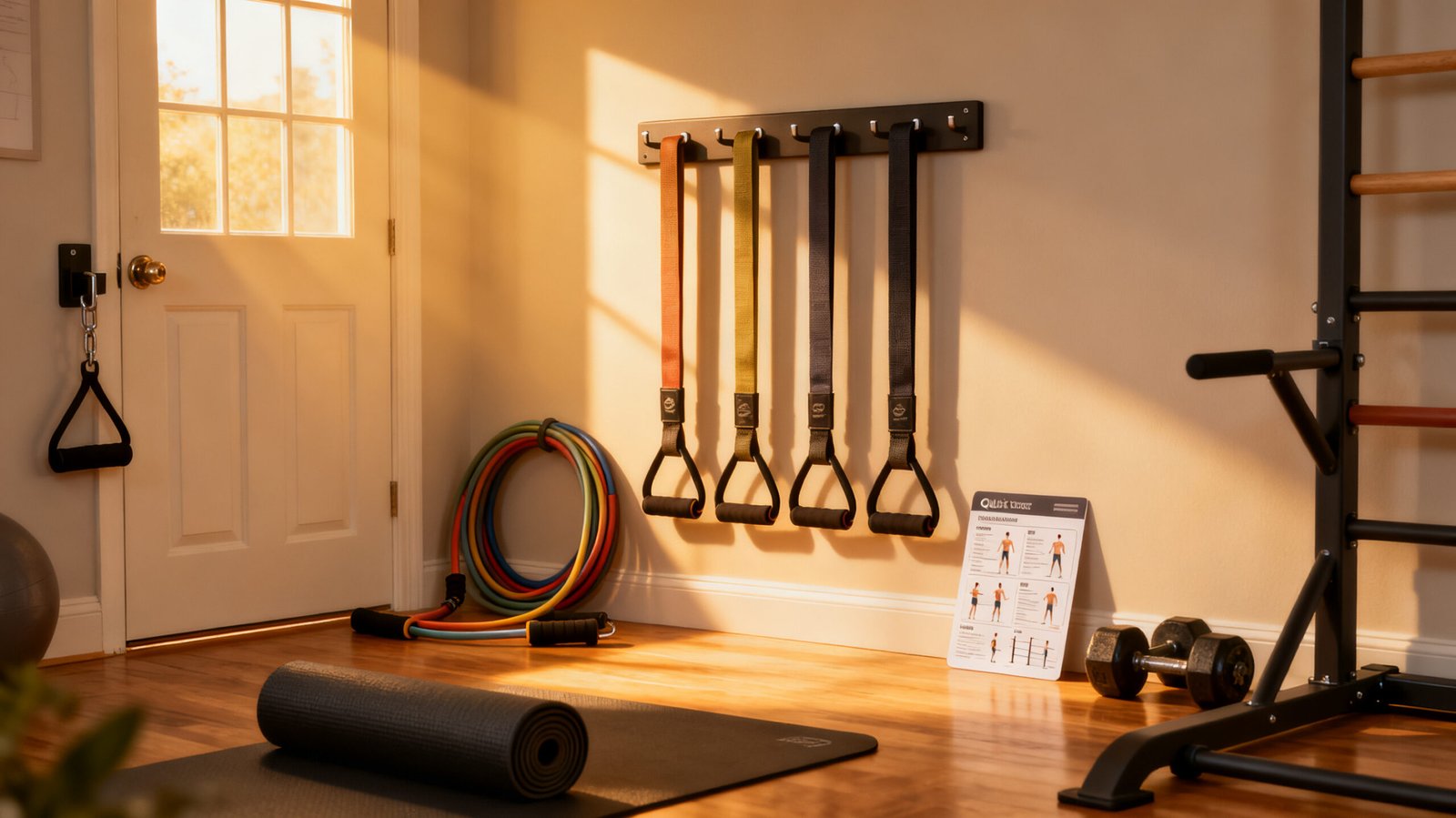
This transparency matters because it affects your wallet. If you are weighing a home gym vs gym membership cost comparison, the longevity of your equipment directly impacts the break even calculation. Bands that fail after six months make a home gym more expensive than a membership over time. Before committing to a specific set, we recommend reading our guide on home gym mistakes to avoid the most common purchasing regrets first time buyers face.
Practical buying checklist and next steps for deeper reporting
Use this checklist before you click purchase on any resistance band set:
- Inspect product images for carabiners with stamped weight ratings. If none are visible, plan to buy rated carabiners separately.
- Verify that a door anchor and ankle straps are included in the listing photos. Do not rely on text descriptions alone.
- Contact the manufacturer to request tensile strength data and cycle test results. If they cannot produce them, factor that uncertainty into your decision.
- Read the warranty terms before buying. Look for coverage periods and whether the warranty covers snapping under normal use or only manufacturing defects.
- Confirm that the band elongation works for your intended rep ranges. A band that is too short limits exercise variety. One that is too long may not provide adequate resistance at the start of movements.
- Inspect bands upon arrival for micro tears, thinning, or inconsistent elasticity before the first use. Hold each band up to light and stretch gently while examining the surface.
For the editorial team, this guide exposes several critical data gaps that need to be filled for a truly definitive buying recommendation. We need an Amazon review scrape of the top 10 resistance band sets to quantify complaint frequencies. We need independent lab tests measuring tensile strength and cycle life for heavy duty pull up assist bands. We need manufacturer spec requests for ASTM compliance documentation and latex purity statements. If you can provide a larger result set or permission to work from a broader set of publicly available Amazon reviews, product pages, and independent lab reports, we can turn this into a fully sourced research report. For now, if you are building out a complete setup and wondering how much weight home gym equipment you actually need, bands are a smart complement to free weights but should not be your only resistance modality for maximal strength development.
Conclusion
Choosing the best resistance bands comes down to three things: inspecting for failure indicators before every session, following evidence based programming parameters instead of random band workouts, and demanding independent test data from manufacturers rather than trusting marketing claims. The Consumer Reports guidance on elongation, RPE, rep ranges, and frequency gives you a training blueprint that most product roundups completely omit. Use it. The gaps we identified in tensile testing, cycle life data, and compliance documentation are not reasons to avoid buying bands. They are reasons to buy carefully. Ask for the numbers. Retire bands the moment you see thinning or micro tears. Train with balanced programming that includes both pressing and pulling. And if you are starting from scratch, our home gym under 500 guide shows you exactly how to combine bands with other affordable equipment for a complete strength setup that grows with you.
Frequently asked questions
How do I know when to replace my resistance bands?
Inspect your bands before every session by holding them up to light and stretching them gently. Look for loss of elasticity, thinning, cracks, or micro tears. Consumer Reports identifies these as the primary failure indicators. If you see any of these signs, retire the band immediately regardless of how old it is.
What resistance level should a beginner start with?
Choose a band that allows roughly 50% elongation at the start of each movement. Begin with an RPE of 4 to 6 out of 10, working in the 6 to 10 rep range. Progress toward heavier bands and higher RPE over multiple weeks as your strength and control improve.
Are fabric bands better than latex loop bands?
Fabric bands resist rolling and tend to be more durable, making them better for lower body exercises like squats and lateral walks. Latex bands offer more elongation and a smoother resistance curve, making them preferable for upper body pulling and pressing movements. Many experienced users keep both types in their arsenal.
Can resistance bands actually build muscle?
Yes. Progressive overload with bands works through increased resistance at greater elongation rather than added weight plates. The key is following structured programming with appropriate rep ranges, RPE targets, and progression markers rather than performing random band exercises without a plan.
What accessories do I absolutely need with my resistance band set?
A door anchor, ankle straps, load rated carabiners, and handles are essential. Without a door anchor, you lose the ability to perform horizontal pressing and rowing movements. Without ankle straps, lower body isolation work becomes impractical. Check that carabiners have stamped weight ratings before trusting them under load.