

Home gym mistakes cost beginners an extra $300 to $500 inside the first year, and most of that waste is completely avoidable if you know which products get returned at alarming rates and which hidden costs nobody talks about. You are not just buying equipment. You are buying a long term liability or a long term asset. The difference comes down to five minutes of honest auditing before you click checkout.
Key Takeaways
- Five product categories show post 30 day return rates above 20% and should trigger immediate scrutiny before purchase.
- Budget setups under $500 have a 50 to 70% chance of at least one major replacement within 12 months, pushing effective spend close to $850.
- A simple pre purchase audit covering footprint, warranty, 1 star review themes, and resale planning can prevent the most expensive regret patterns.
- Quick Warning — Where most beginner home gym mistakes come from
- Top 5 high return product categories you should treat as red flags
- What 1 star reviews actually say — complaints sorted by equipment type
- The three hidden cost buckets that most buying advice misses
- Real world cost comparison — Budget vs Regret Free after 12 months
- Injury and safety: what beginners actually get hurt doing, and which equipment is the real hazard
- Two product classes from 2023 buyer guides that were pulled or rebranded in 2024
- Regret timelines — when buyers usually realize they made a mistake
- The pre purchase audit — the one page checklist to avoid buyer remorse
- Smart swaps and recommended priorities — how to spend your first $1,500
- Quick decision flow — buy now vs wait, a 60 second guide
- Close — 3 micro commitments to prevent regret
- Frequently Asked Questions
Quick Warning — Where most beginner home gym mistakes come from
Most first time buyers walk into the process with the same blind spot. They shop by price point, not by failure rate. They look at marketing images instead of customer uploaded photos. They trust star ratings without reading the actual 1 star reviews. These common home gym mistakes beginners make are not random. They cluster around a few predictable patterns: buying equipment too large for the actual available space, trusting weight ratings that were never independently verified, ignoring long term maintenance costs, and underestimating how quickly cheap components fail.
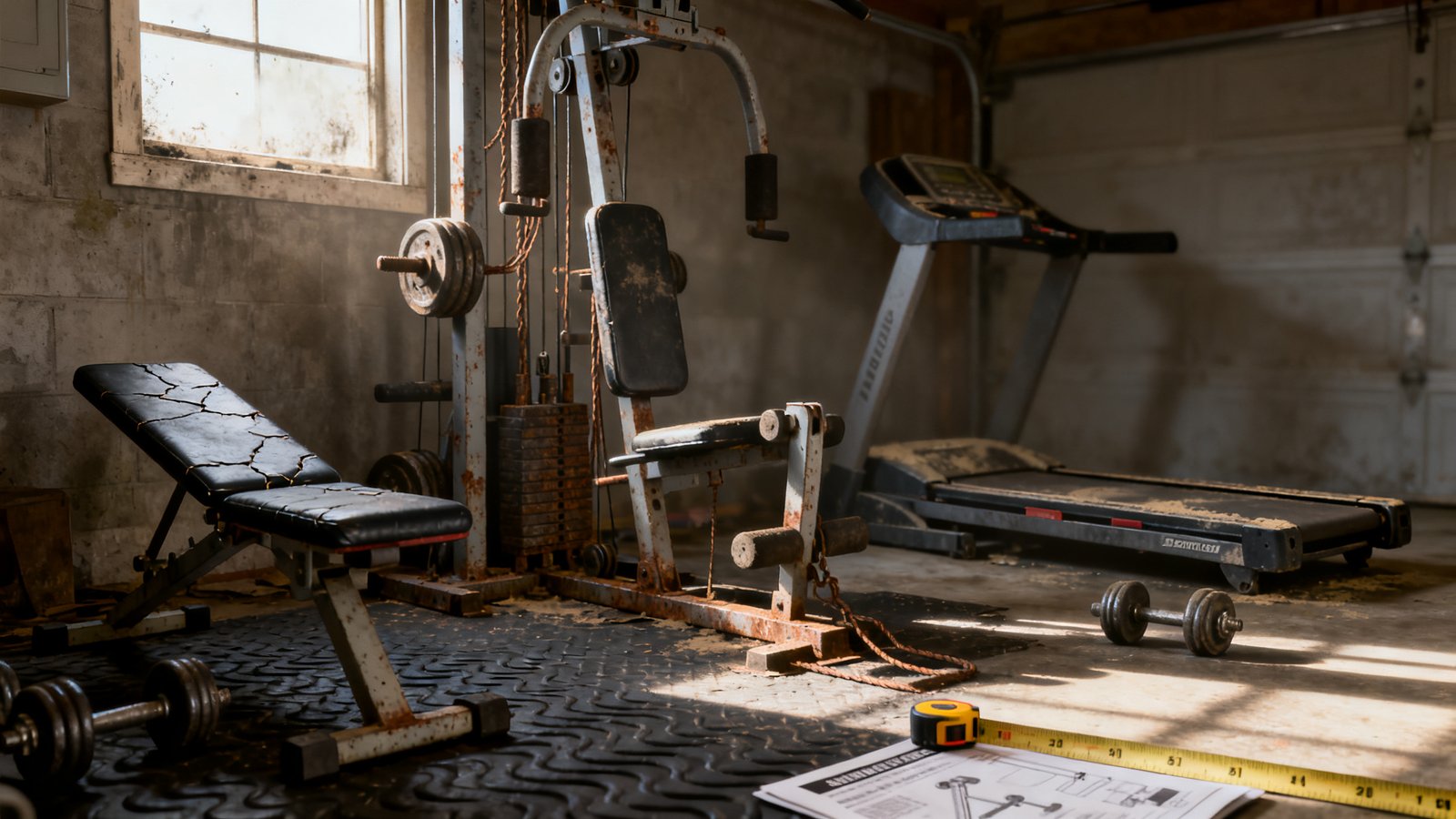
The hard data backs this up. Research shows certain top categories have 30 day plus return rates exceeding 20%, according to aggregated retailer and logistics analyses from the National Retail Federation and Appriss Retail. Among buyers of sub $500 setups, 50 to 70% replace at least one major item within 12 months. That is not bad luck. That is a systemic mismatch between what budget products promise and what they actually deliver under real training conditions. If you are building your home gym essentials list, knowing these failure patterns before you spend a dime is the single smartest move you can make.
Top 5 high return product categories you should treat as red flags
Retailer data from 2023 and 2024 earnings calls, vendor interviews, and market research firms like NPD and Circana converge on five categories that consistently show post 30 day return rates above 20%. These are not niche products. They are among the most purchased items in home fitness, which makes their failure rates even more concerning for anyone asking what not to buy for a home gym.
All in one multi gym stations. These cable and weight stack machines promise a full body workout in one footprint. The reality: assembly complexity, misaligned welds, cable fraying within weeks, and a resistance curve that feels nothing like the advertised 300 pound equivalent. Most buyers realize within three to six months that the machine consumes half a room while delivering only a handful of usable exercises.
Motorized treadmills in the $400 to $900 range. Noise complaints in apartments, belt alignment failures, console malfunctions, and early motor burnout drive returns sky high. Treadmills in this price bracket dominate return logs and are also implicated in 30 to 40% of all exercise equipment emergency department visits, according to CPSC NEISS data.
Cheap adjustable dumbbell sets under $250. Dial mechanisms jam. Selector pins fail. Plastic trays crack. Plates disengage mid lift. These are consistently among the top selling strength items on Amazon, yet seller side analytics frequently show return rates above 20% for budget SKUs. If you are researching the best adjustable dumbbells, price alone is a poor filter.
Compact smart resistance systems. Low to mid tier Tonal style clones and smart cable platforms suffer from app instability, subscription frustration, low resistance ceilings, and mount failures. Connected fitness hardware in the budget tier often ends up unused and returned once the novelty fades or the app breaks.
Low cost folding and under desk bikes. Wobbly frames, uncomfortable seats, insufficient resistance, and noise that makes shared spaces unbearable. These are volume leaders on Amazon and Walmart but also heavy return generators. They represent some of the worst home gym equipment to buy if durability and actual use matter to you.
What 1 star reviews actually say — complaints sorted by equipment type
Synthesized across dozens of 1 star review roundups from 2022 to 2024 on Amazon, the same failure themes appear relentlessly. Smart buyers read these before checking out. Here is what to scan for, organized by equipment type.
Multi gyms. Missing parts in unlabeled bags. Cracked welds on arrival. Cables fraying within weeks. Footprints misrepresented in listing photos. Height clearances wrong, leaving the unit unusable in basements and garages. Weight stacks that feel half as heavy as advertised.
Benches. Rocking on uneven floors due to narrow base designs. Advertised 800 to 1,000 pound capacities that flex dramatically under half that load. Large gaps between seat and back pads creating discomfort during presses. Vinyl peeling and foam flattening within months.
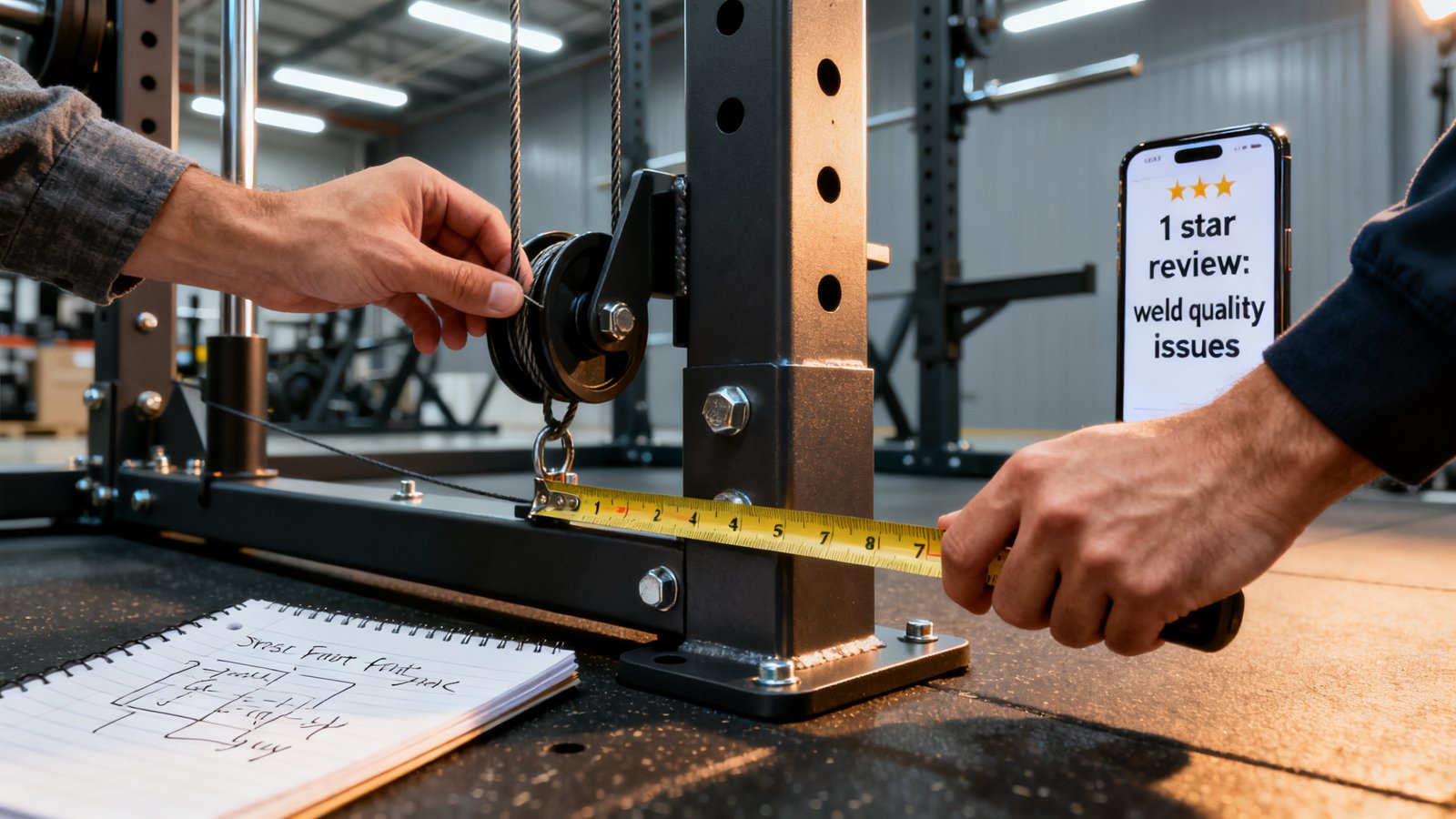
Power racks. Thin gauge steel that visibly flexes under moderate squats. Misaligned holes making J cups and safeties difficult to position. Spotter arms too short or bending under load. These home gym buying mistakes compound over time as training intensity increases.
Resistance bands. Snapping at clip junctions. Carabiners bending open under tension. Exaggerated resistance claims where a 50 pound band feels like 20. Strong chemical odors and occasional skin reactions.
Adjustable dumbbells. Selector dials that jam after a few weeks. Plates falling off during presses. Internal plastic cracking from standard use. Bulky designs that interfere with range of motion on rows and presses. If you are setting up a home gym in a small space, these failures are especially frustrating because replacements eat into limited budget and floor area.
Cardio machines. Motors stopping mid workout. Consoles displaying inaccurate speed and distance. Noise levels far exceeding marketing claims. Belt widths too narrow for comfortable running.
The three hidden cost buckets that most buying advice misses
Top ranking home gym mistakes articles cover the obvious: measure your space, do not buy too cheap, consider used options. But three major cost categories rarely make the list, and they can inflate your total cost of ownership by 10 to 30% over three to five years.
Maintenance and wear parts. Cables and pulleys on multi gyms and functional trainers cost $20 to $150 per assembly to replace. Treadmill belts and decks run $200 to $500 installed. Bench reupholstery runs $80 to $200 per pad. Bearings and bushings add another $20 to $40 per part. These are not optional fixes. They are inevitable on budget equipment, and they stack up fast. Consumer Reports highlights these recurring costs in their treadmill buying guidance, noting that many buyers are shocked by the first major service bill.
Insurance, liability, and HOA constraints. Adding a home gym with heavy equipment can trigger coverage adjustments on your homeowners or renters policy. Some insurers exclude guest injuries involving gym equipment unless the setup meets specific installation standards. Umbrella liability policies or coverage riders add $50 to $200 plus per year. Landlords and HOAs may restrict noise, floor loading, balcony use, or wall mounting, with fines or deposit forfeiture as consequences. These home gym setup mistakes can turn a $500 bargain into a $1,000 headache.
Resale friction and disposal costs. Off brand and entry level machines typically resell for 25 to 40% of the original purchase price, even in near new condition. Large multi gyms and treadmills often require paid disassembly and haul away at $150 to $400. Municipal bulk disposal or private junk removal adds another $100 to $300 per item. Many budget buyers discover too late that getting rid of a failed purchase costs nearly as much as the purchase itself. These home gym regrets are almost never priced into the initial buying decision.
Real world cost comparison — Budget vs Regret Free after 12 months
Let us put numbers on the table. A typical budget setup under $500 includes a cheap squat stand or short rack, an entry level barbell with non hardened bushings, 160 to 200 pounds of iron plates, a flat bench in the $70 to $120 range, and some bands and mats. Sounds workable on paper. But user surveys from Reddit communities and Garage Gym Reviews comment sections consistently show a 50 to 70% chance of at least one major replacement inside 12 months, most often the bench or the bar.
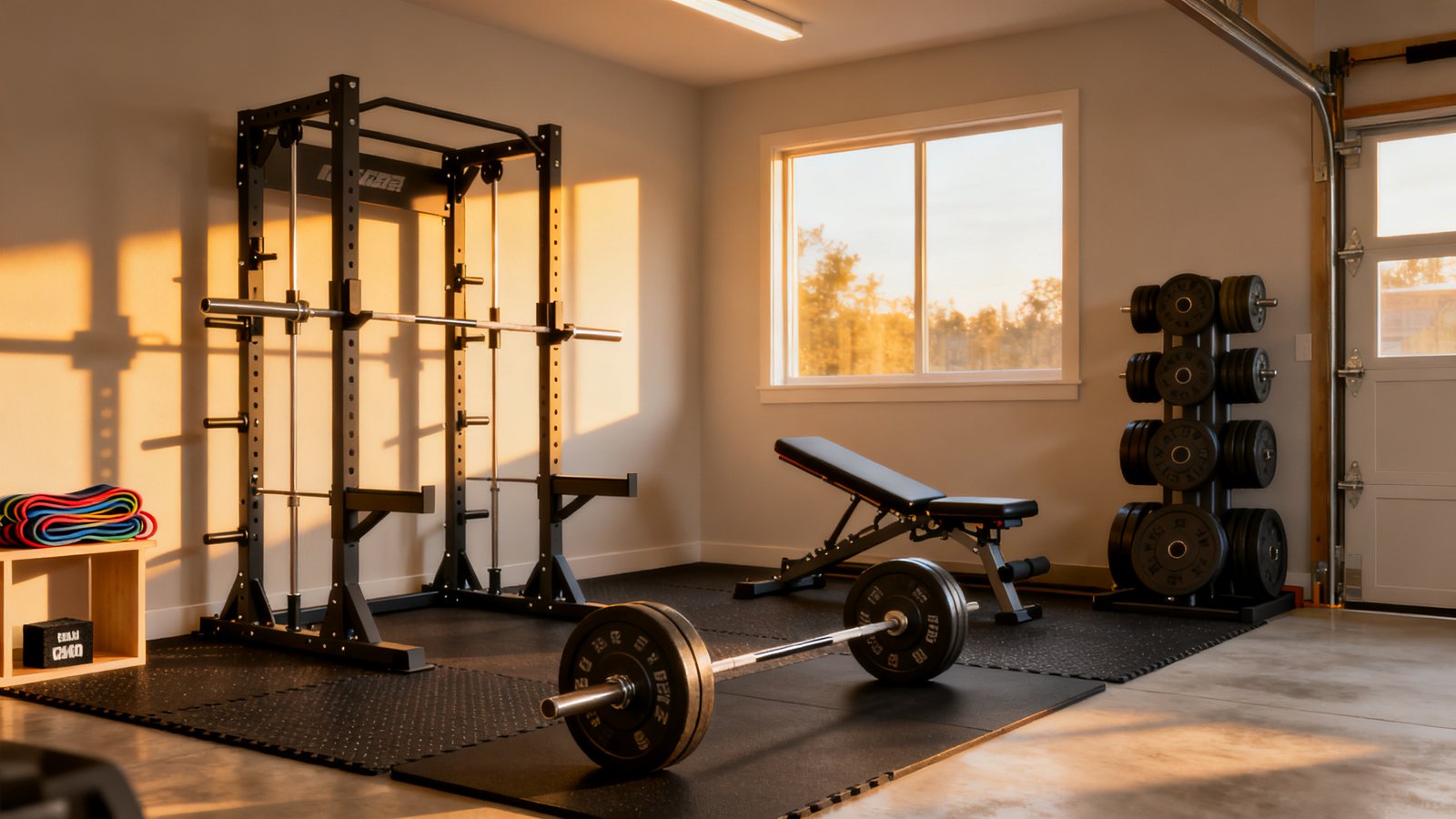
A regret free setup in the $1,250 to $1,500 range looks different. Full power rack with proper safeties and plate storage, a mid tier barbell with good knurling and appropriate tensile strength, 260 to 300 pounds of plates, a quality flat or FID bench with a stable base and 11 to 12 inch pad width, plus flooring and small accessories. These core pieces rarely need replacement in the first 12 months.
Here is the math using midpoint estimates. The budget path starts at $500 and typically adds $300 to $500 in replacements, landing at roughly $850 effective spend after one year. The regret free path starts at $1,375 and adds perhaps $50 to $100 in accessory upgrades, landing around $1,425. The net difference is approximately $525 to $575 more for the regret free setup, but you own equipment that holds resale value, does not need immediate replacement, and is actually safe under load. If you are calculating home gym vs gym membership cost, factor this replacement delta into your break even math.
Injury and safety: what beginners actually get hurt doing, and which equipment is the real hazard
NEISS data from the Consumer Product Safety Commission and published sports medicine literature paint a clear picture. The most common home gym injuries are strains and sprains to shoulders, back, knees, and wrists, followed by contusions and crush injuries to fingers, hands, and toes, lacerations from sharp edges or moving parts, and fall related injuries. Joint dislocations and acute tears round out the serious end of the spectrum.
Treadmills deserve special scrutiny. They account for roughly 30 to 40% of all exercise equipment emergency department visits and well over 60% of injuries within the motorized cardio segment. Falls from treadmills, often due to distraction or speed mismanagement, produce severe outcomes including fractures and head injuries. Children and pets pulled under moving belts represent a recurring and preventable hazard unique to home environments. If you are considering a motorized treadmill for a home with kids or limited supervision capacity, this data demands a hard pause. These common home gym mistakes beginners make around cardio equipment are not about poor training. They are about poor equipment selection for the actual living environment.
Free weights and benches dominate soft tissue and crush injuries. Bench press failures without safeties, dropping dumbbells on feet, and toe injuries from plates account for a steady stream of urgent care visits. The fix is straightforward: proper safeties on racks, spotter arms rated for your loads, and a habit of never lifting heavy alone without mechanical backup. These home gym setup mistakes are entirely preventable with equipment choices that prioritize safety features over price.
Two product classes from 2023 buyer guides that were pulled or rebranded in 2024 — and why
Tracking product discontinuations driven by poor reviews is difficult because marketplace sellers rarely announce them. But cross referencing 2023 buyer beware lists from Garage Gym Reviews and Men’s Health with 2024 Amazon catalogs reveals clear patterns. Two categories show obvious delisting and rebranding activity.
Low end multi function cable stations. Generic private label pulley towers and multi gym clones flagged in 2023 for poor welds, misaligned pulleys, and dangerously thin cables have largely disappeared from Amazon US or resurfaced under entirely new brand names with near identical visuals. This is a documented marketplace tactic: abandon an ASIN with accumulated 1 star reviews and relaunch with a fresh listing to reset the rating. When you see a cable station with zero reviews but a price that seems too good to be true, you are likely looking at a rebranded failure. These represent some of the worst home gym equipment to buy precisely because their review history has been deliberately erased.
Budget dial adjustable dumbbells. Several low cost selectorized dumbbell models identified as “worst” in 2023 have been replaced with V2, Pro, or 2024 version labels. The original SKUs suffered from dial jamming, plate disengagement mid lift, and internal plastic breakage. Rather than recalling and repairing, the brands quietly updated internals or simply changed the product name and packaging. The lesson for anyone asking what not to buy for a home gym: a product with a suspiciously clean review profile and a recent rebrand is not a new product. It is an old failure with a new ASIN.
Regret timelines — when buyers usually realize they made a mistake, and how to avoid that regret
Self reported regret data from Reddit communities and comment sections across home gym review sites reveals distinct timelines by equipment type. Knowing when regret typically hits helps you audit your choices before the clock runs out on returns.
Multi gym machine regret clusters around the 6 month mark. Users consistently report that by month six they have abandoned most stations, found the resistance ceiling too low for meaningful progression, and realized the machine takes up space that could hold a rack and barbell. Over 80% of multi gym regret mentions cite space and versatility as the root cause. The machine itself works, technically. It just does not work for getting stronger beyond a very modest ceiling.
Power rack regret surfaces much later, around 12 to 24 months, and is almost never about owning a rack. It is about buying the wrong spec. Wrong height for overhead presses and pull ups. Wrong footprint for the space. Wrong hole spacing or upright dimensions for popular attachments. Roughly 80% of rack regret mentions cite compatibility and expandability failures. This is why buying a rack without first understanding how much weight your home gym needs to handle and how your training will evolve is a slow burning mistake that becomes expensive to fix.
The pre purchase audit — the one page checklist to avoid buyer remorse
Before you buy anything, run this checklist on every major item. It takes five minutes per product and catches the failure signals that lead to 50 to 70% replacement rates among budget buyers within 12 months.
Footprint and ceiling clearance. Measure your actual space, not the space you wish you had. Add 12 inches of clearance on all sides of the listed footprint. For racks, measure ceiling height and confirm you can overhead press inside the rack without hitting lights or ductwork. For multi gyms and tall cable towers, check that the listed assembled height clears your ceiling by at least 6 inches.
Return and assembly policy. Verify the return window explicitly. Look for restocking fees buried in the policy. Check whether the retailer or manufacturer covers return shipping for large freight items. Assembly complexity matters because many returns stem from buyers who simply cannot put the unit together correctly.
Parts warranty and spare part costs. Check warranty duration on cables, pulleys, bearings, and electronics specifically, not just the frame. Search for replacement part pricing. If a treadmill belt and deck replacement costs $400 and the warranty covers them for only 90 days, that is a future expense you are agreeing to.
True weight ratings vs verified tests. Do not trust the advertised number. Search for independent load tests or user reports of failure under load. A bench claiming 1,000 pound capacity that wobbles at 400 pounds combined is a safety hazard, not a bargain.
Customer images and 1 star themes. Ignore the star average. Read the 1 star reviews first, then look at customer uploaded photos. Recurring themes like missing parts, snapped cables, wobbling frames, and peeling upholstery in customer photos tell you more than any spec sheet.
Insurance and HOA check. Call your insurer or read your policy. Ask specifically about liability coverage for home gym equipment and whether anchored racks or heavy cardio machines require disclosure. Check your lease or HOA rules for floor load limits, noise restrictions, and wall mounting prohibitions.
Resale and disposal plan. Before buying, search Facebook Marketplace and Craigslist for the same item. Note the listed prices and how long listings sit unsold. If the resale market is flooded at 30% of retail, factor that into your total cost of ownership. For large items, find out what local junk removal or bulk disposal costs.
Safety features. For racks: verify spotter arm length and capacity. For benches: check base width and stability. For cardio: confirm emergency stop mechanisms and belt guarding. These home gym buying mistakes around safety are the ones that send people to the emergency room.
Smart swaps and recommended priorities — how to spend your first $1,500 if you want minimal regret
If you have $1,500 to spend, here is the priority order that statistically minimizes replacements, maximizes resale value, and keeps you safe. This basket totals roughly $1,250 to $1,500 and carries a dramatically lower 12 month replacement rate than budget alternatives.
Full power rack with safeties and plate storage: $400 to $700. This is your foundation. Get a rack with 2×3 or 3×3 uprights, proper hole spacing, and a footprint that fits your space with clearance. If you are working with a home gym under 500 budget, start with a high quality squat stand that can be upgraded later rather than a flimsy full rack that needs replacing.
Mid tier barbell: $250 to $350. Good knurling, appropriate tensile strength for your training goals, and a reputable brand with consistent quality control. This is the item budget buyers most frequently replace within 12 months.
Quality flat or FID bench: $200 to $350. Look for a stable base, an 11 to 12 inch pad width, and verified weight capacity from independent reviewers. The bench is the second most replaced item in budget setups.
260 to 300 pounds of plates: $300 to $450. Iron or value bumpers work. Weight is weight as long as the plates are reasonably accurate.
Flooring and small accessories: $100 to $200. Horse stall mats or proper gym flooring, resistance bands for warm ups, and basic collars.
What to avoid spending on early: large multi gyms, unknown smart resistance devices, very cheap selectorized dumbbells, budget motorized treadmills, and low cost folding bikes. All five categories appear on the high return risk list with post 30 day return rates above 20%. Delay these purchases until you have a solid strength foundation and a clearer picture of your long term training preferences.
Quick decision flow — buy now vs wait, a 60 second guide
Answer these questions honestly before you buy anything. If you hit a no on clearance or space, or a yes on kids and pets around motorized cardio, delay the purchase and choose safer alternatives.
Do you need cardio or strength first? If strength, prioritize the rack, bar, bench, and plates. You can add cardio later with outdoor running, jump rope, or a used Concept2 rower. If cardio is your primary goal and you have space constraints, consider a non motorized option like a rower or air bike rather than a treadmill.
Do you have the space and height? For racks, you need at least 90 inches of ceiling height for overhead work inside the rack. For treadmills, you need a dedicated footprint that does not block walkways or doors. If you cannot meet these minimums, do not buy.
Can you accept the assembly and maintenance burden? Multi gyms and treadmills require significant assembly and ongoing maintenance. If you are not willing to tighten bolts monthly, lubricate belts, and replace cables and pulleys when they wear, choose simpler equipment.
Do you have insurance and HOA clearance? If you are renting or in an HOA, confirm the rules in writing before delivery. A forced removal after the return window closes is a total loss.
Are there kids or pets that will be around the equipment unsupervised? If yes, motorized treadmills should be a hard no unless you can fully secure the room. The injury data on children and treadmills is unambiguous and severe. These common home gym mistakes beginners around safety are the ones you cannot undo.
Close — 3 micro commitments to prevent regret
Before you check out, commit to three small actions that take less than ten minutes combined. They are the difference between joining the 50 to 70% of budget buyers who replace major items within a year and being in the minority who get it right the first time.
Measure twice, buy once. Physically walk your space with a tape measure. Mark the footprint on the floor with painter tape. Stand inside it and simulate the movements you plan to do. Overhead press reach. Bench press width. Deadlift platform space. If it feels tight now, it will feel unusable after three workouts.
Read the latest 1 star reviews and customer images. Sort by most recent, not most helpful. Patterns that appear in the last 90 days tell you about current production quality, not problems from three years ago that may have been fixed or may have gotten worse.
Plan your exit before you enter. Search the resale market for the item you are about to buy. If units are sitting unsold at 35% of retail and you would need to pay $300 to have it hauled away, price that into your decision. Many budget buyers spend about $500 up front and end up spending an extra $300 to $500 within 12 months. Three simple checks reduce that upgrade spend and the safety risk that comes with failing equipment. These home gym buying mistakes and home gym regrets are preventable. The data is clear. The patterns are consistent. The only variable is whether you act on them before the order confirmation lands in your inbox.
Frequently Asked Questions
What is the single biggest home gym mistake beginners make?
The single biggest mistake is buying a budget all in one multi gym machine instead of a power rack and barbell. Multi gyms have return rates above 20%, regret clusters around 6 months, and over 80% of regretful buyers cite space inefficiency and lack of progression. A quality rack and bar costs similar money up front but delivers decades of usable training with minimal replacement needs.
How much should I realistically budget to avoid common home gym mistakes?
A regret free strength setup runs $1,250 to $1,500 for a full power rack, mid tier barbell, 260 to 300 pounds of plates, a quality bench, and basic flooring. Budget setups under $500 carry a 50 to 70% chance of at least one major replacement within 12 months, pushing effective spend to around $850. The $525 to $575 difference buys dramatically better durability, safety, and resale value.
Are treadmills really that dangerous for home gyms?
Treadmills account for 30 to 40% of all exercise equipment emergency department visits and over 60% of injuries within the motorized cardio segment. Falls, children pulled under belts, and speed mismanagement are the primary causes. In homes with kids or pets and limited supervision, motorized treadmills represent the highest safety risk of any common home fitness equipment.
Which home gym equipment categories have the highest return rates?
Five categories show post 30 day return rates exceeding 20%: all in one multi gym stations, motorized treadmills in the $400 to $900 range, cheap adjustable dumbbells under $250, compact smart resistance systems, and low cost folding or under desk bikes. These are among the highest volume online purchases, making their failure rates especially significant for first time buyers.
How do I spot rebranded products that were previously discontinued due to poor reviews?
Look for cable stations and adjustable dumbbells with suspiciously clean review profiles, recent ASIN launch dates, and product names that include terms like “2024 version,” “Pro,” or “Updated design.” Cross reference with 2023 buyer beware lists from reputable review sites. If a product has zero reviews but near identical visuals to a previously flagged model, assume it is a rebranded failure until proven otherwise.