

If you have asked yourself is home gym worth it this year, the answer lives in a spreadsheet most people never build. Rising gym fees, shrinking free time, and a flood of affordable equipment make the question more relevant than ever. But the real decision hinges on line items most online calculators conveniently ignore. This guide walks you through every cost, every hidden variable, and every behavioral factor so you can make a numbers based decision that holds up six months from now.
Key Takeaways
- An entry level home gym can break even in under six months for a single user, while a mid range setup typically pays for itself in just over one year.
- Hidden costs like flooring, maintenance, and accessory creep can add hundreds to your initial budget and significantly extend your break even timeline if ignored.
- Equipment from brands like Rogue can retain up to 90% of its original cost at resale, which means your true net investment may be far lower than the sticker price suggests.
- Quick verdict — is a home gym worth it?
- Break-even timelines — how long until a home gym pays for itself?
- True upfront and recurring costs — what calculators often miss
- Which equipment keeps value — resale and depreciation to protect ROI
- Behavior & consistency — do people actually use home gyms more?
- Common buyer pitfalls and top regrets to avoid
- Decision framework — a step by step ROI calculator readers can use
- Buying checklist by budget tier (what to buy at each price point)
- When a gym membership is still the better buy
- Research gaps — what we still don’t know (and how to get answers)
- Conclusion
- FAQ
Quick verdict — is a home gym worth it?
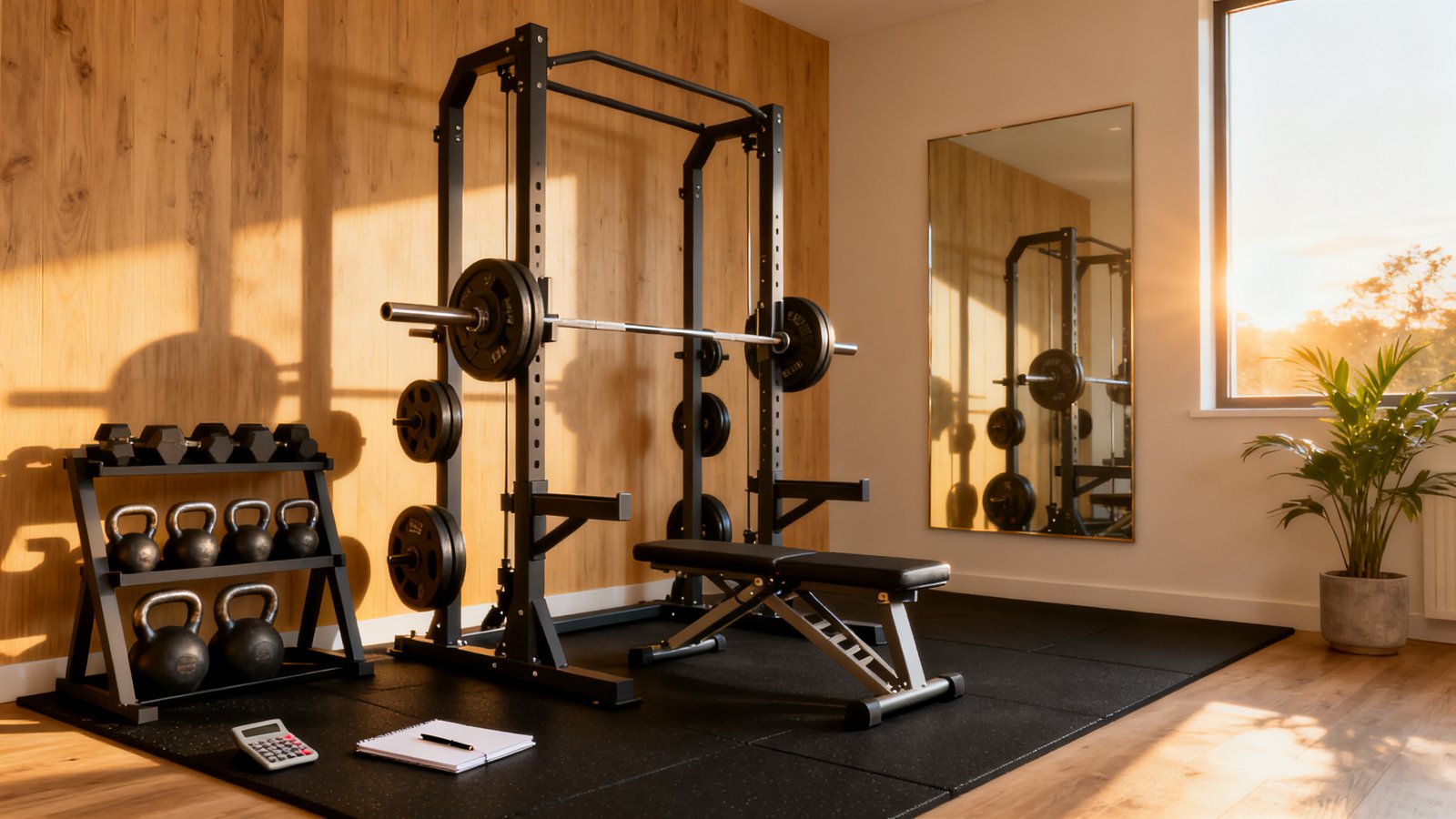
For most people who train at least three times per week and have a spare corner or garage bay, the answer leans heavily toward yes. The math is straightforward. In the UK, median annual gym fees run between £600 and £800, while an entry level home gym costs £300 to £500 upfront. That means a basic setup can pay for itself inside of six months. In the US, the average gym membership sits at $65 per month or about $780 per year, while a typical home gym build lands between $1,500 and $2,500. A budget conscious buyer can start for as little as $300 to $1,000.
But raw cost is only half the story. Convenience plays an enormous role that spreadsheets cannot fully capture. No commute, no waiting for the squat rack, no adjusting your schedule around class times. Those minutes add up fast. According to Prolinе Direct’s 2026 cost analysis, the time saved alone often tips the scale for busy professionals and parents. The trade off is straightforward: you give up variety, social motivation, and dedicated coaching in exchange for total schedule freedom and long term savings.
If you are the type who thrives on group energy or needs a trainer watching your form, a membership still holds serious appeal. But if you value autonomy and can follow a program without external accountability, the home gym is hard to beat on both cost and convenience.
Break-even timelines — how long until a home gym pays for itself?
The break even point is where your upfront investment equals the membership fees you would have otherwise paid. It is the single most important number in the entire decision, and it varies dramatically by build tier and household size.
For a single user in the UK, an entry level setup at £400 breaks even in roughly five to six months against an average £70 monthly membership. A mid range build at £900 crosses the line around thirteen to fourteen months. A high end setup at £1,800 or more stretches the timeline to two to three years. In the US, the numbers shift slightly. Garage Gym Reviews reports a typical home gym costs $1,500 to $2,500, and a specific example of a $3,243 build versus $1,620 per year in commercial fees lands at roughly two years for breakeven.
The math accelerates sharply when you add a second user. Two people each paying $109 per month with separate travel costs can push combined annual commercial expenses past $4,000. Against that number, even a premium home gym breaks even in well under a year. Families with teenagers who lift see the fastest returns of all.
The formula you need is simple. Take your total upfront cost, including shipping, flooring, and any initial accessories. Divide that number by your annual membership savings. Multiply by twelve to get months. If that number sits at twenty four or below and you plan to train for at least two years, the home gym wins on pure cost.
One factor these timelines assume is that you actually use the equipment. A $400 home gym used twice and abandoned is infinitely more expensive per session than a $70 monthly membership you attend regularly. Be honest about your habits before running the numbers. If you have a history of starting and stopping fitness routines, consider a three month trial with minimal equipment before committing to a full build.
True upfront and recurring costs — what calculators often miss
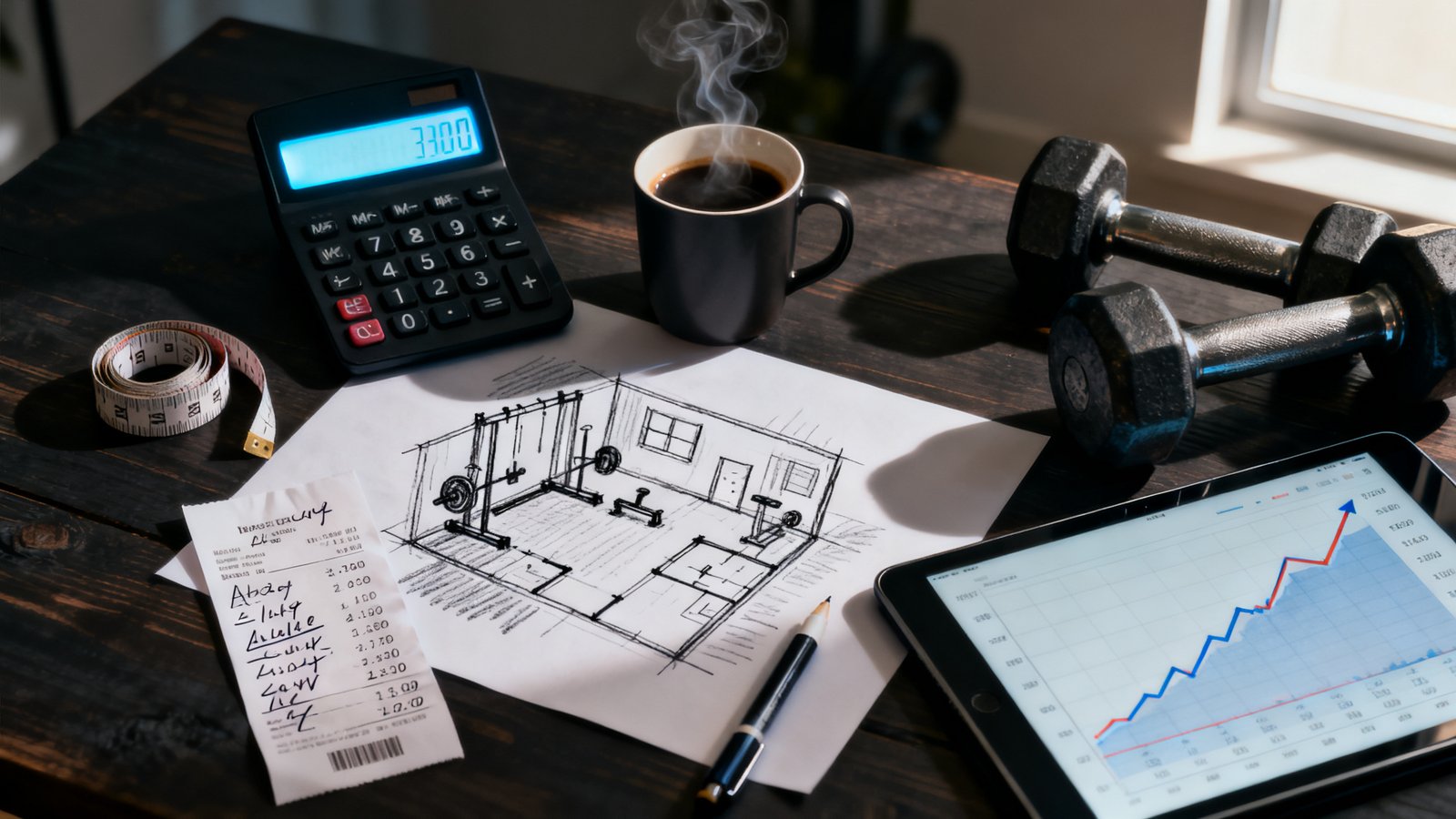
Most online calculators stop at the equipment sticker price. They ignore the peripheral expenses that quietly inflate your total investment by 20% to 30%. If you want an honest home gym cost benefit analysis, you need to account for every line item.
Flooring is the most commonly overlooked expense. A decent set of rubber or foam mats for a standard single car garage space runs between £80 and £200 in the UK and $100 to $300 in the US. Skip this and you risk cracked concrete, damaged equipment, and noise complaints from neighbors below. Ventilation and climate control also matter. A garage that hits freezing temperatures in January or swelters in July needs a fan, a space heater, or both. Budget another £50 to £150 for basic climate solutions.
Maintenance is an ongoing cost few people factor in. Barbells need occasional cleaning and lubrication. Cable systems require tension checks. Rubber grips on dumbbells degrade over time. None of these are large expenses individually, but they add up. Gray Matter Lifting notes that upkeep is a marginal but real cost, especially if your equipment lives in an unconditioned space where humidity and temperature swings accelerate wear.
Then there is accessory creep. You buy a squat rack and barbell. A few months later you realize you need a dedicated deadlift platform. Then a landmine attachment catches your eye. Then a set of bands for mobility work. Each purchase feels small in isolation, but collectively they can add £300 to £500 or more in the first year alone. This is the hidden cost that most first time builders underestimate.
| Cost Category | Entry Level (UK £ / US $) | Mid Range (UK £ / US $) | High End (UK £ / US $) |
|---|---|---|---|
| Core Equipment | £300-500 / $300-1,000 | £600-1,200 / $1,500-2,500 | £1,500+ / $6,000+ |
| Flooring | £80-150 / $100-200 | £150-250 / $200-400 | £300+ / $500+ |
| Climate & Storage | £50-100 / $50-150 | £100-200 / $150-300 | £200-500 / $300-800 |
| First Year Accessory Creep | £100-200 / $100-250 | £200-400 / $250-500 | £400-800 / $500-1,000 |
| Realistic Total | £530-950 / $550-1,600 | £1,050-2,050 / $2,100-3,700 | £2,400+ / $7,300+ |
The gap between what you plan to spend and what you actually spend is where most home gym regrets are born. Build a realistic total and then add a 15% buffer. You will thank yourself later.
Which equipment keeps value — resale and depreciation to protect ROI
Not all equipment depreciates equally. Understanding which brands and categories hold value can dramatically reduce your net cost and shorten your effective break even timeline. If you ever decide to sell, the right purchases can return a surprising amount of cash.
Rogue Fitness equipment stands out for resale value. According to Gray Matter Lifting, Rogue gear can resell at close to 90% of its original cost. That means a £500 Rogue barbell might net you £450 in a private sale two years later. The effective cost of ownership drops to just £50 spread across two years of use. Compare that to a budget barbell that might sell for 30% of its original price, and the premium brand actually becomes the cheaper option over time.
Cast iron plates and kettlebells also hold value well. They are simple, durable, and always in demand on the used market. Cable machines and cardio equipment depreciate faster, partly because they have more moving parts that wear and partly because they are harder to transport. If protecting resale value matters to you, prioritize steel and iron over electronics and pulleys.
Buying used is the single most effective way to protect your ROI from the start. Search local marketplaces for people moving house or upgrading their own setups. These sellers are often motivated and willing to accept 50% to 70% of the retail price. A complete used setup can cut your upfront cost by a third or more, which pulls your break even point forward by months. For more guidance on assembling a cost effective setup, check our home gym under 500 guide which details exactly where to save and where to spend.
Behavior & consistency — do people actually use home gyms more?
The financial case for a home gym assumes you use it. But does having equipment at home actually lead to more consistent training? The honest answer is that we lack rigorous longitudinal data. No study in the provided research tracked six month workout frequency for home gym owners versus commercial gym members. What we have instead is anecdotal evidence and logical inference.
The anecdotal side is compelling. One experienced lifter reports training five days per week at home, including two a day sessions, which they would never attempt at a commercial gym. The reasoning is simple: when your gym is thirty seconds from your living room, the friction of starting a workout drops to nearly zero. No packing a bag, no driving, no hunting for parking, no waiting for equipment. Those small barriers matter enormously for consistency over months and years. Prolinе Direct’s research supports this view, noting that home convenience tends to improve consistency and reduce skipped sessions.
The logical case is equally strong. Behavioral psychology tells us that reducing friction increases habit formation. A home gym removes the single biggest friction point in any fitness routine: the commute. For parents with young children, shift workers with irregular hours, or anyone who values flexibility, the ability to train at 5 a.m. or 10 p.m. without leaving the house is transformative.
Still, the risk of abandonment is real. Some people find that the lack of social energy and external accountability makes it harder to push through tough sessions. The equipment sits unused, and guilt accumulates alongside dust. To guard against this, set a fixed schedule, track your workouts, and consider finding an online training community or accountability partner. The home gym essentials list we have compiled can help you start with the minimum equipment needed, which reduces the risk of overwhelming yourself early on.
Common buyer pitfalls and top regrets to avoid
No user review database in the provided research catalogued specific regrets from home gym owners. But by analyzing cost patterns and usage behaviors, several predictable failure modes emerge. These are the mistakes that turn a promising investment into an expensive storage problem.
Overbuying is the most common error. First time builders often purchase equipment for exercises they might theoretically do one day rather than what their actual program demands. A power rack with twelve attachments looks impressive but wastes money and floor space if you only ever squat and bench. Start with the minimum and add pieces only when your training consistently requires them. Our home gym mistakes article covers this and other costly missteps in detail.
Ignoring flooring and ventilation is another frequent regret. A heavy deadlift on bare concrete can crack the slab and destroy your plates. A stuffy, unventilated garage in August makes workouts miserable. These are not optional upgrades. They are foundational requirements for a functional training space.
Poor layout planning also causes frustration. A rack placed too close to a wall prevents loading plates on one side. A bench that cannot fully extend without hitting a shelf limits your exercise selection. Before buying anything, map your space with tape on the floor and walk through every movement pattern you plan to train. Leave clearance for plate changes, bar rotation, and your own body moving through full ranges of motion. For tight spaces, our home gym small space guide offers specific layout strategies that maximize every square foot.
Underestimating maintenance leads to premature equipment failure. Barbell bearings need occasional cleaning. Exposed steel rusts in humid environments. Bolts on racks loosen over time. Budget ten to fifteen minutes per month for basic upkeep and your equipment will last for decades instead of years.
Decision framework — a step by step ROI calculator readers can use
Instead of relying on generic online calculators, build your own using real numbers from your life. The formula is simple, but the inputs determine everything.
Start with your upfront build cost. Include every line item we covered earlier: equipment, shipping, flooring, climate adaptations, and a 15% buffer for unexpected needs. Next, calculate your annual membership savings. Multiply your current monthly fee by twelve. If you are comparing for multiple users, multiply by the number of people in your household who would use the equipment. Add any travel costs you currently incur driving to and from the gym, plus a rough value for your time if you want a more complete picture.
Now factor in recurring home gym costs. Estimate annual maintenance at roughly 2% to 5% of your equipment value. Add an annual upgrade or accessory budget if you anticipate expanding your setup. Subtract expected resale value at the end of your ownership period, discounted to today’s dollars.
The core equation: Break even months equals your total upfront cost divided by your annual savings, all multiplied by twelve. If the result falls within your planned usage window, the home gym makes financial sense. For a single UK user building an entry level setup, this number often lands between five and eight months. For a US couple building a mid range setup, it can land under twelve months even with a $2,000 investment.
Write your own numbers down. A $3,243 build versus $1,620 per year in commercial fees gives a roughly two year break even, as documented by Gray Matter Lifting. Your specific figures will vary, but the framework remains the same. If you want a deeper dive into the comparative numbers, our home gym vs gym membership cost analysis breaks down several real world scenarios.
Buying checklist by budget tier (what to buy at each price point)
Concrete equipment recommendations organized by budget make the buying process straightforward. These lists assume you are building a general strength training setup. Adjust based on your specific goals.
Entry Level (UK £300-500 / US $300-1,000): A pair of best adjustable dumbbells, a flat bench, and a set of resistance bands. Add a pull up bar if your door frame supports it. Flooring is non negotiable even at this tier. A basic set of interlocking foam or rubber mats will protect your floor and dampen noise. This setup covers the majority of strength movements and fits in a closet when not in use.
Mid Range (UK £600-1,200 / US $1,500-2,500): A power rack or squat stand, a quality barbell, a full set of weight plates totaling at least 150kg or 300lb, an adjustable bench, and a dedicated deadlift platform or thicker flooring under the rack area. Add a set of bands for mobility and accessory work. This tier enables heavy compound lifting and covers 90% of what most people do in a commercial gym.
High End (UK £1,500+ / US $6,000+): Everything in the mid range tier, upgraded to premium brands. A Rogue or Eleiko barbell, competition bumper plates, a full commercial grade rack with cable attachments, a dedicated functional trainer or cable tower, and specialty bars if your training calls for them. Climate control, mirrors, and sound systems often appear at this level. The equipment at this tier holds resale value exceptionally well, especially the barbells and racks.
Non Equipment Must Haves For All Tiers: Flooring, a basic maintenance kit including a brush and lubricant for barbell sleeves, adequate ventilation, and a storage solution that keeps your space usable when you are not training. Do not skip these. They are as important as any piece of equipment you buy.
When a gym membership is still the better buy
A home gym is not universally superior. Several scenarios make a commercial membership the smarter financial and practical choice, even if the long term math appears to favor buying equipment.
Short term training goals top the list. If you are training for a specific event, recovering from an injury under professional supervision, or testing whether you even enjoy strength training, locking into a home gym investment makes little sense. A three to six month membership lets you build the habit and clarify your preferences before committing capital.
The need for classes and coaching also favors memberships. Boutique studios, yoga classes, and trainer led small group sessions provide instruction and motivation that a solo home setup cannot replicate. If your fitness identity revolves around group energy and expert guidance, the membership fee pays for more than just equipment access. It pays for community and accountability.
Space constraints are a hard stop for many people. A studio apartment with thin walls and shared floors is a poor candidate for deadlifts and rack pulls. Even foldable equipment requires storage space. If your living situation makes a training footprint impossible, the membership fee is simply a necessity, not a discretionary expense.
Finally, low upfront capital can push memberships ahead. A $65 monthly fee is easier to absorb than a $1,500 lump sum, even if the long term math favors the one time purchase. Financing options exist, but paying interest on depreciating equipment is rarely a wise financial move. If you cannot afford the upfront cost without debt, stick with the membership and save until you can pay cash for your setup.
Research gaps — what we still don’t know (and how to get answers)
Honest analysis requires acknowledging what the data cannot yet tell us. Several questions that matter enormously to buyers remain unanswered in the available research.
We do not know what percentage of home gym owners abandon their equipment within the first year. No study in the provided sources tracked this metric, and it is arguably the single most important variable in the entire decision. A home gym used for six months and then ignored is a terrible investment at any price point. Someone should survey home gym buyers at the twelve month mark and publish the results.
We lack quantified six month workout frequency comparisons between home gym owners and commercial gym members. The anecdotal claims that home convenience improves consistency are plausible and logically sound, but they remain unverified by controlled data. A simple study tracking session frequency across matched cohorts would provide enormous clarity.
We have no systematic review of home gym owner regrets. The provided sources contained zero user reviews or documented complaints. Mining Reddit threads, Facebook groups, and marketplace listings for common reasons people sell their equipment could surface patterns that help prospective buyers avoid the same mistakes.
If you are on the fence, do your own small scale research. Ask friends or coworkers who own home gyms how often they actually use them. Browse local classifieds and note which types of equipment appear most frequently. Patterns will emerge quickly, and those patterns are worth more than any generic buying guide.

Conclusion
The question is home gym worth it ultimately resolves to three variables you control: your upfront budget, your training consistency, and how long you plan to stay in your current home. Run the break even formula with your real numbers. Factor in flooring, maintenance, and accessory creep. Shop used where possible and prioritize equipment that holds resale value. If the math lands under two years and you have the space, the decision is financially straightforward.
But numbers alone do not lift weights. The best home gym in the world is worthless if you do not use it. Be honest about your habits. If you need the social energy of a gym to stay consistent, keep the membership and consider a minimal home setup only as a supplement. If you crave autonomy and flexibility, build your space with intention, start small, and let your training drive your purchases rather than the other way around. Ready to start? Browse our equipment guides linked throughout this article, measure your space today, and commit to a budget before you open a single shopping tab.
FAQ
Is a home gym worth it for someone who only works out twice a week?
It depends on your membership cost and build budget. At twice per week, the break even timeline stretches roughly 50% longer than for someone training four times weekly. If your annual membership is £600 or more and you can build an entry level setup for under £500, it still makes financial sense within a year. But if you pay less than £30 per month for a gym, the membership likely wins for infrequent use.
How much space do I realistically need for a functional home gym?
A single car garage bay, roughly 3m by 5m or 10ft by 16ft, provides enough room for a power rack, barbell, bench, and plate storage with safe clearance on all sides. Smaller spaces can work with foldable racks, adjustable dumbbells, and bodyweight stations. The key is mapping your space before buying and ensuring you have at least 60cm or 2ft of clearance around your primary training footprint.
What is the single biggest mistake first time home gym buyers make?
Overbuying equipment they do not need for their actual training program. Many beginners purchase specialty bars, excessive weight plates, or complex cable systems before establishing consistent habits. The smarter approach is buying the minimum viable setup for your current program and adding pieces only when your training demands them.
Can I build a decent home gym for under $500 in 2026?
Yes. A pair of quality adjustable dumbbells, a flat bench, resistance bands, and basic flooring can be assembled within a $500 budget, especially if you buy the dumbbells used or wait for seasonal sales. This setup covers the majority of strength training movements and fits in compact spaces. For specific product recommendations at this price point, see our detailed budget guide.
Does home gym equipment actually hold resale value?
Certain brands and categories hold value exceptionally well. Rogue Fitness barbells and racks can resell at close to 90% of original cost. Cast iron plates and kettlebells typically retain 50% to 70% of their retail price on the used market. Cardio machines and cable systems depreciate faster due to mechanical complexity and shipping challenges. Buying premium steel equipment used is the most effective way to protect your resale value from day one.