

The home gym vs gym membership cost question is one every serious lifter eventually faces. You pay your monthly dues, you drive back and forth, you wait for the squat rack, and at some point you wonder if all that money and time would be better spent on your own equipment. The short answer is that a home gym beats a commercial membership financially for most people who train consistently, but the breakeven timeline varies dramatically based on what you build and where you live. This post walks through every dollar, every hidden fee, and every tradeoff so you can run the numbers for your own situation.
Key Takeaways
- A middle tier $2,000 home gym breaks even against an average gym membership ($1,380 per year) in roughly 1.5 years and costs as little as $155 per year when annualized over 10 years.
- Hidden costs like flooring, upgrades, and cardio repairs catch many first time buyers off guard; roughly 30 to 50% of engaged users spend an extra $500 to $1,000 within their first 12 to 24 months.
- Time, commute, and childcare savings often outweigh the equipment cost entirely; a 3x per week lifter can save over $1,300 per year in vehicle and time value alone by switching to a home gym.
Table of Contents
- Quick Take: Will a Home Gym Save You Money?
- How Much Does a Home Gym Actually Cost in 2024?
- True Cost Comparison: Breakeven Math and Hidden Pitfalls
- Practical Buying Checklist and Budget Template
- Conclusion
- Short FAQ: One Line Answers
Quick Take: Will a Home Gym Save You Money?
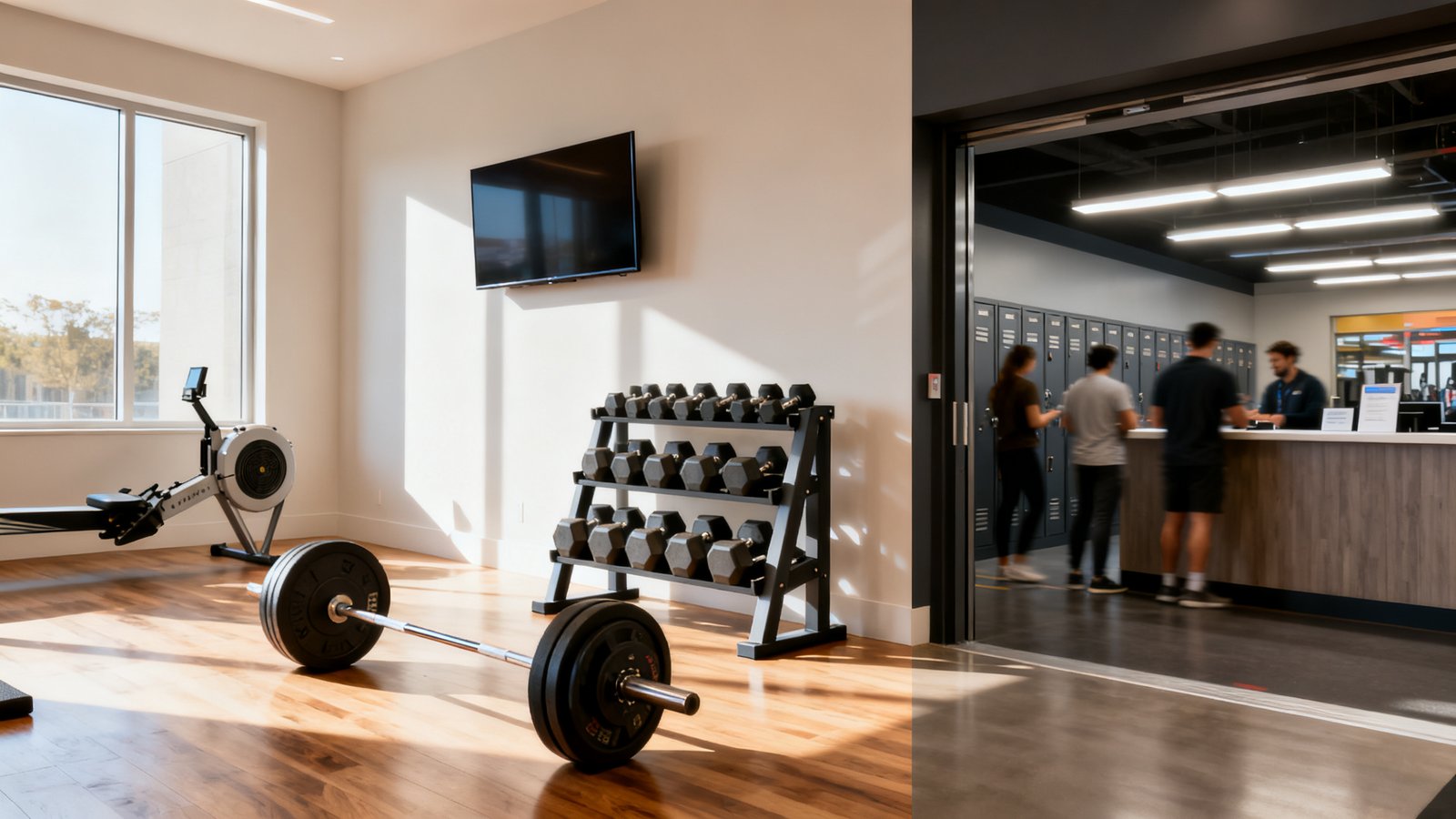
For most people who train 3 to 5 times per week, a home gym is significantly cheaper than a gym membership over any horizon longer than two years. The cross over point depends almost entirely on two factors: how much you spend on equipment and how expensive your current membership is. A $2,000 middle tier setup breaks even against an average mainstream gym membership (roughly $1,380 per year all in) in about 1.5 years according to Gray Matter Lifting and corroborated by our own modeling. Against a budget chain at roughly $560 per year, the breakeven stretches to about 4.1 years. Against a high end club at $1,950 per year, you break even in just over one year.
The real question is not “is a home gym cheaper” but rather “when does it become cheaper for my specific situation.” That is what the rest of this article answers, with exact numbers you can plug into your own spreadsheet.
When a Home Gym Does NOT Make Financial Sense
There are clear scenarios where keeping your gym membership is the smarter money move. If you train twice a week or less, the per use cost of a home gym becomes hard to justify. If you move frequently for work, hauling a power rack cross country is a nightmare. If you genuinely use the pool, sauna, and group classes at your gym, those amenities are expensive to replicate at home. And if you are the type who needs the social energy of a gym to stay motivated, no amount of savings will matter if the equipment collects dust.
How Much Does a Home Gym Actually Cost in 2024?
The Garage Gym Reviews team found that most people land between $1,500 and $2,500 for a well equipped setup. Strength Warehouse USA breaks it into three clear tiers. Here is what each tier actually looks like with real 2024 pricing, including flooring.
Basic Tier: $400 to $1,000
This is the minimalist route. Adjustable dumbbells run $150 to $300 on Amazon or Walmart. A resistance band set costs $20 to $40. A basic flat bench runs $80 to $150. Add a doorway pull up bar ($30 to $70), a kettlebell pair ($60 to $150), and interlocking foam tiles or a couple of stall mats ($75 to $150). At the low end you can get started for around $150 to $300 with bands, a mat, a single kettlebell, and a pull up bar. A more complete basic setup with dumbbells, bench, bands, mat, and flooring lands around $500 to $900. You will not be setting powerlifting records here, but you can build real muscle. Our home gym under 500 guide covers exactly how to maximize this budget.
Middle Tier: $1,000 to $3,000
This is where most serious home gym builders land and where the long term savings really kick in. A power rack runs $300 to $875 depending on brand. A quality barbell costs $120 to $350. A 260 to 300 pound plate set runs $350 to $800. An adjustable bench adds $200 to $350. Flooring with 3 to 4 stall mats or rubber rolls costs $150 to $400. Accessories like collars, a storage tree, bands, and a jump rope add $100 to $250.
A typical budget conscious middle tier build (Amazon heavy mix) comes in around $1,580. A hybrid build mixing Rogue bar and plates with a budget rack hits about $2,120. An all Rogue middle tier with minimal accessories lands near $2,640. Global Fitness reports the average homeowner spends between $2,000 and $5,000 on a gym, and most of those fall into this middle tier band. For a complete home gym essentials list, see our dedicated checklist.
Premium Tier: $3,000 to $10,000+
This tier includes a full size branded power rack with attachments ($1,200 to $2,500), multiple specialty barbells ($900 to $2,000 total), large plate sets of 400 to 600 plus pounds ($800 to $1,600), a cable system or functional trainer ($1,800 to $4,500), and one or two cardio machines like a Concept2 rower or a treadmill ($900 to $3,000 each). Higher end flooring adds $400 to $1,200. Gray Matter Lifting built a Rogue strength setup for $3,243 with no cardio. Add a rower and a bike and you are at $5,000 quickly. Realistic premium gyms fall in the $4,000 to $10,000 range. While the upfront cost is steep, even a $5,000 premium setup annualizes to roughly $360 to $410 per year over 10 years, which still beats most gym memberships handily.
Hidden First Year Home Gym Costs to Budget For
Most first time buyers underestimate what they will spend after the initial purchase. Based on patterns across r/homegym discussions, roughly 30 to 50 percent of engaged users spend an additional $500 to $1,000 within their first 12 to 24 months, primarily on upgrades and flooring. The proportion who spend more than $1,000 in unexpected costs year one is likely under 25 to 30 percent.
Common surprises include upgrading to heavier plates or dumbbells sooner than expected ($200 to $700), replacing a wobbly budget rack or bench ($200 to $800), adding stall mats or rubber flooring after starting on bare concrete ($200 to $600), and minor electrical or wall reinforcement work ($100 to $400). Cardio machine repairs can hit $200 to $600 out of warranty. Climate control equipment like dehumidifiers or portable AC units for garage and basement setups adds $100 to $500 upfront.
True Cost Comparison: Breakeven Math and Hidden Pitfalls
True Annual Cost of a Gym Membership (All In)
The sticker price of a gym membership tells less than half the story. The Health and Fitness Association, cited by Garage Gym Reviews, puts the average 2024 membership at $65 per month, or $780 per year, growing roughly 3 percent annually. But that is just dues.
Add initiation fees (amortized over 5 years at roughly $10 to $40 per year), annual facility improvement fees ($40 to $70), locker or towel service ($5 to $20 per month if not included), and transportation and time costs. Gray Matter Lifting estimates $3.93 per workout in travel, vehicle, and time costs, which they translate to roughly $530 per year.
Here is how the all in annual cost breaks down across three realistic scenarios:
| Scenario | Monthly Dues | Fees + Transport/Time | Total Annual Cost |
|---|---|---|---|
| Budget Chain | $25/month | ~$260/year | ~$560/year |
| Average Mainstream | $65/month | ~$600/year | ~$1,380/year |
| High End Club | $110/month | ~$630/year | ~$1,950/year |
Annualized Home Gym Cost Over 2, 5, and 10 Years
Using a $2,000 middle tier home gym as our baseline, here is what the per year cost looks like when you factor in depreciation and maintenance. Strength equipment typically lasts 10 to 15 plus years with minimal degradation, and brands like Rogue often retain 70 to 90 percent resale value if well maintained, though real world resale for most items lands in the 50 to 80 percent range.
| Horizon | Home Gym (Mid Tier $2,000) | Gym Membership (Avg $1,380/yr) | Savings |
|---|---|---|---|
| 2 Years | ~$1,100/year | $1,380/year | $560 saved over 2 yrs |
| 5 Years | ~$195/year | $1,380/year | $5,925 saved over 5 yrs |
| 10 Years | ~$155/year | $1,380/year | $12,250 saved over 10 yrs |
Breakeven Calculator: How to Compute Your Personal Payback
The formula is straightforward. Take your total home gym cost (including flooring and accessories), add $75 per year for maintenance, and compare it to your total annual gym spend including dues, fees, and commute costs. The breakeven point in years is your initial equipment cost divided by the difference between your annual gym cost and annual home gym maintenance.
For a $2,000 setup with $75 per year in maintenance versus the average membership at $1,380 per year, breakeven happens at roughly 1.53 years (about 18 months). Against a budget chain at $560 per year, breakeven stretches to about 4.12 years. Against a high end club at $1,950 per year, you break even in just 1.07 years (about 13 months).
Your training frequency matters because travel and time costs scale with each visit. Using Gray Matter’s $3.93 per workout estimate, a 3x per week lifter incurs about $613 per year in travel and time costs, making total annual gym cost roughly $1,463. Breakeven lands at about 1.49 years. A 4x per week lifter hits breakeven at roughly 1.33 years. At 5x per week, breakeven drops to about 1.19 years. The more you train, the faster the home gym pays for itself.
Used vs New: Where to Save the Most Without Sacrificing Safety
The used market is where smart builders cut their upfront cost by 20 to 40 percent without compromising safety. Plates are the safest used purchase. On Facebook Marketplace and Craigslist, iron and bumper plates routinely sell for 50 to 70 percent of new retail. Barbells are more variable: generic bars go for 40 to 60 percent of new, while premium bars like the Rogue Ohio or Texas Power Bar hold value at 60 to 85 percent of new. Racks follow a similar pattern, with branded racks selling for 60 to 80 percent of new retail and generic racks at 40 to 60 percent.
Cardio machines depreciate fastest. Treadmills and ellipticals often sell for 20 to 50 percent of MSRP due to shipping difficulty and wear. Rowers and air bikes from Concept2 or Rogue hold value better at 60 to 85 percent of new. Global Fitness notes that refurbished commercial equipment can save 30 to 50 percent below new retail while offering heavy duty build quality.
When buying used, inspect welds and bolts on racks, check barbell sleeves for smooth spin, and look for rust or bending on plates. Skip used flooring unless it is nearly new. The savings are rarely worth the odor and wear. For a complete setup on a tight budget, our budget home gym setup guide shows you how to mix used and new strategically.
Hidden Savings to Add Into the Equation
Most cost comparisons ignore the largest savings categories entirely. Commute costs are real and quantifiable. For a 3x per week lifter driving a 6 mile round trip, the IRS mileage rate of $0.67 per mile yields roughly $627 per year in vehicle operating costs. Add 20 minutes of round trip commute time valued at even $15 per hour and that is another $770 per year. Combined, that is roughly $1,397 per year in hidden savings just from eliminating the drive.
Childcare savings can be even larger. If gym visits require a sitter at $15 to $20 per hour for 2 hours, twice per week, across 50 weeks, that is roughly $3,500 per year. Many parents on fitness forums report that a home gym eliminates or sharply reduces this cost. For trainers and content creators who use their home gym for business, portions of equipment, space, and utilities may be tax deductible, effectively lowering net cost further.
What Most Articles Miss: Real World Complaints and Traps
Both sides of this decision have annoying realities that rarely make it into comparison articles. On the gym membership side, cancellation barriers are notorious: requirements to cancel in person or via certified mail, 30 to 60 day notice periods, and early termination fees of $50 to $200 plus. Annual club improvement fees of $30 to $70 appear on your bill with little warning. Promotional rates expire and convert to much higher charges. Parking costs in urban areas add up. Locker rentals and towel service fees are often excluded from the advertised rate.
On the home gym side, under buying weight or quality leads to expensive replacements within the first year. Many start on bare concrete and later realize they need $200 to $600 in proper flooring after noticing noise, floor damage, or slipping. Ceiling height issues force equipment swaps or space modifications. Cardio machine repairs out of warranty can run $200 to $600. Upgrades on weights and attachments often add $200 to $800 in the first 12 to 24 months.
The mitigation strategy for both sides is the same: plan for the real cost, not the advertised one. For gym memberships, read the contract cancellation terms before signing. For home gyms, build a home gym essentials list that includes flooring and a 20 to 30 percent contingency line item day one. Many users report their final spend is 1.5 to 3 times their original budget, driven almost entirely by upgrades rather than maintenance.
Practical Buying Checklist and Budget Template
Here is a step by step process to build your budget and avoid the cost traps that derail most first time buyers:
- Decide your training priority. If you are strength focused (squat, bench, deadlift), allocate 70 to 80 percent of your budget to rack, barbell, plates, and bench. If you are cardio focused, prioritize a quality rower or bike and build strength accessories around it. Mixing both equally at a middle tier budget usually means compromising on both.
- Pick your tier honestly. A basic $400 to $1,000 setup works for general fitness but will frustrate a serious lifter within months. A middle tier $1,000 to $3,000 build handles most strength goals indefinitely. Premium builds above $3,000 only make sense if you need cable systems, multiple specialty bars, or cardio machines.
- Build your initial shopping list with prices. Include rack, barbell, plates, bench, and flooring as your core five items. Everything else is secondary. Use real prices from Rogue, Amazon, or REP Fitness rather than aspirational estimates.
- Add a 20 to 30 percent contingency. This is not optional if you want a realistic budget. On a $2,000 build, that means setting aside an extra $400 to $600 for flooring upgrades, heavier plates, or a better bench within the first year. Most experienced home gym owners on r/homegym report their final spend landing 1.5 to 3 times their original budget specifically because they skipped this step.
- Decide what to buy used and what to buy new. Plates used, flooring new, barbell new unless you find a premium bar in excellent condition, rack used if branded and in good condition, cardio machines used with caution. Our best adjustable dumbbells guide covers the dumbbell decision specifically if that is part of your plan.
- Plan your resale strategy. Buying quality brands like Rogue, REP, or Concept2 preserves resale value. If you might move or upgrade within 3 to 5 years, the resale value of quality equipment meaningfully reduces your total cost of ownership.
Conclusion: The Math Favors the Home Gym for Consistent Lifters
For anyone training 3 or more times per week with a time horizon longer than two years, the home gym vs gym membership cost math is decisive. A $2,000 middle tier build annualizes to roughly $155 to $195 per year over 5 to 10 years, compared to roughly $1,380 per year for the average gym membership. Even against a budget chain at $560 per year, the home gym wins over a 5 plus year horizon. When you add the value of eliminated commute time, vehicle costs, and potential childcare savings, the breakeven point moves even closer. The key is building your budget realistically with a contingency, buying the structural core new or high quality used, and avoiding the upgrade spiral that catches unprepared buyers. Use the breakeven formula in this post to run your own numbers. If you want a downloadable spreadsheet version of the calculator, check out our home gym budget guide for the full toolkit.
Short FAQ: One Line Answers
Is a home gym cheaper than a gym membership?
Yes, for most people training 3 or more times per week. A $2,000 middle tier home gym breaks even against an average gym membership in about 1.5 years and costs as little as $155 per year annualized over 10 years, compared to roughly $1,380 per year for the average gym.
How long does it take to break even on a home gym?
Against an average membership at $1,380 per year, a $2,000 home gym breaks even in roughly 1.5 years. Against a budget chain at $560 per year, breakeven takes about 4.1 years. Against a high end club at $1,950 per year, breakeven happens in just over 1 year.
What is the best home gym equipment to buy used?
Iron plates and bumper plates are the safest used purchase, selling for 50 to 70 percent of new retail with virtually no performance degradation. Branded racks and premium barbells also hold up well used if inspected for weld quality and sleeve spin.
What hidden costs do most home gym buyers overlook?
Flooring is the most commonly overlooked expense at $200 to $600. Upgrades like heavier weights or a sturdier bench add $200 to $800 in the first year for many buyers. Cardio machine repairs can run $200 to $600 out of warranty.
How much does a home gym cost per year over time?
A $2,000 middle tier home gym annualizes to roughly $1,100 per year over 2 years, $195 per year over 5 years, and $155 per year over 10 years when factoring in maintenance and realistic resale value.