

Building a home gym small space setup sounds simple until you actually try it. You measure your apartment, order equipment that looks compact online, and then discover the pull up bar hits the ceiling, the foldable rack shakes during rows, and your “corner gym” blocks the only path to the kitchen. I have helped hundreds of renters and small space owners figure this out, and the same problems come up every time. This guide names those problems, gives you exact measurements, and shows you what actually works when every square foot counts.
Key Takeaways
- You need at least 92 inches of ceiling height for pull ups and overhead presses. Most compact racks need even more. Measure before you buy anything.
- A 6×8 ft (48 sq ft) footprint is the realistic minimum for a bench plus dumbbells setup. A 6×6 ft space limits you to bodyweight and bands only.
- Wall mounted and foldable systems can wobble during dynamic movements. Floor anchors, heavy base plates, and controlled rep speed are your best fixes.
- Why small space home gyms fail (the three biggest complaints)
- Ceiling height rules of thumb (what you need to do pull ups and overhead presses)
- Minimum floor space plans: exact footprints and two practical layouts
- Stability and anchoring: how to avoid wobble with space saving racks
- Equipment that truly fits small spaces: a prioritized list
- Smart gym systems in tiny corners: a reality check (Tonal, Mirror, others)
- Hidden costs most people miss (flooring, sound control, shipping and returns)
- Returns, warranties, and brand reliability: what we know and what we do not
- Solutions for taller users and limited ROM: workarounds and gear tweaks
- Multi use furniture and untapped hacks (the missing sub topic)
- Quick decision matrix and pre purchase checklist
- Conclusion: making your small space gym actually work
- Frequently asked questions
Why small space home gyms fail (the three biggest complaints)
Most people blame themselves when a compact home gym does not work. They think they picked the wrong equipment or did not research enough. The truth is simpler. Small space gyms fail for three specific reasons, and almost nobody talks about them before you buy.
The first complaint is ceiling height restrictions. You find a rack that looks perfect online, bring it home, and then realize you cannot do a single pull up without hitting your head. Overhead presses are out of the question. This is not your fault. Most product pages bury the ceiling requirement deep in the specs or omit it entirely. The second complaint is instability. Foldable and wall mounted racks save floor space, but many wobble noticeably during dynamic movements. That side to side shake during a set of pull ups kills your confidence and forces you to slow down, which limits intensity. The third complaint hits taller users hardest: limited range of motion. Compact all in one machines cram multiple stations into a small footprint, but the cable travel and pulley positions often shortchange anyone over six feet. The lat pulldown carabiner sits too close to the shoulders, and the leg press range feels half complete.
Each of these complaints forces a compromise. Either you swap the exercise, modify the movement, or return the equipment. The rest of this guide shows you exactly how to avoid all three before you spend a single dollar. For a broader look at budget friendly setups that work in apartments, see our home gym under 500 guide.
Ceiling height rules of thumb (what you need to do pull ups and overhead presses)
A minimum of 92 inches from floor to ceiling is generally recommended for pull ups and overhead pressing. That is 7 feet 8 inches. Many apartments have 8 foot ceilings, which gives you 96 inches, but do not assume yours does without measuring. Older buildings, basement units, and converted spaces often have lower ceilings.
Specific equipment demands even more clearance. The PRx Profile ONE fold down rack requires between 94 and 107 inches of ceiling height depending on the model and mounting configuration. The Force USA C10 all in one trainer needs at least 97 inches. The RitFit size guide confirms that most home gyms need at least 8 feet, or 96 inches, for pull ups, overhead presses, and tall racks. If your ceiling is below 92 inches, standing overhead presses and full range pull ups are not happening without modifications.
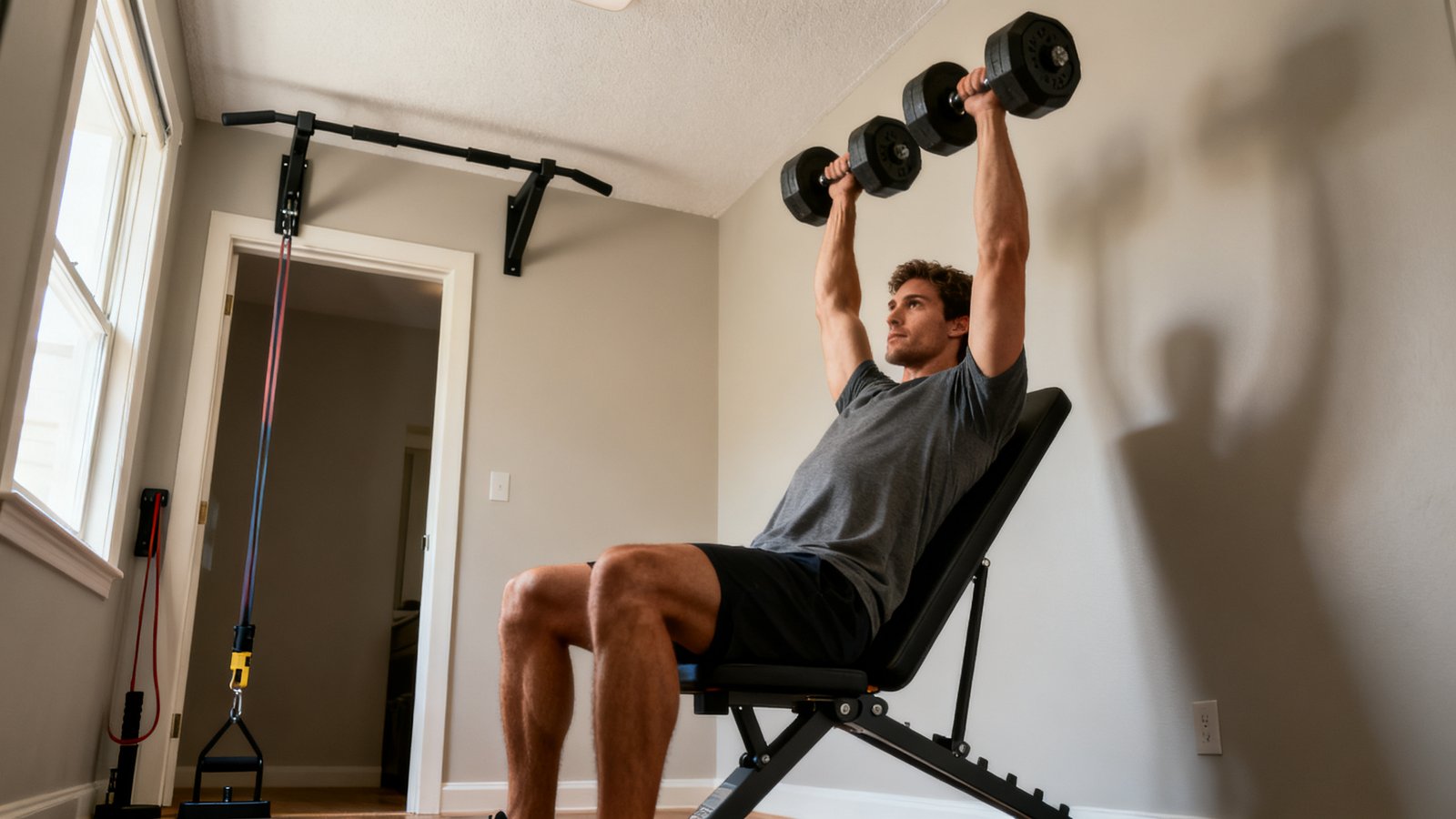
What do you do when your ceiling is too low? Seated overhead dumbbell presses and landmine presses solve the pressing problem immediately. For pulling, a doorway pull up bar set lower for negative only reps works well. You jump into the top position and lower yourself slowly. Banded pull variations anchored to a low point on a door or wall also train the same muscles without overhead clearance. Before buying any rack, check out our best pull up bar home guide for doorway and wall mounted options that work in low ceiling rooms. For a complete starter equipment list that accounts for ceiling constraints, our home gym essentials list is a good place to start.
Minimum floor space plans: exact footprints and two practical layouts
A 6×8 ft space, which is 48 square feet, can accommodate a foldable bench, resistance bands, adjustable dumbbells, and wall storage with enough open floor for movement. This is the compact strength setup confirmed by the RitFit size guide. A 6×6 ft area works only for bodyweight, bands, and light dumbbell work. You cannot fit a bench in that footprint and still have room to move around it safely.
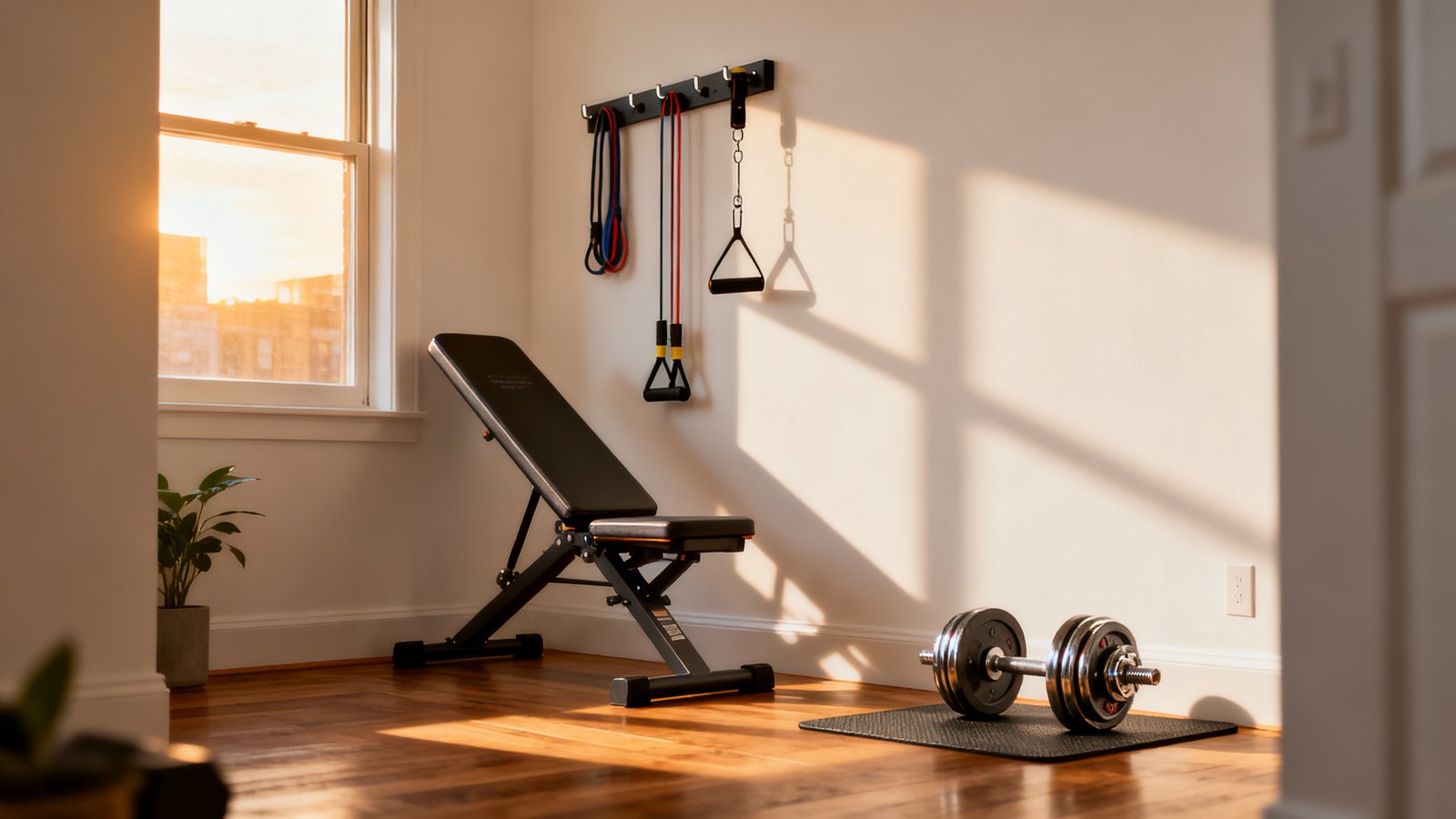
Layout option A is the foldable bench plus bands plus adjustable dumbbells setup. Place the bench against a short wall, store dumbbells on a low wall shelf directly above it, and hang bands on hooks beside the bench. The center of the 6×8 rectangle stays open for standing exercises, lunges, and floor work. Layout option B is the ultra compact band and bodyweight setup in 6×6 ft. No bench, no rack. Just a mat, bands, a pair of adjustable dumbbells, and a doorway pull up bar. This works in a studio apartment corner or even a bedroom alcove. Wall storage for everything keeps the floor completely clear between sessions.
For more ideas on maximizing limited square footage, see our dedicated home gym small space guide with additional layout options.
Stability and anchoring: how to avoid wobble with space saving racks
Fold down and wall mounted racks save floor space, which is why they dominate small gym recommendations. But the same design feature that makes them compact also makes them less stable than traditional freestanding racks. The PRx Profile ONE, for example, exhibited noticeable instability during side to side movements when tested with plastic footplates instead of rubber ones, as Barbend noted in their testing. This wobble is not dangerous for controlled pull ups, but it becomes a real concern during kipping pull ups, dynamic rows, or anything with lateral momentum.
The fix is straightforward. First, bolt the rack into wall studs, not drywall alone. This is non negotiable. Second, if the rack has floor contact points, swap plastic footplates for rubber ones or add rubber pads underneath. Third, use floor anchors if the design allows. A rack anchored to both the wall and the floor is dramatically more stable. Fourth, adapt your rep speed. Slower, controlled reps reduce lateral force. Save explosive movements for exercises where both feet stay on the ground.
If you are considering a foldable bench as part of your setup, stability matters there too. Read our best weight bench home gym guide for benches tested specifically for stability under load.
Equipment that truly fits small spaces: a prioritized list
Not all compact equipment earns its footprint. Some items promise space efficiency but deliver poor functionality. Here is a ranked list of equipment that genuinely fits and works in small spaces, ordered by versatility per square foot.
| Equipment | Footprint | Best For | Watch Out For |
|---|---|---|---|
| Adjustable dumbbells | 2×2 ft stored | Replaces 10+ pairs of dumbbells | Some models are wide and awkward for certain movements |
| Foldable bench | 5×1.5 ft when stored vertically | Enables pressing, rows, seated work | Cheap folding benches can pinch fingers or wobble under heavy loads |
| Resistance bands | Hangs on a hook | Pulls, presses, assisted pull ups, mobility | Latex bands degrade over time; fabric bands last longer |
| Doorway chin up bar | Fits in a doorframe | Pull ups, hanging leg raises, band anchor point | Requires sturdy doorframe; some leave marks on trim |
| Suspension trainer | Packs into a small bag | Rows, presses, core work, hundreds of variations | Needs a solid anchor point; door anchor included with most models |
| Compact kettlebell | 1×1 ft on floor | Swings, goblet squats, carries, Turkish get ups | Cast iron bells can damage floors if dropped; use a mat |
| Fold away squat stand | 3×3 ft when deployed | Squats, bench press with spotter bars | Requires ceiling clearance; must be anchored or heavily weighted at base |
What to avoid if ceiling or floor space is tight: full power racks, dedicated leg press machines, Smith machines, large cable crossover stations, and any all in one trainer that exceeds your measured ceiling height. For a deeper dive into adjustable dumbbells specifically, see our best adjustable dumbbells comparison.
Smart gym systems in tiny corners: a reality check (Tonal, Mirror, others)
Smart gyms look like the ultimate small space solution. The wall mounted units are sleek, compact, and replace an entire rack of weights with digital resistance. The problem is that the wall unit is not the whole story. Smart gyms require clear floor space around them to safely perform the programmed workouts, and the numbers might surprise you.
Tonal, for example, cannot fit a 4×4 ft corner. The wall mounted unit itself measures roughly 5.25 inches deep by 21.5 inches wide by 50.9 inches high. That sounds tiny. But the brand recommends at least 7×7 ft of clear space, which is 49 square feet, to safely perform the workouts. Garage Gym Reviews confirms you need a 7 foot by 7 foot space clear to use the unit safely. Barbend states you will need roughly 64 square feet of available space to perform the programmed workouts for Tonal. No Mirror device appeared in any of the sources reviewed, so its true spatial requirements cannot be assessed here.
The takeaway is simple. Smart gyms are wall space efficient but floor space demanding. If your clear floor area is less than 7×7 ft, a smart gym is not your answer. In that footprint, you are better off with adjustable dumbbells, a foldable bench, and bands, which together cost less and fit in 48 sq ft. For more ideas on compact workout equipment that works in apartments, browse our home gym ideas for small spaces collection.
Hidden costs most people miss (flooring, sound control, shipping and returns)
The price tag on equipment is only part of the total cost. Several expenses hit after the purchase, and they catch first time buyers off guard. Flooring is the biggest one. Cheap foam puzzle tiles are inadequate for any setup with weights. Proper 3/4 inch rubber mats or horse stall mats are essential to protect your floor, reduce noise transmission, and provide a stable training surface. Bold Body Fitness lists ignoring flooring as a key mistake and specifically advises against cheap puzzle mats. Expect to spend $50 to $150 on proper rubber flooring for a 48 sq ft area.
Sound control is the secondary hidden cost. The RitFit size guide recommends using rubber mats and training during reasonable hours if sound is a concern. In multi unit buildings, even rubber mats may not be enough. Deadlifts, kettlebell swings, and jump rope create impact noise that travels through floors and walls. Some renters add interlocking rubber tiles with an acoustic underlayment beneath them. Others use crash pads or sandbags to absorb impact. These are not luxury add ons. They are practical necessities when neighbors live directly below or beside you.
Delivery and installation costs for heavy equipment also add up. A single all in one trainer can weigh several hundred pounds and arrive on a pallet. Freight delivery, stair carries, and professional assembly are often separate line items. Before ordering, check whether the price includes curbside delivery, threshold delivery, or white glove service. The differences can be hundreds of dollars.
Returns, warranties, and brand reliability: what we know and what we do not
A common claim in home gym content is that certain brands have higher return rates on Amazon than others. The supplied research data for this article does not include return rate data for any compact brands sold on Amazon. No analysis of return rates or customer return statistics is available. Any article making those claims is working from information that is not publicly verified.
What you can evaluate instead are warranty lengths and customer service reputations. Longer warranties on frames, moving parts, and cables signal manufacturer confidence. A frame warranty of 10 years or more is common on quality racks. Cable and pulley warranties are typically shorter, often 1 to 3 years. Read the fine print. Some warranties only apply to the original purchaser and require professional installation. Others prorate the coverage over time. Before buying any space saving equipment, search for recent customer reviews that mention warranty claims. The experience of filing a claim tells you more than the warranty length alone. If a brand makes it hard to reach a human or takes weeks to ship replacement parts, that matters more than an extra year of coverage on paper.
For a complete list of equipment that belongs in a reliable starter gym, our home gym essentials list covers top rated picks with verified warranty information.
Solutions for taller users and limited ROM: workarounds and gear tweaks
Compact all in one machines often fall short for taller athletes. The Bowflex Xtreme 2 SE, for instance, has a top lat pulldown position that sits too low, making the effective range of motion incomplete for users over six feet tall, as Barbend testing revealed. This is a design tradeoff. The machine shrinks its footprint by lowering the pulley height, and suddenly tall users are doing lat pulldowns that stop midway.
The workarounds are not perfect, but they keep you training. For overhead pulling, switch to seated cable rows, band pull aparts, and doorway pull up bar negatives. These hit similar muscle groups without needing ceiling height or tall pulley columns. For pressing, seated and incline dumbbell presses replace standing overhead presses. An adjustable bench set to a high incline gives you the shoulder activation of an overhead press with zero ceiling clearance issues. For leg exercises, swap compact leg press attachments for Bulgarian split squats, step ups, and single leg work. These take less space and provide full range of motion regardless of your height.
Before buying any used or compact all in one trainer, physically test the range of motion if you can. Sit at the lat pulldown station. Does the bar reach your chest with your arms fully extended overhead? If not, that machine is not for you. If you are buying online, search for video reviews from users who match your height. A 5 foot 8 inch reviewer will never flag the ROM issues that affect someone 6 foot 2.
Multi use furniture and untapped hacks (the missing sub topic)
None of the sources reviewed for this article discuss multi use furniture for small home gyms. Not a single guide mentions storage benches that double as weight storage, fold away desks that clear space for workouts, or convertible shelving that transforms into equipment racks. This is a surprising gap, because dual purpose furniture is one of the most practical solutions for anyone living in a studio or one bedroom apartment.
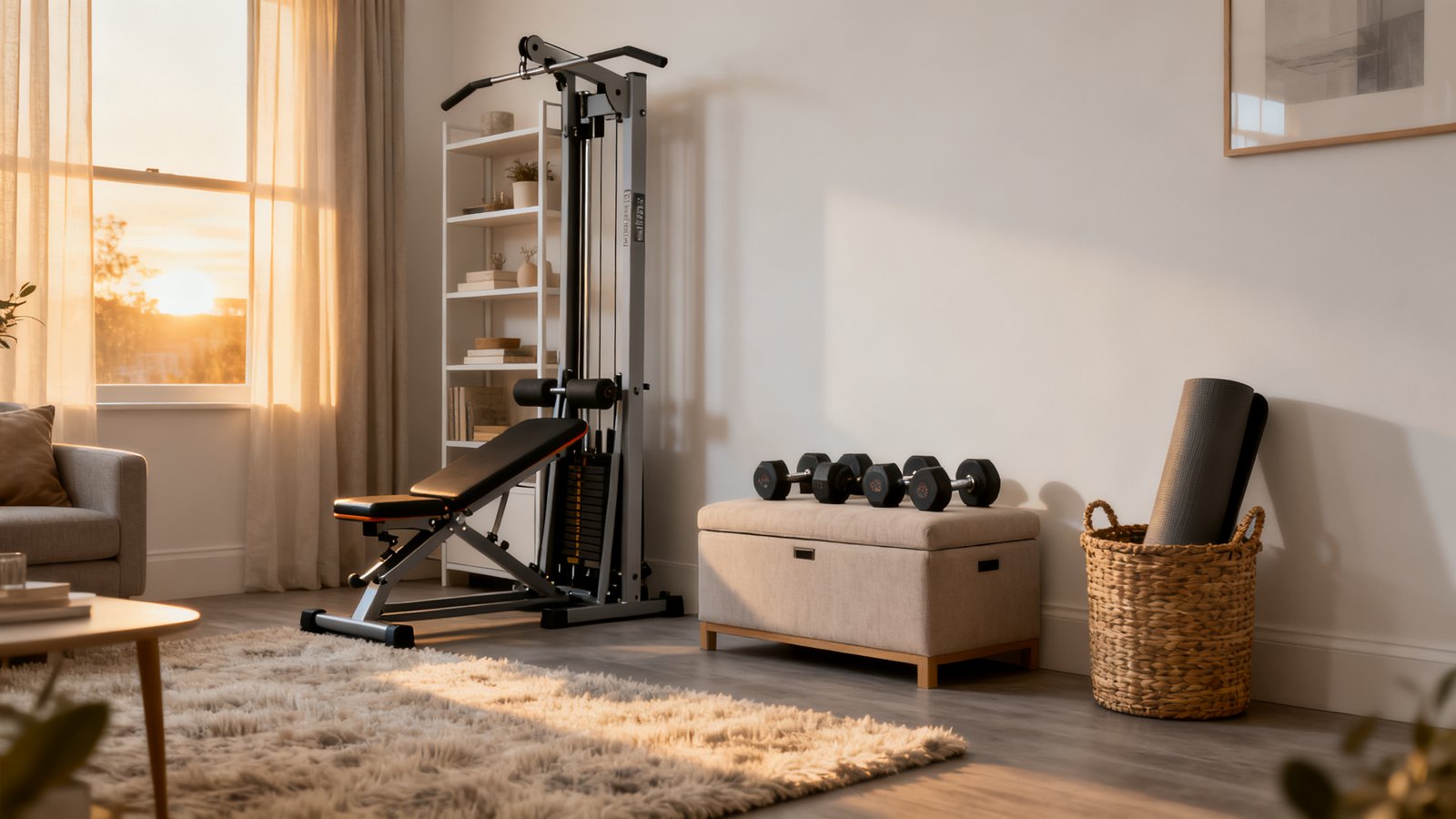
The concept is simple. A storage bench at the foot of your bed can hold dumbbells, bands, and a mat inside, while serving as seating the rest of the day. A fold down wall mounted desk can lift up and lock against the wall, revealing a clear workout zone behind it. Murphy bench concepts, inspired by Murphy beds, fold flat against the wall when not in use and drop down into a stable weight bench position. Convertible shelving units on casters can hold equipment on one side and face outward as a regular bookshelf when pushed against the wall. These approaches are not discussed in mainstream home gym content, but they solve the core problem of small spaces: everything must earn its footprint twice.
If you are handy, building a simple plyometric box with a hinged lid creates a storage cube for bands and accessories that also functions as a step up platform, a seat, and a squat depth gauge. A wall mounted pegboard with hooks holds resistance bands, jump ropes, and suspension trainers in plain sight and takes zero floor space. These hacks cost very little and dramatically improve how a small room functions for both living and training. For more unconventional space saving strategies, explore our full home gym small space resource.
Quick decision matrix and pre purchase checklist
Before you buy a single piece of equipment, run through this checklist. It combines every critical measurement and consideration from the sections above into one quick pass. Missing any of these steps is how people end up with equipment that does not fit, wobbles dangerously, or blows the budget on hidden costs.
- Measure your ceiling height in inches. Target 92 inches or above for pull ups and overhead presses. If below, plan for seated press variations and doorway bar negatives.
- Measure your clear floor footprint. A 6×8 ft rectangle is the realistic minimum for a bench plus dumbbells plus bands setup with adequate circulation space.
- Test wall and floor stability. Confirm you can bolt a rack into wall studs. If renting, check your lease and consider freestanding options with heavy base plates instead.
- Budget for flooring. Add $50 to $150 for 3/4 inch rubber mats or horse stall mats. Skip foam tiles entirely.
- Confirm warranty terms. Look for a minimum 10 year frame warranty on racks and a minimum 1 year warranty on cables and moving parts. Read recent customer reviews about actual claim experiences.
- Reserve wall storage space. Plan hooks, shelves, or a pegboard to keep equipment off the floor when not in use.
- Verify ROM if you are over 6 feet tall. Search for video reviews from users your height or physically test equipment before buying.
- Account for delivery and assembly costs. Check whether the price includes threshold or white glove delivery, especially for heavy items.
Conclusion: making your small space gym actually work
A small home gym fails for predictable reasons: you did not measure the ceiling, you underestimated the wobble, and the machine was not built for your height. But a small home gym succeeds when you treat those three factors as dealbreakers instead of afterthoughts. Measure first. Prioritize flooring and stability. Choose equipment that fits your body, not just your floor plan. The 6×8 ft layout with a foldable bench, adjustable dumbbells, and wall storage works. The 6×6 ft bodyweight and bands layout works too. Smart gyms need more clearance than you probably have. And multi use furniture, while overlooked, might be the best investment you make.
Your home gym small space setup does not need to be elaborate. It needs to be measured, stable, and suited to your actual living situation. Start with the checklist. Test your space. Then buy with confidence, knowing that every piece earns its footprint. For help choosing the right weight amounts once your space is ready, see our guide on how much weight home gym beginners should buy.
Frequently asked questions
What is the minimum ceiling height for a home gym with pull ups?
A minimum of 92 inches, or 7 feet 8 inches, is generally recommended for pull ups and overhead pressing. Specific equipment like the PRx Profile ONE requires 94 to 107 inches, and the Force USA C10 needs at least 97 inches. Always measure your exact ceiling height before purchasing any rack or all in one trainer.
Can I build a home gym in a 6×6 ft space?
A 6×6 ft space works for bodyweight exercises, resistance bands, and light dumbbell work. It does not accommodate a bench with enough circulation space for safe movement. For a bench plus dumbbells setup, a 6×8 ft footprint, or 48 square feet, is the realistic minimum.
Does Tonal fit in a 4×4 ft corner?
No. While the Tonal wall unit itself is compact at roughly 5.25 inches deep by 21.5 inches wide, the brand recommends at least 7×7 ft of clear floor space, or about 49 square feet, to safely perform the programmed workouts. Some sources suggest 64 square feet is ideal.
How do I stop my foldable rack from wobbling?
Bolt the rack into wall studs, not drywall alone. Replace plastic footplates with rubber ones or add rubber pads underneath. Use floor anchors if the design allows. For dynamic movements, slow down your rep speed to reduce lateral forces that cause wobble.
What is the most overlooked cost when setting up a small home gym?
Flooring is the cost most people overlook. Cheap foam tiles are not sufficient for weight training. Proper 3/4 inch rubber mats or horse stall mats are needed to protect floors, reduce noise, and provide a stable surface. Expect to spend $50 to $150 for a 48 square foot area. Delivery and assembly fees for heavy equipment are another common surprise.