

If you’re hunting for the best kettlebells home gym buyers can actually trust, you’ve probably already noticed the problem. Most reviews read like product praise with zero tradeoff analysis. You need to know what works in a compact apartment, what holds up over years of use, and whether an adjustable model actually saves you money or just creates new headaches. This guide answers those questions directly.
Key Takeaways
- The average adjustable kettlebell replaces up to eight standard bells for around $165, making it the smartest space and budget choice for most home gym owners.
- Weight increment size is the most overlooked buying factor. Some models jump 9 lbs per change while others go as fine as 0.5 kg, which directly impacts your ability to progress safely.
- Warranty length varies wildly from 1 year (Titan Fitness) to lifetime (REP Fitness), and this single factor often determines long term value more than the initial price tag.
Table of Contents
- Quick Picks for a Small Home Gym
- Adjustable vs. Fixed-Weight — Real Tradeoffs
- Exact Weight-Jump Specs — How Small Can You Progress?
- Material Comparison — Cast Iron / Powder-Coat vs. Vinyl-Coated
- Best Kettlebells for Beginners & How to Pick Your First Weights
- Cost-Per-Pound — Set vs. Adjustable (How to Do the Math)
- Storage & Warranty — The Overlooked Buying Factors
- Common 1-Star Complaints & How to Avoid Them
- Buying Checklist & Decision Flow (Actionable Next Steps)
- FAQ
Quick Picks for a Small Home Gym
If you need to make a decision in the next five minutes, here are three recommendations tied to specific scenarios. Each solves a distinct problem for the home gym buyer.
Best Adjustable for Space: PowerBlock Adjustable Kettlebell. Its ultra compact build replaces four kettlebells in a single unit that tucks into a closet or shelf. If square footage is your primary constraint, this is the pick.
Best Fixed-Value Set for Long Term Value: REP Fitness adjustable kettlebell with lifetime warranty. At $149.99 for the 8 to 16 kg range, you get a brand that stands behind its product forever. When you factor in the warranty, the cost per year of use drops dramatically compared to budget alternatives.
Best Beginner Friendly Single Bell: A 12 kg cast iron powder coated kettlebell from a brand with a clear return policy. This weight lets a beginner practice swings, goblet squats, and halos without immediately needing to upgrade. For more guidance on starting weights, check our weight selection guide for home gym beginners.
Adjustable vs. Fixed-Weight — Real Tradeoffs
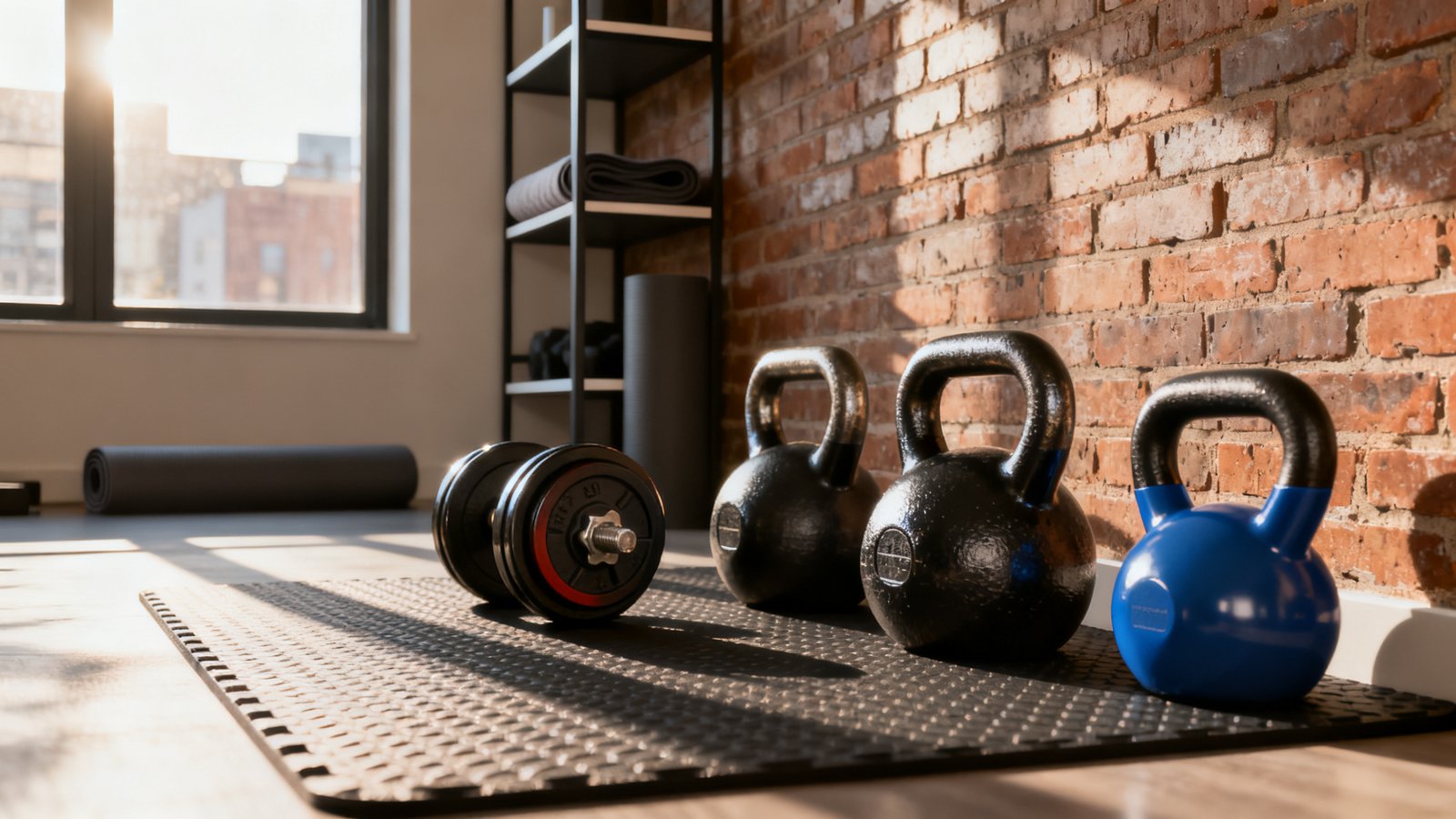
This is the central buying decision and most articles gloss over the actual tradeoffs. Let’s break down what matters for a home gym where space, budget, and durability actually count.
An adjustable kettlebell condenses multiple weight options into one unit. The average adjustable model can replace up to eight standard kettlebells for around $165, based on testing data from Garage Gym Reviews. That is compelling math for a renter with a 700 square foot apartment.
Fixed weight kettlebells offer a simpler value proposition. The handle never changes shape between weights. The balance point stays consistent. There are no pins, dials, or locking mechanisms that can fail. But you need storage space for each bell, and the cost multiplies fast when you outgrow your starting weight.
Here is the side by side comparison that actually matters for a home gym buyer:
| Factor | Adjustable Kettlebell | Fixed-Weight Set |
|---|---|---|
| Space Footprint | One unit replaces 4 to 8 bells | Each bell needs its own footprint or rack |
| Long Term Cost | $149 to $299 for full range | $250 to $600+ for a comparable weight spread |
| Handle Feel | May differ slightly between weight settings; some models have bulkier frames | Consistent diameter and finish across all weights |
| Durability | Locking mechanism is a potential failure point | No moving parts; essentially indestructible |
| Progression Granularity | Varies wildly (0.5 kg to 10 lb jumps) | Depends on how many bells you own |
A critical transparency note: The provided sources contain no sales data, unit volumes, revenue figures, or market share statistics for adjustable or fixed weight kettlebells. The recommendations in this guide are review driven, based on hands on testing from multiple independent reviewers at BarBend, Men’s Health, and Women’s Health, not market share data. No one is publishing unit sales numbers publicly, so any claim about which model “sells best” would be fabricated. What we do have is consistent testing feedback across multiple outlets, and that is what drives these picks.
Exact Weight-Jump Specs — How Small Can You Progress?
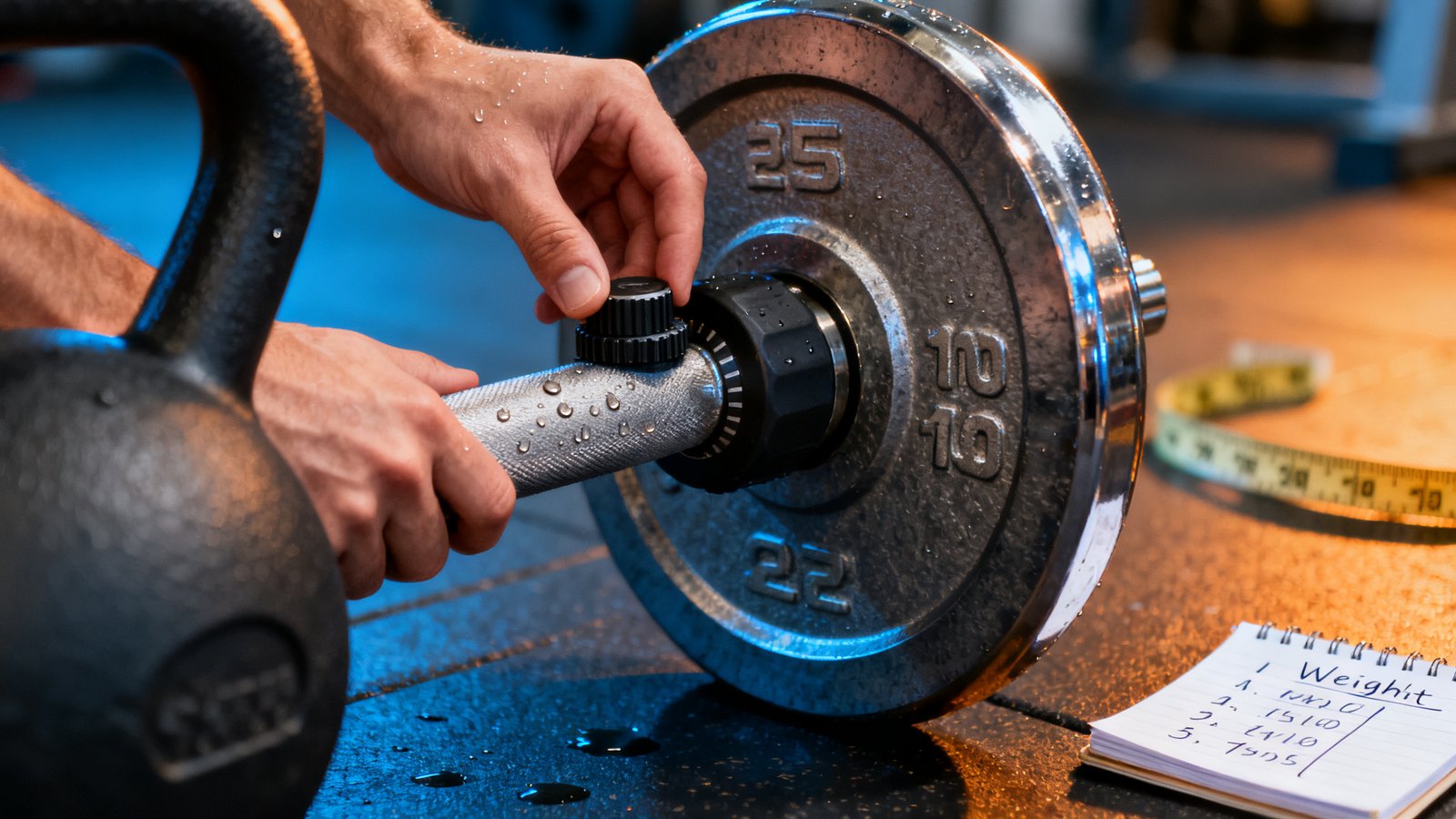
Weight increment size is the factor that separates a kettlebell you can grow with from one you will outgrow in six months. For beginners and intermediates building a home gym, jump sizes of 5 lbs or less are ideal. Jumps of 9 or 10 lbs can stall progress or force you to buy supplementary bells.
Here are the exact specs for the top adjustable models on the market, drawn from Garage Gym Reviews testing data:
| Model | Weight Range | Increment Size | Total Settings |
|---|---|---|---|
| Bells of Steel Adjustable Competition Style | 12 to 20.5 kg (expandable to 32 kg) | 0.5 kg (1.1 lbs) per plate | 18 weight increments |
| REP Fitness Adjustable | 8 to 16 kg or 20 to 40 lbs | 2 kg (4.4 lbs) or 5 lbs | 5 settings per model |
| Titan 10 to 40 LB Adjustable | 10 to 40 lbs | 2.1 to 2.7 kg (4.6 to 6 lbs) per plate | 7 working weights |
| Titan Competition Style Adjustable | 12 to 32 kg | 2, 3, 4, or 6 lbs per change | Varies by plate combo |
| PowerBlock Adjustable | 18 to 35 lbs OR 35 to 62 lbs | 4 and 9 lbs (light); 9 lbs (heavy) | Multiple per model |
| Bowflex SelectTech 840 | 8 to 40 lbs | 4 to 10 lbs across 6 settings | 6 settings (8, 12, 20, 25, 35, 40 lbs) |
| Titan Plate Loadable | 8 to 500 lbs | Depends on plates available | Unlimited |
Material Comparison — Cast Iron / Powder-Coat vs. Vinyl-Coated
The material you choose directly affects grip security when sweaty, floor protection in a rental, and how the bell looks after two years of use. Here is what the testing data and user feedback actually reveal.
Cast Iron with Powder Coat: This is the standard for serious lifters. The powder coat provides a slightly textured surface that maintains grip when hands get damp. However, testing at Garage Gym Reviews found the Titan competition style adjustable showed premature corrosion on the powder coat after just a few months. The Amazon Basics cast iron bell has a painted handle that reportedly becomes slippery with sweat, creating a safety concern during high rep swings. Flat bottoms on cast iron bells can also scratch hardwood or tile floors, so a mat is essential in a rental.
Vinyl Coated: These are marketed as floor friendly and quieter, but the tradeoffs are real. The Yes4All vinyl coated kettlebell has user reports of the coating chipping on delivery, sometimes right out of the box. The bottom is often not entirely flat, which complicates exercises like hand release pushups or renegade rows. Multiple testers note that vinyl can feel slick when things get sweaty. If you’re considering vinyl, inspect the bell immediately on arrival and be ready to return any unit with coating damage.
For a deeper look at how equipment materials hold up in compact setups, read our small space home gym guide here.
Best Kettlebells for Beginners & How to Pick Your First Weights
Beginners need one thing above all else: a weight that feels manageable for 10 to 15 reps on a single arm movement without form breakdown. For most people new to kettlebell training, that means starting between 8 kg (18 lbs) and 12 kg (26 lbs).
Here is a practical starting point based on general strength levels:
Complete beginners with no lifting background: Start with an 8 kg (18 lb) bell for single arm work and a 12 kg (26 lb) bell for two hand swings. A single 8 kg bell lets you practice the movement patterns without risking injury.
Active beginners with some gym experience: A 12 kg (26 lb) bell handles most single arm and two hand work. You may outgrow it for swings within a few months, but it remains useful for Turkish get ups and halos even as you add heavier bells.
Budget conscious beginners: The REP Fitness 16 kg adjustable listed at $149.99 covers the 8 to 16 kg range, essentially giving you a beginner and intermediate bell in one purchase. At roughly $4.28 per pound based on the usable weight range, it undercuts the price per pound of most fixed weight sets like the Nike Essentials kettlebell set at $3 to $5 per pound, while giving you multiple weight options in a single footprint.
If you’re building a full starter setup on a tight budget, our home gym under $500 guide covers kettlebell pairings with other essential equipment.
Cost-Per-Pound — Set vs. Adjustable (How to Do the Math)
Most buyers never run the actual numbers. They see a $40 fixed weight bell and a $200 adjustable and assume the fixed bell is cheaper. That math falls apart once you need more than one weight.
Here is how to do the comparison for your own situation. List every weight you realistically need over the next two years. For a beginner moving toward intermediate, that might be 8 kg, 12 kg, 16 kg, 20 kg, and 24 kg. That is five bells. At $40 to $60 per fixed bell for budget to mid range options, you are looking at $200 to $300 total.
Now compare the adjustable route. The Bowflex SelectTech 840 at $149 covers 8 to 40 lbs across six settings, which works out to roughly $4.66 per pound of usable weight change. The Metis neoprene kettlebells come in at $2.50 to $3.50 per pound individually, but you need to buy multiple bells to match the weight range.
The average adjustable model replaces eight standard kettlebells for around $165, as noted in Garage Gym Reviews testing. Even if you dislike the handle feel of an adjustable, the math for a space constrained home gym is hard to argue with.
A caveat on missing data: Exact cost per pound figures for complete fixed weight sets versus adjustable models are not provided in the available sources. The comparisons above use calculated figures from listed prices and weight ranges. Always run your own numbers based on current pricing and the specific weights you need. For more on budgeting a complete setup, see our home gym versus gym membership cost analysis.
Storage & Warranty — The Overlooked Buying Factors
Storage and warranty length are the two factors that most kettlebell reviews skip entirely, yet they directly dictate whether your purchase remains a good decision two years later.
Storage reality: A collection of five fixed weight kettlebells consumes meaningful floor space. Without a rack, they sit on the floor and become tripping hazards in a small apartment. The PowerBlock adjustable is specifically praised as the best compact option because its ultra compact build replaces four kettlebells in a single stackable unit. Most other brands including Bells of Steel, Titan Fitness, Bowflex, and REP Fitness do not highlight storage features or rack compatibility in their product descriptions.
Warranty differences: The average warranty among adjustable kettlebells tested is 4 years, but the spread is enormous. Here is how the major brands compare:
| Brand | Warranty Length | Assessment |
|---|---|---|
| REP Fitness | Lifetime | Best in category |
| Bells of Steel | Limited lifetime | Strong; read the fine print on “limited” |
| PowerBlock | 5 years | Above average |
| Bowflex SelectTech 840 | 2 years | Below average |
| Titan Fitness | 1 year | Worst among tested brands |
| Amazon Basics / Yes4All | Not highlighted | Assume limited coverage |
A one year warranty on a mechanical adjustable kettlebell with moving parts should give any buyer pause. If the locking mechanism fails at month 13, you own a paperweight. The lifetime warranty from REP Fitness effectively makes their adjustable a one time purchase. For more on avoiding equipment that fails early, see our guide on home gym mistakes to avoid.
Common 1-Star Complaints & How to Avoid Them
Negative reviews follow clear patterns, and knowing them in advance lets you sidestep the most common frustrations. Here are the recurring complaints for each material type, drawn from user feedback aggregated across multiple review sources.
Cast Iron and Powder Coat Issues:
- Powder coat showing premature corrosion, particularly on the Titan competition style adjustable kettlebell. Testers noted rust signs within months of normal indoor use.
- Painted handles becoming dangerously slick with sweat. The Amazon Basics cast iron bell is the most cited example. When a handle loses grip mid swing, the safety risk is real.
- Uncoated bottoms scratching hardwood and tile floors. This is preventable with a gym mat but frequently catches first time buyers off guard.
Vinyl Coated Issues:
- Coating chipping on delivery. The Yes4All vinyl bell had multiple reports of the coating flaking off with the packaging, straight out of the box.
- Non flat bottoms making ground based exercises unstable. Hand release pushups and renegade rows become frustrating when the bell wobbles.
- Vinyl surface feeling slick when sweaty, reducing grip confidence during high rep sets.
Prevention tips: Use a gym mat under any kettlebell regardless of material. Choose powder coat over painted handles for better sweat grip. Inspect vinyl coated bells immediately on delivery and refuse any unit with visible coating damage. For powder coat longevity, wipe down the bell after sweaty sessions instead of letting moisture sit on the surface.

Buying Checklist & Decision Flow (Actionable Next Steps)
Run through this decision flow. Answer each question honestly and the right pick becomes clear.
Step 1: Is space limited? If yes, an adjustable is the default choice. The PowerBlock or Bells of Steel models condense multiple bells into a single footprint. A fixed weight set only makes sense if you have dedicated floor space or a rack. See our small apartment home gym setup guide for storage solutions.
Step 2: Do you need fine weight jumps? If you plan to press kettlebells or follow a structured progression program, Bells of Steel with its 0.5 kg increments is the clear winner. If you only plan to swing and goblet squat, larger jumps from the Bowflex or Titan models are acceptable.
Step 3: On a tight budget? If yes, and you already own weight plates, the Titan plate loadable kettlebell at $74.99 is the cheapest path to a full weight range. If you do not own plates, the REP Fitness adjustable at $149.99 with lifetime warranty is the safest long term bet.
Step 4: Do you want a lifetime warranty? If warranty matters and you want to buy once, REP Fitness wins. Bells of Steel offers a limited lifetime warranty as a runner up. Avoid Titan Fitness and Bowflex if warranty coverage influences your decision.
Buy triggers: The average adjustable replaces up to eight bells for around $165 and fits in a closet. If those two facts align with your constraints, buy an adjustable with a warranty of at least 5 years.
Don’t buy triggers: If you find a vinyl coated bell with visible coating flaws on delivery, return it immediately. If an adjustable model has a 1 or 2 year warranty and moving parts, consider the replacement cost after the warranty expires as part of the true price.
Conclusion
Finding the best kettlebells home gym setup comes down to three honest assessments: your available space, the weight increments you need for safe progression, and how much you value a warranty that outlasts the honeymoon phase of a new purchase. An adjustable kettlebell from REP Fitness or Bells of Steel solves the space and budget equation for most buyers, while the PowerBlock offers the smallest footprint of any tested model. Fixed weight sets still have a place for lifters who prioritize consistent handle feel and zero mechanical risk. Run the cost per pound math on the exact weights you need, factor in the warranty length as a hidden cost multiplier, and avoid vinyl coated bells with a history of chipping complaints. Your floor space and your training consistency will both thank you.
FAQ
What weight kettlebell should a complete beginner start with?
Most beginners should start with an 8 kg (18 lb) bell for single arm exercises and a 12 kg (26 lb) bell for two hand swings. If you have prior strength training experience, a single 12 kg bell can cover both use cases for the first few months. The key is being able to complete 10 to 15 controlled reps without form breakdown.
Are adjustable kettlebells as durable as fixed weight bells?
Fixed weight bells have no moving parts and are essentially indestructible. Adjustable kettlebells introduce locking mechanisms that can fail. However, brands like REP Fitness back their adjustables with a lifetime warranty, which mitigates the durability concern. The powder coat on some adjustable models has shown premature corrosion in testing, so brand choice matters significantly.
Which adjustable kettlebell has the smallest weight increments?
The Bells of Steel adjustable competition style kettlebell offers 0.5 kg (1.1 lb) increments per plate across 18 weight settings, making it the most granular option available. The Bowflex SelectTech 840 has the largest jumps at 4 to 10 lbs between its six settings. PowerBlock uses 4 and 9 lb increments depending on the model.
Is there any sales data comparing adjustable versus fixed weight kettlebells?
No. The available sources from Garage Gym Reviews, Men’s Health, Women’s Health, and BarBend contain no sales data, unit volumes, revenue figures, or market share statistics for adjustable or fixed weight kettlebells. All recommendations in this guide are based on hands on testing and expert review, not market sales data.
Should I buy vinyl coated or cast iron kettlebells for a home gym?
Cast iron with powder coat is generally preferred for grip security when sweaty. Vinyl coated bells are marketed as floor friendly but have recurring complaints about coating chipping on delivery and slick surfaces when wet. If you choose vinyl, inspect the bell immediately upon arrival and use a gym mat regardless of material to protect your floors.