

A compact home gym machine is the single smartest purchase an apartment dweller can make right now. If you work from home, live in a studio or one bedroom, and refuse to let limited square footage kill your training, this guide is built for you. I have spent hours digging through product listings, negative reviews, warranty terms, and real user experiences so you do not have to guess. By the end, you will know exactly what to buy, what to avoid, and how to spot junk before it ships to your door.
Key Takeaways
- True all in one machines under $500 do not exist. What you get instead are smart, modular systems that cover 80 to 90 percent of movement patterns if you choose correctly.
- Cable fraying, stiff pulleys, and unusable adjustment points are the top mechanical failures reported in budget wall mounted units. These are not minor annoyances. They kill your workout options and create safety hazards.
- Warranty length directly signals manufacturer confidence. One year is the bare minimum on moving parts. Anything less, and you are gambling.
Table of Contents
- Why a compact home gym machine is the best fit for apartment life
- Top mechanical failures to watch for (make this a main decision factor)
- What “all in one” machines under $500 typically miss (and how to compensate)
- Best compact setups under $500 — realistic picks and what each delivers
- Shipping, footprint and installation — what to expect when space is limited
- Warranty and returns — read this before you buy
- Red flags in product listings and negative reviews (quick scan checklist)
- Final buying checklist and recommended configurations for apartments
- What we couldn’t find (data gaps & what to ask customer support about)
- Frequently Asked Questions
Why a compact home gym machine is the best fit for apartment life
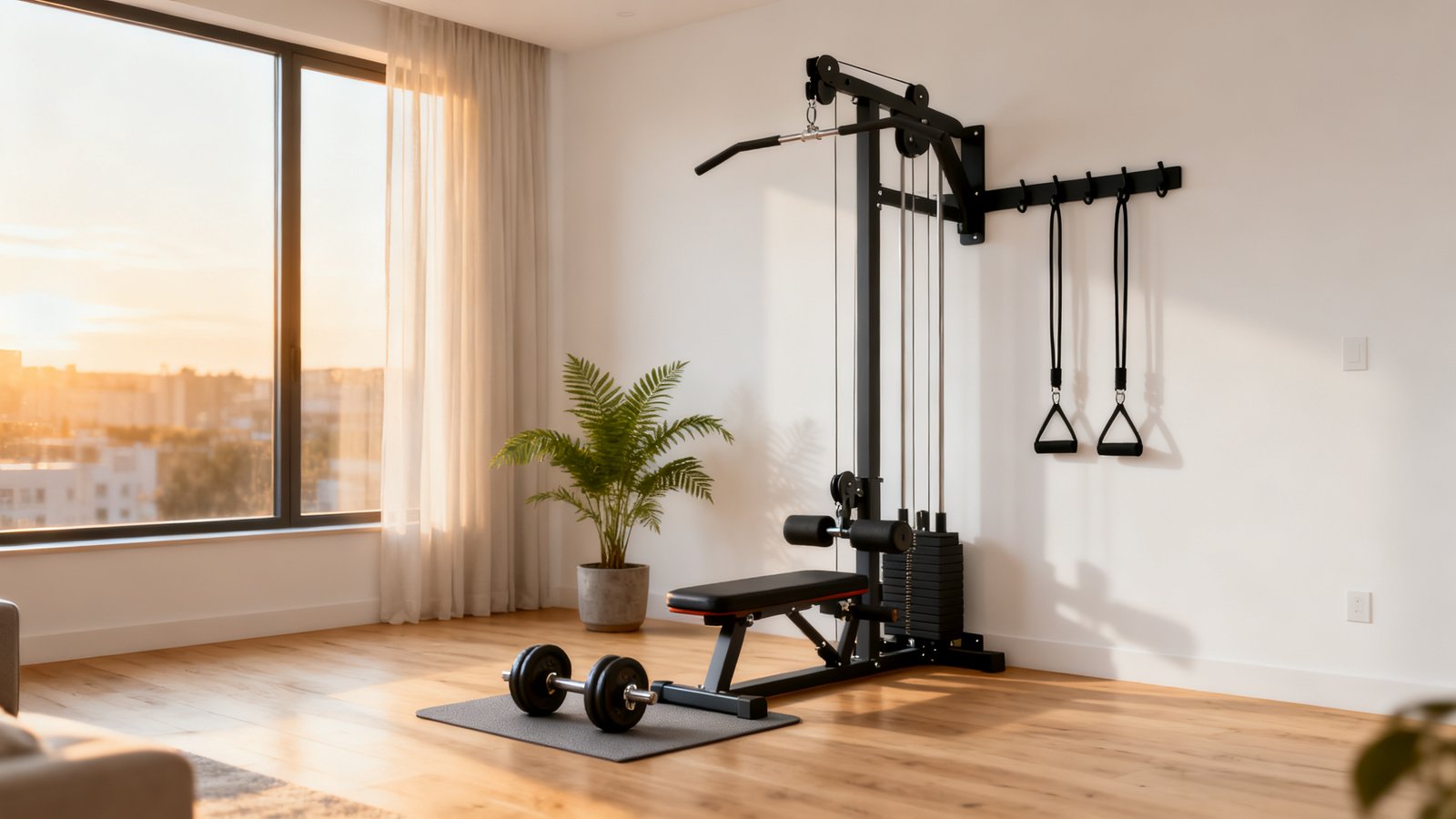
Space is nonnegotiable when you rent. A bulky power rack with a seven foot barbell simply will not fit in a studio. That reality pushes you toward equipment labeled “all in one home gym machine” or “compact home gym machine.” But here is the trade off: you sacrifice load capacity and exercise variety for portability and a smaller footprint.
What does “full body” actually mean under $500? It means your equipment must handle at minimum a vertical press, a vertical pull, a hip hinge, a squat variation, and some form of loaded carry or core work. According to the GarageGymReviews list of best home gyms under $500, products range from suspension trainers like TRX at just 1.5 lbs to wall mounted pulley towers at 65 lbs (Source: GarageGymReviews). None of them are traditional multi station rigs. Most are lightweight, portable, and modular.
That is not a bad thing. It means you can actually receive the package, carry it upstairs, and set it up without hiring help. But it also means you need realistic expectations. A compact home gym machine will not replicate a commercial cable stack. It will, however, give you enough stimulus to build muscle and maintain conditioning if you program intelligently.
Top mechanical failures to watch for (make this a main decision factor)
I read through dozens of negative reviews on wall mounted cable machines so you can spot trouble before you buy. The Valor Fitness BD-62 is a popular budget pick, but a detailed three star review on its Amazon page reveals exactly what goes wrong when cost cutting meets moving parts (Source: Valor Fitness BD-62 Amazon page). These failures are not unique to Valor. They appear across the category.
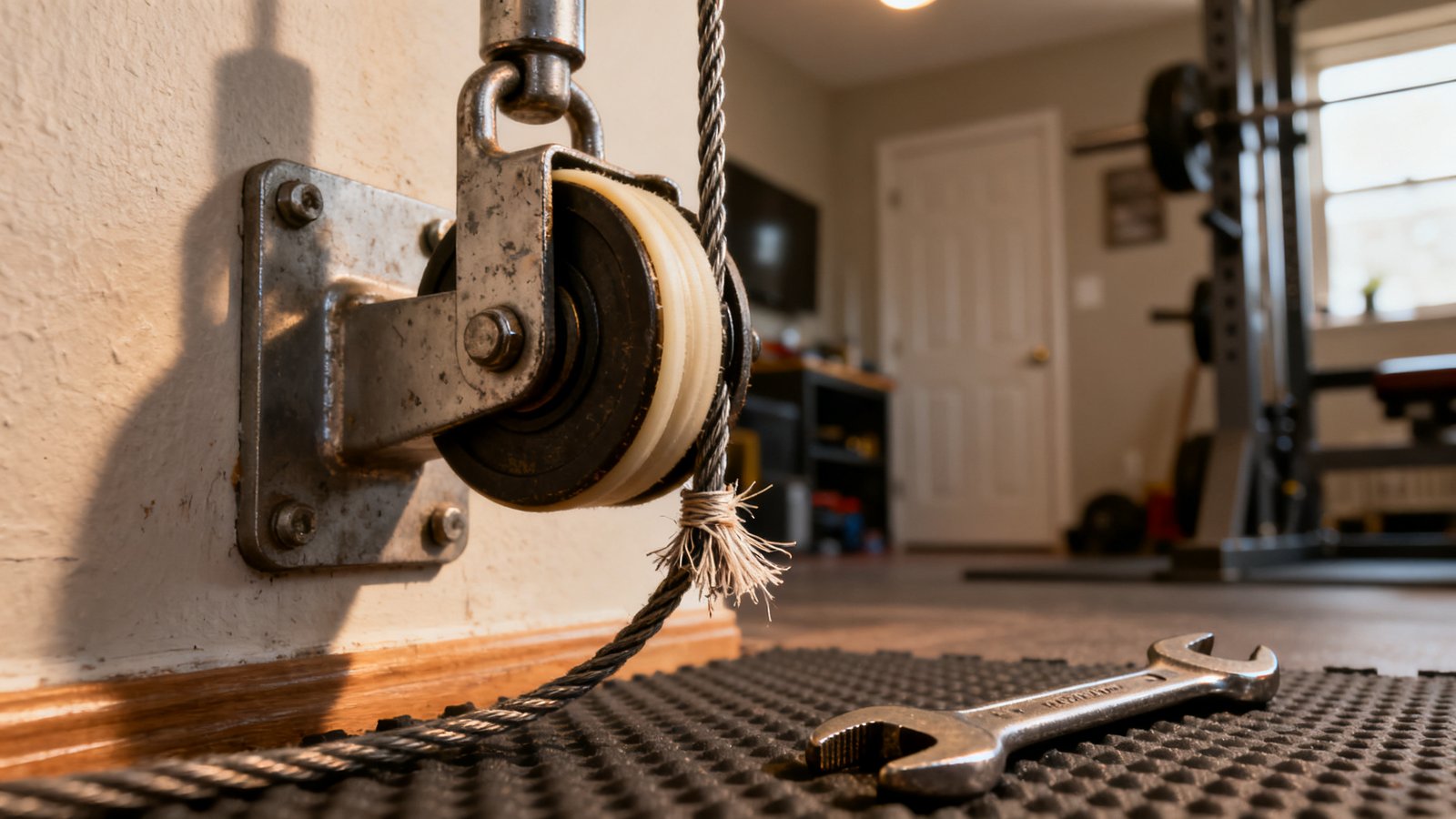
First, cable fraying. After roughly three months of regular use, the weight bearing cable on the BD-62 started shedding wire filaments and developing a split jacket. A frayed cable under tension is dangerous. It snaps, you lose control, and replacement parts are not always cheap or available.
Second, stiff and mediocre pulleys. The reviewer noted the system has excessive internal resistance simply from the number of pulleys and their low quality. Cables required a “wear in” period before they moved smoothly. Until then, every rep felt inconsistent. This matters because inconsistent resistance ruins hypertrophy stimulus and makes progressive overload guesswork.
Third, unusable adjustment positions. The top peg position on the BD-62 cannot be used because the cable trolley physically interferes with the top pulleys. You lose a portion of the advertised functionality before you even start. For a portable gym machine or foldable home gym equipment, every lost position means fewer exercise options in an already limited footprint.
What “all in one” machines under $500 typically miss (and how to compensate)
Let me be blunt. The research could not identify a single true all in one home gym machine under $500. The Bowflex Xtreme 2 SE is described as an all in one, but it sits at $1,499 (Source: GarageGymReviews best home gyms). Even at that price, reviewers note it emphasizes upper body and trains delts more than hamstrings. That pattern holds across the category. Cheap all in one machines dramatically underserve the posterior chain and lower body.
What is missing in sub $500 systems? Heavy lower body loading. Most compact options rely on your body weight or light resistance bands for squat and hinge patterns. That works for maintenance, but not for building significant leg strength. Horizontal pulling rows is another blind spot. Wall mounted pulley towers give you vertical pulls, but horizontal rows often require a separate setup or creative band anchoring.
The fix is simple. Pair your main best resistance bands or pulley tower with single leg work. Bulgarian split squats, single leg Romanian deadlifts, and band resisted hip thrusts fill the lower body gap without needing a squat rack. A set of best adjustable dumbbells under $300 adds serious loading potential for goblet squats, lunges, and rows. The best compact home gym under 500 is almost always a hybrid of two or three tools rather than one magic machine.
Best compact setups under $500 — realistic picks and what each delivers
These four product types represent the best compact home gym under 500 dollars. Each covers different movement patterns and suits different apartment constraints. I have pulled specs directly from the GarageGymReviews list (Source: GarageGymReviews under $500 list).
suspension trainer (TRX Home Suspension Trainer)
Product weight: 1.5 lbs. Footprint: nearly zero. This thing anchors to a door and gives you rows, presses, flyes, and core work. Lower body is limited to single leg squats and hamstring curls. Perfect for the ultra portable gym machine seeker who travels or moves often. No installation permission needed. Warranty: 2 years.
Resistance Bands (Fringe Sport Latex Free Strength Bands)
Bands are roughly 40 inches long and weigh almost nothing. You get vertical presses, rows, pull aparts, and band resisted squats. Hip hinge work requires creative anchoring. Bands scale resistance by stacking or shortening, but tension curves differ from free weights. Warranty: 1 year.
Wall Mounted Pulley Tower (Titan Fitness V3)
Product weight: 65 lbs. Footprint: approximately 80.5 to 84.5 inches tall, 25 inches wide, 27.5 inches deep. This is a serious piece of foldable home gym equipment that handles lat pulldowns, cable curls, tricep pushdowns, and low row variations. It requires wall mounting, so landlord approval matters. Warranty: 1 year. The weight and footprint make it the most permanent option on this list.
Adjustable Dumbbells (Powerblock Sport Series)
Each unit weighs 50 lbs. Footprint: 12 x 6.5 x 6.5 inches. These cover presses, rows, squats, lunges, carries, and loaded hinges. Combined with bands, you get a near complete setup. Warranty: 5 year limited. If you can only buy one thing, start here and add bands later.
Bar and Band System (X3 Bar)
Product weight: 17 lbs. Ground plate footprint: 10 x 19 x 1 inch. The X3 uses a steel bar with layered resistance bands anchored to a floor plate. It handles presses, rows, deadlifts, and squats effectively within its band based resistance curve. Warranty: 5 years on bar and plate, 1 year on bands.
Shipping, footprint and installation — what to expect when space is limited
Shipping weight tells you a lot about what you are getting into. A TRX at 1.5 lbs ships in a small envelope. The Titan Pulley Tower at 65 lbs arrives in a large box you will need help carrying upstairs. The X3 Bar ground plate is compact at 10 by 19 inches but still requires floor space and a clear zone around you during use. None of these are traditional multi station home gym small space rigs with bolted frames and separate weight stacks.
For apartments, installation is the real gatekeeper. Wall mounted units like the Titan Pulley Tower need stud mounting. If you rent, check your lease. Some landlords prohibit wall drilling entirely. Others allow it if you patch and paint before moving out. Door anchored suspension trainers avoid this problem completely. Home gym small space planning also requires thinking about vertical clearance. The Titan tower stands over 80 inches tall. Measure your ceiling height before ordering.
Floor based options like the X3 Bar or Powerblocks need a dedicated workout zone of roughly 6 by 6 feet minimum. That sounds small, but in a studio, it means rearranging furniture before every session. Factor that friction into your decision. If setup takes five minutes, you will train. If it takes fifteen, you will skip sessions.
Warranty and returns — read this before you buy
Warranty length correlates directly with product type and manufacturer confidence. Moving parts wear out. Cables, pulleys, and bands fail before frames or plates do. Here is the warranty comparison from the GarageGymReviews list (Source: GarageGymReviews under $500 list):
| Product | Warranty |
|---|---|
| TRX Home Suspension Trainer | 2 years |
| Ironmaster Super Bench Pro V2 | 10 years |
| Fringe Sport Strength Bands | 1 year |
| Titan Wall Mounted Pulley Tower V3 | 1 year |
| Powerblock Sport Series | 5 year limited |
| X3 Bar (bar and plate) | 5 years |
| X3 Bar (bands) | 1 year |
| Fitness Reality 810XLT Cage | 1 year limited |
| Titan Gymnastic Rings | 1 year |
| Lebert Equalizer Bars | Limited lifetime |
What jumps out: anything with cables or bands tends to carry one year. Frames and bars get five to ten years. A home gym under 500 budget means you are likely buying products with short warranties on the parts that fail first. This is why the Valor BD-62 cable fraying issue matters so much. If your cable splits at month four and the warranty expired at month twelve, you are lucky. If it splits at month thirteen, you are buying a replacement out of pocket or trashing the unit.
Returns are another gray area. The Valor Fitness BD-62 product page lists a 60 day return policy but no actual return rate percentage (Source: Valor BD-62 Amazon page). That is typical. Amazon does not publish return rates publicly. If return data is missing, lean on warranty length and the tone of negative reviews as your proxy for durability.
Red flags in product listings and negative reviews (quick scan checklist)
You can save yourself hours of research by scanning reviews for specific phrases. Based on the Valor BD-62 feedback, here are the exact terms to flag when reading reviews on any all in one workout machine apartment product:
🚩 Red Flag Review Phrases (Copy These Into Your Search)
- “cable fraying”
- “mediocre pulleys” or “high resistance pulleys”
- “wear in” or “break in period”
- “top peg unusable” or “position unusable”
- “split jacket” or “cable jacket split”
- “stiff cables”
- “pulley interferes” or “trolley interferes”
Beyond reviews, inspect the listing itself. A legitimate compact home gym machine listing will state product weight, assembled footprint, mounting hardware included or not, warranty length in months, and the return window explicitly. If any of these are missing, the manufacturer is hiding something. Move on.
Home gym mistakes often start with ignoring listing gaps. A missing footprint measurement is not an oversight. It means the unit is either larger than you expect or the seller does not want you to realize how much floor space it eats.
Final buying checklist and recommended configurations for apartments
Here is your five item must check list before clicking buy on any all in one home gym machine:
- Weight and footprint: Know the exact assembled dimensions and product weight. Confirm it fits your doorways and your floor can support it.
- Movement coverage: Does it allow a vertical press, vertical pull, hip hinge, squat variation, and core work? If it misses two or more, plan your add ons now.
- Warranty at least 1 year: On cables and moving parts, one year is the floor. Less than that is a hard pass.
- Documented return policy: The listing must state the return window in days. If it does not, assume returns will be difficult.
- No early cable fraying reports: Search reviews for “fray” and “split” before purchasing any cable based system.
Based on everything above, here are three recommended configurations for apartment buyers:
Configuration 1: Ultra Portable — TRX suspension trainer plus a set of Fringe Sport bands. Total weight under 5 lbs. Covers every major movement pattern except heavy squats and deadlifts. Zero installation. Ideal for the renter who moves annually or works out in different rooms.
Configuration 2: Hybrid Strength — Powerblock Sport adjustable dumbbells (50 lbs each) plus resistance bands. This setup handles loaded squats, presses, rows, hinges, and carries. Footprint under 2 square feet. Great for the lifter who wants actual progressive overload in a small footprint.
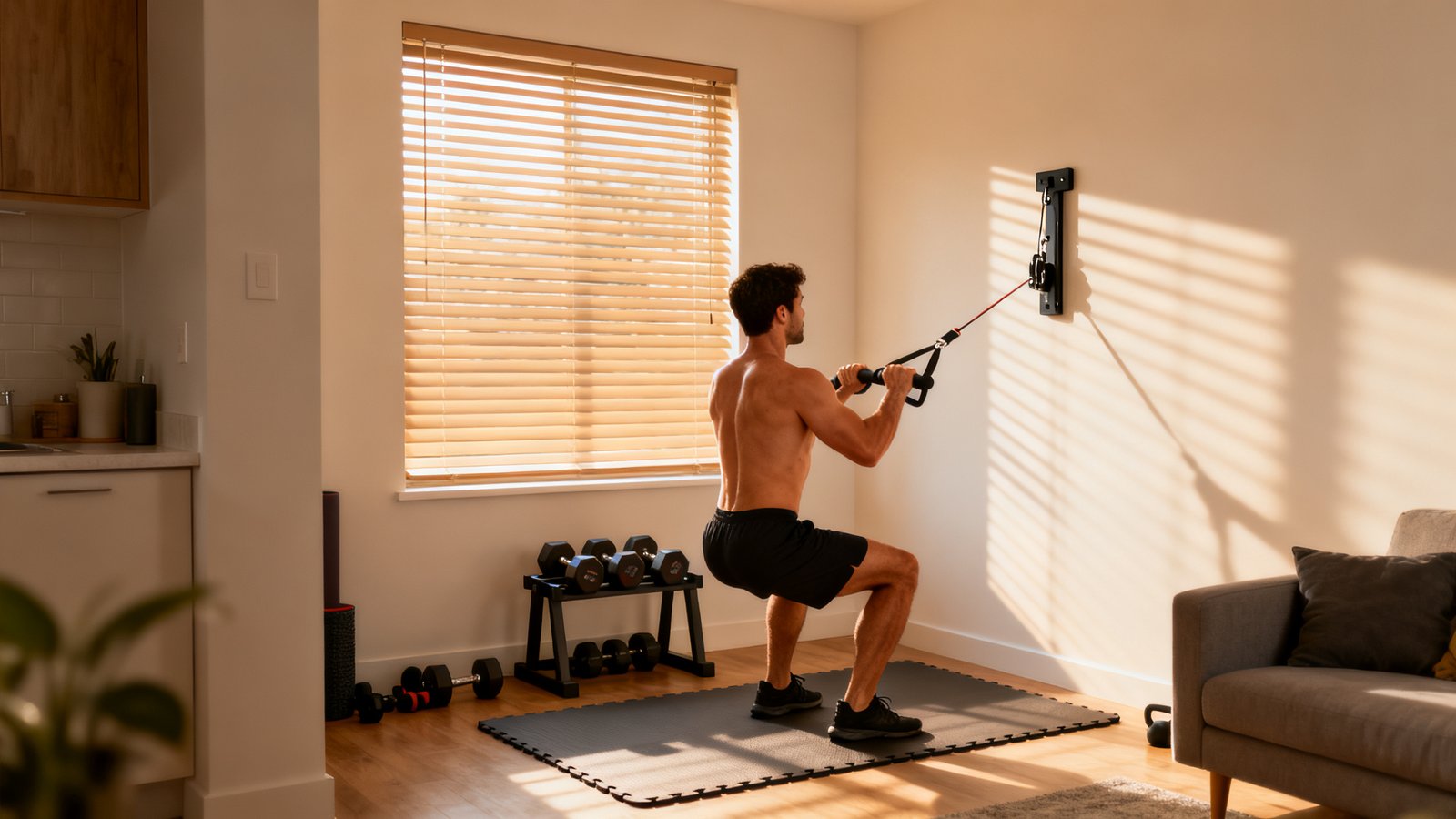
Configuration 3: Wall Mounted Tower — Titan Wall Mounted Pulley Tower V3 paired with bands for lower body work. Requires landlord approval and stud mounting. Best for the apartment dweller who plans to stay put and wants cable based training. Understand the one year warranty and inspect cables monthly.
If you are still deciding whether a home setup makes financial sense, our home gym vs gym membership cost breakdown shows the break even point arrives faster than most people expect, especially with budget equipment choices.
What we couldn’t find (data gaps & what to ask customer support about)
Research has limits. I want to be transparent about what the available data does not tell you. No public source provides return rate percentages for compact gyms under $500 on Amazon. Not for any time period. The Valor Fitness BD-62 page mentions a 60 day return policy but publishes no actual return rate (Source: Valor Fitness BD-62 Amazon page). That is normal for the category, but it leaves you guessing about long term satisfaction.
Failure rate statistics are similarly absent. Manufacturers do not volunteer how many units come back for cable issues or pulley defects. The best proxy we have is the tone and volume of negative reviews mentioning specific mechanical failures. That is imperfect, but it is what we have.
If you want hard data, ask customer support these three questions before purchasing a portable gym machine or any home gym essentials list item with moving parts:
- “What is the annual return or failure rate for this specific model?”
- “Is the cable assembly covered beyond the standard warranty period, and what does a replacement cost?”
- “Can you provide the exact installation weight load specs and stud spacing requirements?”
If they cannot answer these questions clearly, that silence is information. The best compact home gym under 500 is sold by companies that stand behind their specs.
Frequently Asked Questions
What is the best compact home gym machine for a studio apartment?
The TRX suspension trainer wins for pure space efficiency at 1.5 lbs with zero permanent installation. If you want actual resistance loading, the Powerblock Sport adjustable dumbbells at 50 lbs per hand combined with resistance bands deliver the most exercise variety per square foot. Choose based on whether portability or progressive overload matters more to you.
Can I really get a full body workout from one machine under $500?
Yes, but not from a single piece. No true all in one machine exists under $500 that equally trains upper and lower body. You will need to combine two or three tools. A pulley tower plus bands or adjustable dumbbells plus a suspension trainer are the most common effective pairings.
Are wall mounted cable machines safe for apartment walls?
They can be if properly mounting into studs. Drywall anchors alone are insufficient. The Titan Pulley Tower V3 weighs 65 lbs and handles dynamic load, so it must hit at least two studs. Check your lease for drilling restrictions. If mounting is not allowed, stick with door anchored or floor based equipment.
Why do budget cable machines have so many bad reviews about fraying?
Thin cable jackets and low quality pulleys wear faster under friction and tension. Budget manufacturers cut costs on the components that move. The Valor BD-62 review documented fraying within three months. Regular lubrication and inspecting cables weekly can delay failure, but the underlying materials are simply not industrial grade.
What warranty length should I look for on a compact gym under $500?
One year minimum on cables, pulleys, and bands. Five years or more on frames and bars is standard. Products like the X3 Bar offer five years on the bar and plate but only one year on bands, which reflects the reality that wear items fail sooner. Factor replacement band costs into your budget if you choose band based systems.