

Finding the best resistance bands for your home strength training setup should not feel like a gamble. But right now, the market is flooded with cheap sets that snap without warning, incomplete kits missing critical accessories, and product roundups that skip the programming details you actually need to get stronger. This guide takes a different approach. I will tell you exactly what the available evidence supports, what it does not, and what you should demand from manufacturers before you spend a dime.
Key Takeaways
- Consumer Reports identifies loss of elasticity, thinning, cracks, and micro tears as the primary failure indicators to inspect before every use.
- Bands must support squats, rows, and chest presses at minimum, and your programming should start with two to three nonconsecutive training days per week using a band that allows roughly 50% elongation at the start of each movement.
- No source we reviewed provided independent tensile strength data, cycle to failure testing, or verified ASTM F2613 compliance claims. You should request these numbers directly from sellers before buying heavy duty sets.
Table of Contents
- Quick summary: what this guide delivers and what it does not
- Top failure modes to watch for when buying bands
- Which foundational movements bands must support
- Programming for strength with bands: what most product lists skip
- Accessories, set completeness, and common omissions
- Safety standards, warranties, and compliance: what we could not confirm
- Fabric vs. latex loop bands: suitability and common fit issues
- Independent test data the reader should demand
- Practical buying checklist and next steps for deeper reporting
- Conclusion
- Frequently Asked Questions
Quick summary: what this guide delivers and what it does not
This guide synthesizes the most trustworthy consumer guidance available right now on the best resistance bands for strength training. We drew primarily from Consumer Reports, Men’s Health, and Garage Gym Reviews to identify failure modes, foundational exercise requirements, and practical programming protocols that most product list articles overlook entirely. If you have been searching for resistance bands for strength training and feeling overwhelmed by shallow roundups, this is your antidote.
But I need to be upfront about the gaps. The available sources do not include Amazon 2024 review frequency data, exact price per resistance calculations, measured tensile or cycle test results, or brand by brand compliance statements. When I could not verify a claim, I flagged it explicitly. My goal is to help you buy wisely now while making clear what deeper tests you should demand from manufacturers and what our editorial team plans to investigate next.
Top failure modes to watch for when buying bands
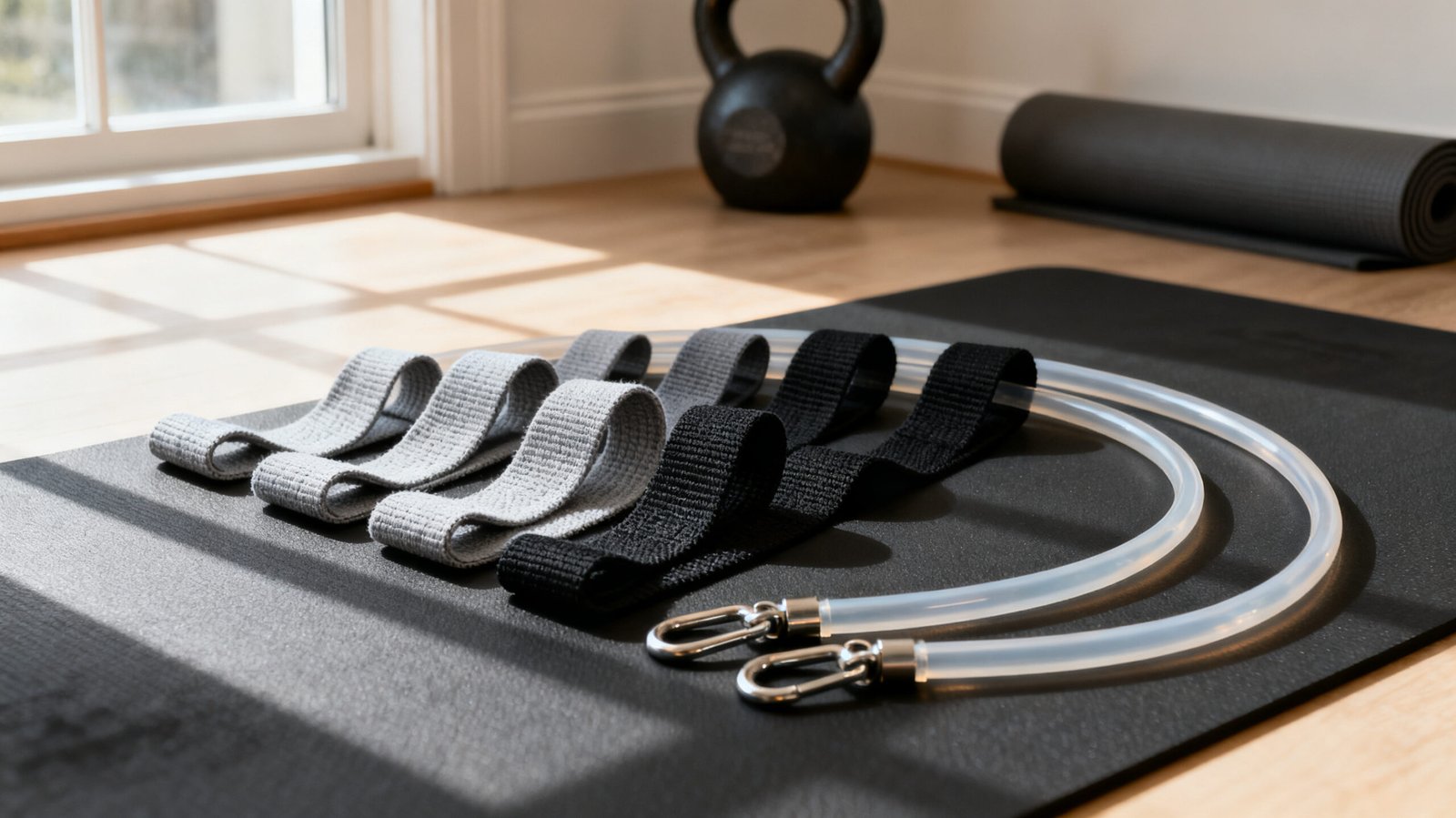
Most band failures are not sudden mysteries. They announce themselves through visible degradation that too many users ignore. Consumer Reports flags four specific indicators you must inspect for before purchasing any set advertised as heavy duty resistance bands or pull up assist bands: loss of elasticity, thinning, cracks, and micro tears (Consumer Reports).
Loss of elasticity means the band no longer snaps back to its original shape after use. It feels loose at the start of a movement where it once provided tension immediately. Thinning appears as uneven narrowing along the band’s length, often concentrated near anchor points or high friction zones. Cracks are visible fissures in the surface, especially common in latex bands stored in dry or sun exposed areas. Micro tears look like small nicks or surface irregularities that deepen with repeated stretching.
Before every single use, run your fingers along the full length of each band while it rests unstretched. Look for any of these four signs. If you spot them, retire the band immediately. A snapped band during a loaded movement like a row or chest press can cause serious facial or eye injury. This is not theoretical. It happens regularly with poorly maintained or cheaply manufactured bands.
Which foundational movements bands must support
Not all band sets are designed to handle the full movement spectrum a serious home trainer needs. Consumer Reports explicitly names squats, rows, and chest presses as the core exercises your resistance bands for strength training must accommodate (Consumer Reports). The publication also emphasizes balanced programming: if you train chest presses, you must also train rows to avoid shoulder imbalances.
For lower body work like squats, you need loop bands for working out that provide enough resistance at full extension without rolling up your thighs. Shorter loop bands work well for glute activation and lateral walks, but squats demand longer bands or tube bands with ankle straps. Horizontal pulls like rows require a secure door anchor or sturdy attachment point. Vertical pulls, including assisted pull ups and lat pulldowns, need bands long enough to stretch overhead without bottoming out prematurely.
When evaluating a set, mentally run through these movements. Can the band accommodate a full range squat without snapping or rolling? Can you anchor it securely for rows? Is there enough length for pull up assistance? If any of these answers are no, that set is incomplete for strength training purposes regardless of how many bands it includes.
Programming for strength with bands: what most product lists skip
This is the section that separates real training guidance from filler content. Most roundups for the best resistance bands for home workout stop at listing products. They never tell you how to actually program with bands for progressive strength gains. Consumer Reports provides a practical framework that I have expanded below (Consumer Reports).
Frequency. Start with two to three nonconsecutive training days per week. Monday, Wednesday, Friday works well. Your connective tissues need adaptation time when transitioning to band based resistance, which creates variable tension unlike free weights.
Band Selection. At the start of any movement, your band should be elongated roughly 50% from its resting length. If a band is already stretched 80% just to begin a row, you have nowhere to go through the concentric phase. Pick the band that gives you tension from the very first inch of the movement without being fully stretched at the midpoint.
Reps, Sets, and RPE. Begin in the 6 to 10 rep range with an RPE of 4 to 6 out of 10. This means each set should feel moderately challenging but leave several clean reps in the tank. Over four to six weeks, progress toward an RPE of 8 to 10 out of 10. Once you can comfortably complete 12 reps at a given resistance, move to a heavier band and reset to the 8 to 12 rep target. This mirrors the progressive overload principle used with free weights, which is why understanding how much weight you need for a home gym translates directly to band training logic.
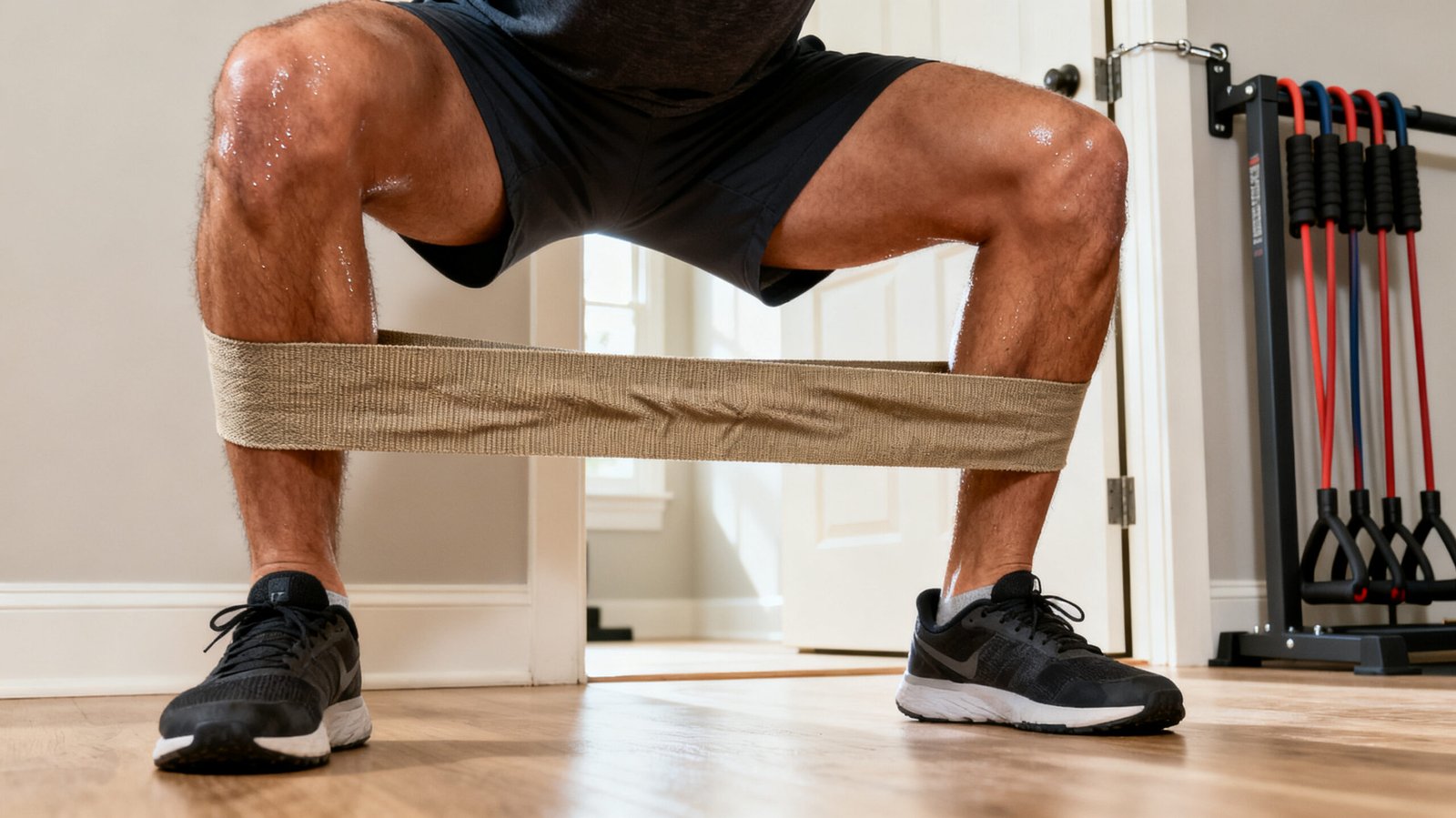
Progression markers matter. Track your reps, band color or resistance level, and RPE in a simple notebook or app. When you hit 12 clean reps at RPE 9 or below for two consecutive sessions, step up. Bands do not have labeled weight increments like dumbbells, so this subjective plus objective tracking becomes your progression backbone.
For a more complete home setup, consider how bands complement other equipment. A solid home gym under 500 dollars often pairs bands with a pull up bar and adjustable dumbbells for maximum exercise variety without crowding your space.
Accessories, set completeness, and common omissions
Many buyers focus exclusively on the bands themselves and ignore the accessories that make those bands usable across multiple movements. The best resistance bands sets include door anchors, ankle straps, carabiners, and handles as standard components. Budget sets under $50 frequently omit one or more of these, and the missing accessory is often the door anchor or ankle strap (Garage Gym Reviews; Men’s Health).
Without a door anchor, you cannot perform horizontal rows or chest presses safely. Without ankle straps, lower body isolation work like hamstring curls and glute kickbacks becomes awkward or impossible. Carabiners that feel flimsy or do not rotate smoothly will fray your bands over time. Handles with poor grip texture make high rep sets uncomfortable and reduce your willingness to train consistently.
When comparing a fabric resistance bands set to a latex tube set, check the accessory listing photograph carefully. Count the handles. Confirm the door anchor is included. Look for metal carabiners rather than plastic clips. If the product image focuses exclusively on colorful bands and buries the accessory details in a text block, assume corners were cut.
This is also where many beginners make costly mistakes. Skipping a proper home gym essentials list review before purchasing often leads to buying duplicate equipment or missing critical items that force a second order. Bands alone do not make a gym. Accessories turn bands into a system.
| Feature | Budget Sets Under $50 | Premium Sets $80 to $150 |
|---|---|---|
| Door Anchor | Often missing or thin foam | Reinforced nylon with multi point placement |
| Ankle Straps | Frequently omitted entirely | Padded with adjustable velcro closure |
| Carabiners | Plastic or thin alloy | Steel with spring loaded gate |
| Handle Grip | Hard foam, slips when sweating | Textured rubber or dense EVA foam |
| Warranty | 30 day or nonexistent | 1 year minimum, some lifetime |
Safety standards, warranties, and compliance: what we could not confirm
This section is uncomfortable to write because it exposes a real problem. When you search for heavy duty resistance bands or pull up assist bands, many product pages include phrases like “ASTM F2613 compliant” or “lab tested tensile strength.” I wanted to verify these claims against independent documentation. I could not.
The available sources do not contain enough material to confirm which brands explicitly list ASTM F2613 compliance, latex purity certifications, or specific warranty language on their product pages. This does not mean those claims are false. It means the information is not publicly accessible through the review channels consumers typically consult before buying.
ASTM F2613 is a safety specification for resistance bands that covers dimensions, tensile strength, and labeling requirements. If a band claims compliance, the manufacturer should be able to produce documentation. Ask for it directly. If they cannot or will not provide it, treat that as a data point in your purchasing decision. Latex purity matters because impurities create weak points that accelerate the four failure modes discussed earlier. Warranty language that is vague about “normal wear and tear” exclusions may not protect you when a band fails during use.
Many home gym mistakes stem from assuming that listed specifications are verified rather than self declared. Apply the same skepticism to band claims that you would to any fitness equipment purchase.
Fabric vs. latex loop bands: suitability and common fit issues
The choice between a fabric resistance bands set and traditional loop bands for working out in latex comes down to durability expectations, comfort preferences, and the specific exercises you prioritize. Fabric bands resist snapping more effectively because multiple woven layers distribute stress differently than a single latex extrusion. They also resist rolling up during lower body exercises, which is a common frustration with latex loop bands placed above the knees.
However, fabric bands have less elasticity. This means they provide resistance through a shorter range of motion and can feel abrupt at the end range. Latex bands stretch further and deliver a smoother resistance curve, which many lifters prefer for upper body pressing and pulling movements. The tradeoff is that latex degrades faster, especially when exposed to sunlight, heat, or oils from skin.
I need to flag a sourcing gap here. While Consumer Reports confirms the core movements bands should support, the available search results do not provide enough material to verify which fabric loop dimensions map best to lower body versus upper body use, or which specific exercise generates the most rolling and slipping complaints. This is data our editorial team needs to source through original testing. For now, assume fabric bands excel at hip level and below movements, while latex loop bands offer greater versatility across the full body at the cost of more frequent inspection and replacement.
Independent test data the reader should demand
If you take one thing from this guide, let it be this: the market for the best resistance bands lacks standardized, publicly available test data. I searched for measured tensile strength in pounds, cycles to failure counts, exact resistance per band at specific elongation percentages, and price per resistance unit comparisons across heavy duty resistance bands categories. The available sources simply do not contain these numbers (Garage Gym Reviews; Men’s Health).
Why do these metrics matter? Tensile strength tells you the maximum load a band can handle before failure. A pull up assist band marketed as “50 to 125 lbs” without a measured tensile rating is giving you marketing copy, not engineering data. Cycle to failure testing simulates repeated stretching to determine how many uses you can expect before degradation begins. Without this number, you cannot calculate cost per use or compare a $15 band against a $40 band on anything other than initial feel.
Price per resistance unit is the metric that would let you compare fabric heavy duty sets against latex sets and against the cost of a gym membership. The home gym versus gym membership cost calculation changes dramatically when your bands need replacement every six months versus every three years. Without cycle life data, you are guessing.
Our recommendation: before purchasing any band set over $60, email the manufacturer and ask for tensile strength at 100%, 200%, and 300% elongation, cycle test results to 50% of original tension, and their ASTM F2613 compliance documentation. If they reply with specifics, you have found a serious supplier. If they deflect, reconsider.
Practical buying checklist and next steps for deeper reporting
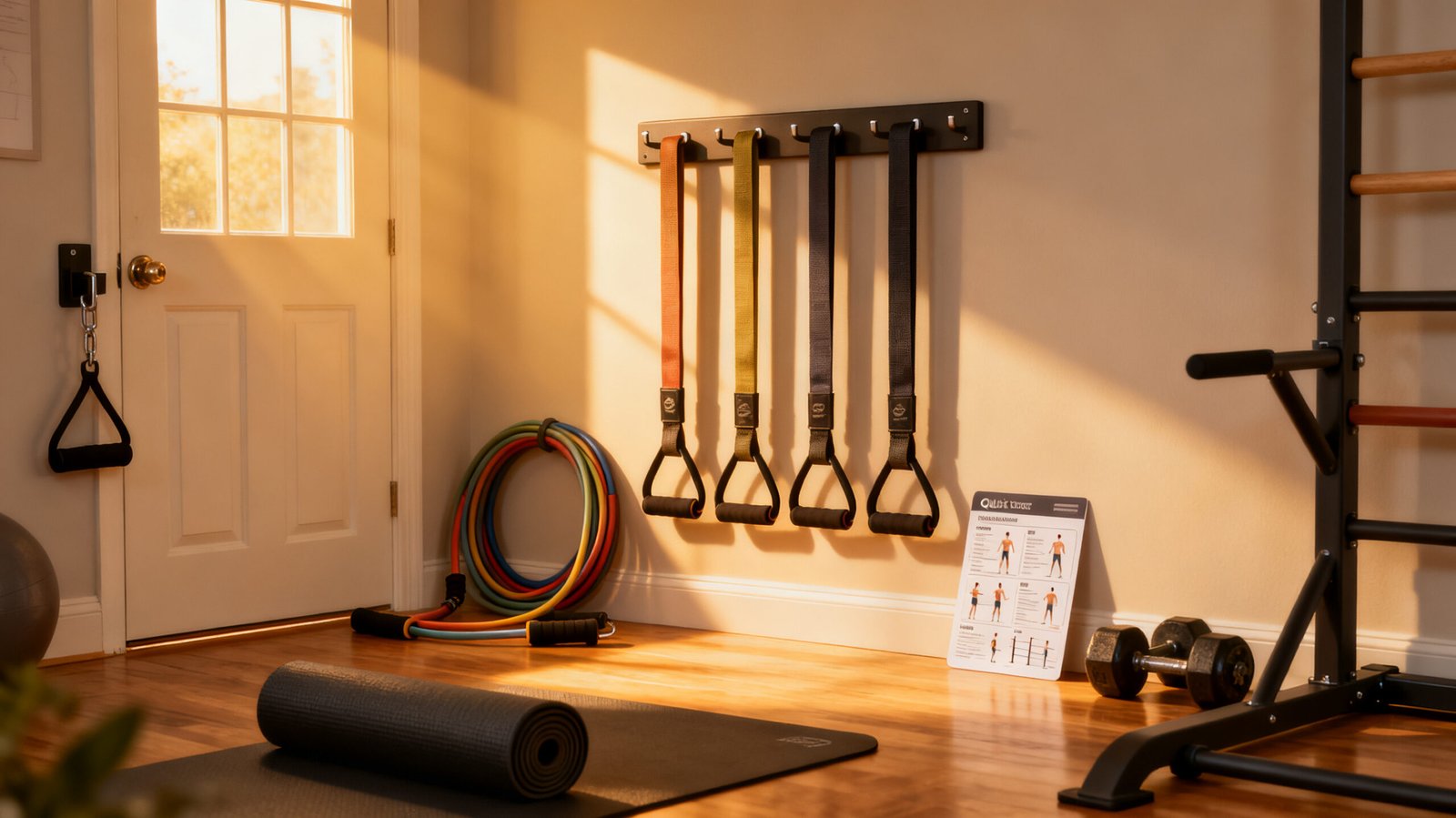
Here is your actionable checklist for evaluating any set marketed as the best resistance bands for home workout use. Work through these points before clicking buy, and you will filter out most junk sets immediately.
- Inspect for micro tears. Upon arrival, run every band through your fingers under good light. Check for thinning, cracks, loss of elasticity, and surface irregularities. Return any set that shows these signs out of the box.
- Request tensile and cycle data. Email the seller. Ask for tensile strength at multiple elongation points and cycle life estimates. Silence or vague answers are red flags.
- Confirm included accessories. Open the box and verify door anchor, ankle straps, carabiners, and handles are all present. Missing accessories turn a complete resistance bands for strength training kit into a partial one.
- Verify return policy and warranty. Look for a minimum 30 day return window and at least a one year warranty. Check the fine print for “normal wear” exclusions that could void coverage.
- Test elongation for your rep ranges. Set up your primary movements and confirm the band allows roughly 50% elongation at the start and does not max out before you reach full range of motion.
For our editorial team, the next steps are clear. We need an Amazon review scrape across the top selling band sets to quantify complaint frequencies and identify which accessories are most commonly missing from budget kits. We need independent lab testing for tensile strength and cycle to failure on the most popular heavy duty fabric and latex options. And we need direct manufacturer requests for ASTM F2613 compliance documentation with published responses. Once we have that data, this guide will evolve from a research transparent overview into a fully verified buying resource. If you want to build out the rest of your setup while waiting, check our guide on the best home gym for small spaces for equipment that pairs perfectly with band based training.
Conclusion
Resistance bands are deceptively simple tools that demand more scrutiny than most buyers apply. The failure modes are well documented. The foundational movements are clear. The programming framework exists and works. But the independent test data that would let you compare sets on objective durability and value is largely absent from public review channels. Until that changes, your best defense is the inspection checklist above, direct manufacturer inquiries, and a willingness to retire bands at the first sign of degradation. The best resistance bands for your home gym are the ones you can trust every single time you stretch them under load. Do not settle for less.
If you found this guide useful, share it with someone who is about to buy their first set. And if you have access to lab testing resources or manufacturer spec sheets we have not seen, reach out. We want to make this the most transparent resistance band buying resource available.
Frequently Asked Questions
What are the best resistance bands for home strength training?
The best set depends on your primary movements. For general strength training covering squats, rows, and chest presses, look for a set with multiple resistance levels, a reinforced door anchor, padded ankle straps, metal carabiners, and textured handles. Fabric loop bands excel for lower body work and resist rolling, while latex tube sets offer greater versatility across upper and lower body movements. Always inspect bands for micro tears, thinning, and loss of elasticity before first use and before every workout.
How do I know when to replace my resistance bands?
Consumer Reports identifies four clear failure indicators: loss of elasticity where the band no longer snaps back to its original shape, visible thinning along the band’s length, surface cracks, and micro tears that appear as small nicks or irregularities. Inspect your bands before every session by running your fingers along the full length while the band rests unstretched. If you observe any of these signs, retire the band immediately to avoid injury from sudden snapping during loaded movements.
Can resistance bands really build muscle like free weights?
Yes, when programmed correctly. Bands provide variable resistance that increases through the range of motion, which differs from the constant resistance of free weights but still drives hypertrophy and strength gains. The key is progressive overload: start with a band that allows 6 to 10 reps at RPE 4 to 6 out of 10, progress toward RPE 8 to 10, and move to a heavier band once you can complete 12 clean reps consistently. Train two to three nonconsecutive days per week with balanced push and pull programming.
What accessories do I absolutely need with resistance bands?
A door anchor is essential for horizontal rows, chest presses, and any movement requiring a fixed attachment point above or in front of you. Ankle straps enable lower body isolation work like hamstring curls, glute kickbacks, and hip abductions. Metal carabiners connect bands to handles and anchors securely; plastic clips are a common failure point. Handles with dense, textured grips make high rep sets comfortable and sustainable. Budget sets under $50 frequently omit the door anchor or ankle straps, so check the listing carefully.
How do fabric bands compare to latex loop bands?
Fabric bands are more durable and resist rolling up during lower body exercises like squats and lateral walks. They have less elasticity, which creates a shorter resistance range that can feel abrupt at end range. Latex loop bands stretch further with a smoother resistance curve preferred for upper body work, but they degrade faster when exposed to sunlight, heat, or skin oils and require more frequent inspection for micro tears and thinning. Neither type is universally superior; your choice should match your primary exercise preferences and your tolerance for maintenance.